

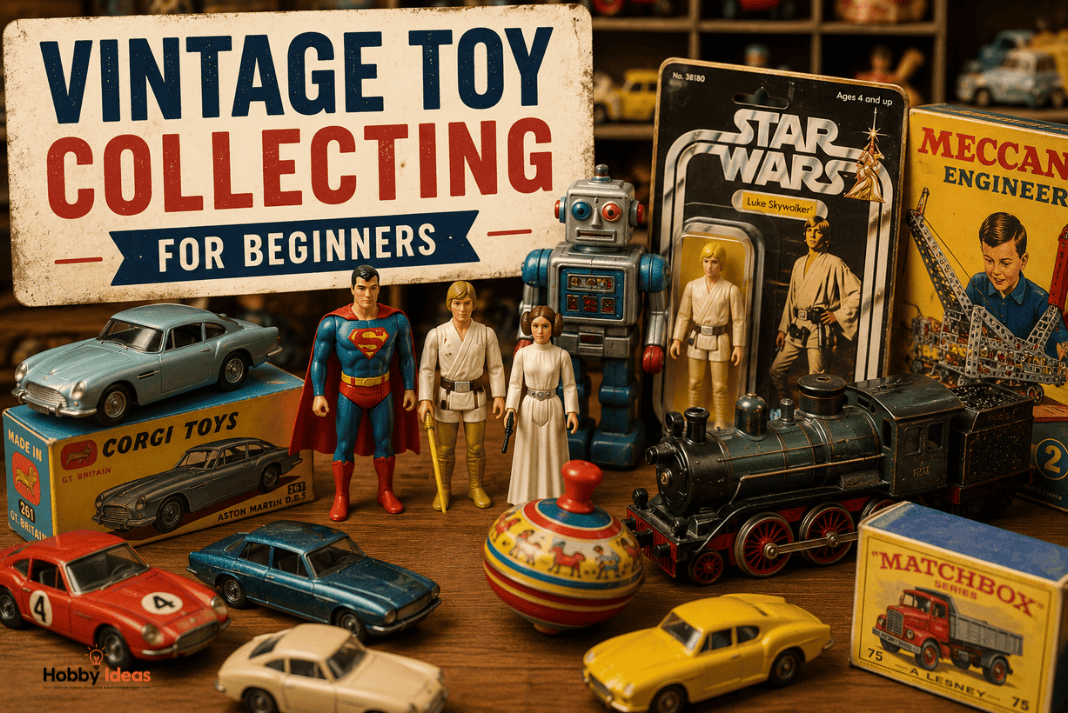
Vintage Toy Collecting: A Nostalgic Hobby Full of History and Childhood Memories
Vintage toy collecting combines nostalgia, history, treasure hunting, and occasionally the strange experience of paying serious money for something you once launched across the living room in 1987.
However, that is exactly why so many people love it.
Whether you grew up with diecast cars, Action Man figures, Star Wars toys, model trains, or retro board games, vintage toy collecting offers a hobby that feels deeply personal while still carrying the excitement of discovery.
Better still, you do not need huge amounts of money to begin. Many collectors start with inexpensive car boot sale finds, childhood favourites rediscovered in lofts, or small nostalgic purchases that slowly grow into a proper collection over time.
In many ways, collecting vintage toys captures everything people enjoy about collecting hobbies for adults. It combines curiosity, memory, history, and the simple pleasure of finding something that instantly makes you smile.
Why Vintage Toy Collecting Remains So Popular
Firstly, vintage toys connect directly to memory. Many collectors search for toys they once owned because those objects instantly trigger stories, emotions, and forgotten moments from childhood.
Sometimes it only takes one old toy catalogue, faded action figure, or slightly battered diecast car to transport somebody straight back to another era.
Additionally, vintage toys often reflect the design trends, films, cartoons, and pop culture of their time. Toys from the 1970s feel very different from toys produced during the 1980s or 1990s, and collectors enjoy exploring those changing styles.
For example, many 1970s toys embraced bold colours and sturdy metal construction, while the 1980s exploded with action figures, cartoons, and film merchandise. Then, during the 1990s, electronic toys and gaming culture started becoming increasingly dominant.
Consequently, vintage toy collecting becomes about far more than simply owning objects. It becomes a way of reconnecting with different periods of culture and personal history.
According to the Victoria and Albert Museum toy history archive, toys offer fascinating insight into social history, manufacturing, design, and changing childhood trends.
Popular Vintage Toys People Love to Collect
One reason vintage toy collecting stays so interesting is the enormous variety available. Some collectors focus on one very specific category, while others enjoy a broader mix of nostalgic items from different decades.
Diecast cars remain hugely popular, especially classic brands such as Matchbox, Dinky Toys, Corgi, and Hot Wheels. Meanwhile, many collectors focus on action figures connected to films and television series from their childhood.
Others collect:
- model trains
- retro board games
- vintage teddy bears
- dolls
- Lego sets
- TV and film merchandise
- electronic toys
- retro gaming items
Interestingly, most collectors eventually drift towards themes that feel personally meaningful rather than simply valuable.
That emotional connection explains why vintage toy collecting often feels more enjoyable than hobbies focused purely on investment.
Diecast Cars Offer an Easy Starting Point
Diecast toy collecting remains one of the easiest entry points for beginners because the models are widely available, relatively easy to store, and available across countless themes and manufacturers.
Collectors often begin with familiar brands they recognise from childhood. Matchbox, Dinky Toys, Corgi, and Hot Wheels continue attracting collectors across multiple generations.
Condition certainly matters with diecast models. Original paint, intact windows, complete wheels, and original boxes often increase collector appeal.
However, heavily played-with examples still carry enormous charm. In fact, many collectors prefer toys that clearly enjoyed real childhood use rather than pieces that spent decades untouched inside cabinets.
Those small scratches and worn edges often feel like part of the toy’s story.
Action Figures and Pop Culture Toys Continue to Boom
Action figures became hugely popular during the 1970s and 1980s, and many of those toys remain highly collectible today.
Collectors regularly search for Star Wars figures, He-Man toys, Transformers, Action Man, Ghostbusters merchandise, and Teenage Mutant Ninja Turtles figures.
Packaging plays a surprisingly important role in this part of the hobby. Mint boxed examples can command extremely high prices, while loose figures tend to appeal more to casual collectors who simply enjoy the nostalgia and display value.
That said, some boxed toys become so pristine that owners seem mildly terrified of breathing near them.
Condition Matters More Than Many Beginners Expect
Condition strongly affects collectible toy desirability, especially for rarer pieces.
Collectors usually examine paint wear, missing parts, repairs, stickers, box condition, fading, and originality. Even small details can dramatically influence interest.
However, beginners should avoid becoming obsessed with perfection immediately.
Affordable worn examples often provide the best learning opportunities because they allow collectors to handle, research, and enjoy items without constantly worrying about damaging something valuable.
Over time, most collectors naturally develop a better understanding of rarity, condition, and authenticity anyway.
Where to Find Vintage Toys

Fortunately, vintage toys still appear in plenty of places if you enjoy the hunt.
Collectors regularly browse car boot sales, charity shops, antique centres, auctions, toy fairs, Facebook Marketplace, and online marketplaces such as eBay.
Additionally, family lofts and house clearances remain surprisingly good sources for forgotten toys that have sat untouched for decades.
Of course, once people discover you collect vintage toys, relatives suddenly start handing you mysterious boxes filled with deeply confusing plastic objects from 1983.
Vintage toy collecting also fits beautifully into the wider world of nostalgic collecting hobbies. If you enjoy the thrill of hunting for unusual finds and learning the stories behind old objects, you may also enjoy our article on collecting hobbies for adults.
If you enjoy the treasure-hunting side of collecting, you may also enjoy our guide on how to start coin collecting, another beginner-friendly hobby built around history, curiosity, and discovery.
Should You Collect Vintage Toys for Profit?
Some vintage toys genuinely become valuable over time. Rare action figures, boxed diecast models, and limited-production toys can sometimes sell for impressive amounts.
However, collecting purely for investment often removes much of the enjoyment.
The happiest collectors usually focus on nostalgia, display appeal, personal interest, and themes they genuinely enjoy researching. Then, if values rise naturally over time, that becomes an added bonus rather than the entire purpose of the hobby.
Besides, trying to predict future collector markets can quickly become exhausting.
Interestingly, many people who enjoy slower collecting hobbies also gravitate towards more mindful lifestyle activities. Our guide to relaxing hobbies to help you slow down and unwind explores more hobbies built around calm, nostalgia, and enjoyment rather than constant productivity.
How to Spot Valuable Vintage Toys
Many beginners wonder whether their old toys might be worth money. While value should never be the main reason for collecting, understanding what makes certain toys desirable can help you make better buying decisions.
Collectors often look for original boxes, complete accessories, limited production runs, unusual colour variations, and toys connected to popular films, television series, or well-known manufacturers.
Condition also plays a major role. Two seemingly identical toys can have very different values depending on paint quality, missing parts, repairs, and overall presentation.
However, it is important to remember that sentimental value often outweighs market value. Many collectors treasure toys because of the memories they represent rather than the price they might achieve.
Storage and Display Make a Big Difference
Storage matters because vintage toys can suffer damage from sunlight, damp, smoke, heat, and rough handling.
Many collectors use shelving, glass display cabinets, labelled storage boxes, or protective plastic cases to keep toys safe while still enjoying them visually.
Boxed toys should remain dry and protected from direct sunlight whenever possible because cardboard packaging fades surprisingly quickly.
At the same time, collections should still feel enjoyable to look at. Part of the fun comes from displaying favourite pieces around the home rather than hiding everything away permanently.
Vintage Toy Collecting Fits Perfectly Into Nostalgic Hobby Culture
Vintage toy collecting also connects beautifully with the wider rise of nostalgic and slow-paced hobbies. More people now seem drawn towards hobbies that feel tactile, comforting, and rooted in real memories rather than endless screen time.
If you enjoy hobbies built around nostalgia and offline creativity, you might also enjoy our article on creative hobbies for adults, which explores slower and more hands-on hobby ideas.
In many ways, vintage toy collecting represents something larger than simply owning old objects. It reflects people reconnecting with stories, memories, imagination, and moments from earlier life.
Recommended Reading for Vintage Toy Collectors
One of the most enjoyable aspects of vintage toy collecting is learning about the stories behind the toys themselves. Understanding how toys evolved over the decades often adds another layer of enjoyment to the hobby.
Vintage Toys by Alessandra Sardo
This beautifully illustrated hardback explores the colourful history of toy collecting, covering everything from classic board games and tinplate toys to action figures, dolls, robots, and early video games. It is particularly enjoyable for collectors who appreciate the nostalgia and cultural history behind the toys they collect.
Final Thoughts on Vintage Toy Collecting
Vintage toy collecting remains one of the most enjoyable and nostalgic collecting hobbies available today.
Whether you love diecast cars, retro board games, action figures, or childhood memorabilia, the hobby combines history, entertainment, design, and personal memory in a uniquely satisfying way.
Most importantly, collecting should feel enjoyable rather than stressful. Start small, buy what genuinely interests you, and allow your collection to develop naturally over time.
After all, most serious collectors began with one toy, one shelf, and absolutely no intention of eventually needing an entire room dedicated to tiny plastic people and miniature cars.