

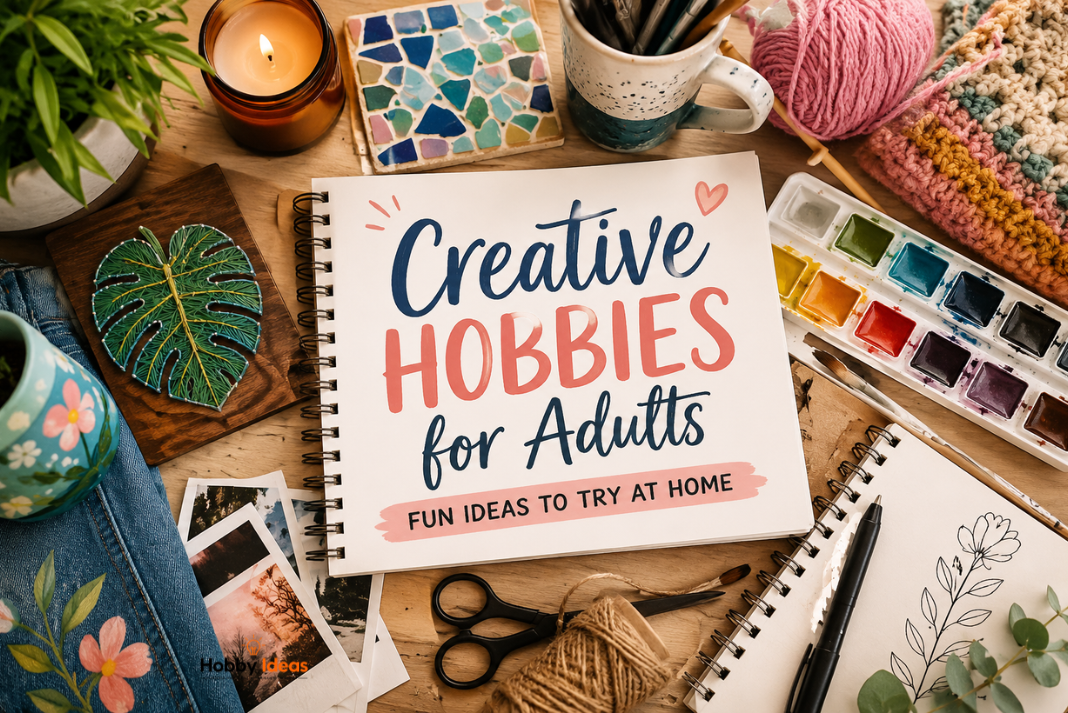
Creative hobbies for adults are not just for people who can paint perfect landscapes, knit jumpers without swearing, or turn a lump of clay into something that does not resemble a potato. In fact, creative hobbies are for anyone who wants to make something, relax a little, and use their free time in a more enjoyable way.
However, choosing the right hobby can feel tricky at first. There are so many options, and because of that, it is easy to spend more time researching hobbies than actually starting one. So, this guide keeps things simple, practical, and beginner-friendly.
Whether you want a calming evening activity, a new skill, or a hobby that might eventually turn into a small side project, these creative hobbies for adults give you plenty of ideas to explore.
Quick Answer: What Are the Best Creative Hobbies for Adults?
The best creative hobbies for adults include painting, drawing, photography, pottery, sewing, jewellery making, creative writing, model making and hands-on activities such as rock tumbling. The right choice depends on whether you enjoy making something practical, expressing ideas, learning a traditional craft or simply switching off while your hands are busy. Beginners do not need natural artistic ability either; many creative hobbies are skills that become more rewarding as you practise.
Why Creative Hobbies Are Worth Trying
Firstly, creative hobbies give your brain something different to do. Instead of scrolling, worrying, or rearranging the biscuit cupboard for the third time, you get to focus on making, designing, or experimenting.
In addition, creative hobbies help you learn through doing. You do not need to master everything before you begin. Actually, most hobbies become more enjoyable once you allow yourself to be slightly rubbish at the start.
According to the NHS guidance on mental wellbeing, learning new skills can support confidence and wellbeing. Therefore, a creative hobby can offer more than just something nice to do on a rainy afternoon.
How to Choose the Right Creative Hobby
Before you choose from a long list of creative hobbies for adults, think about what you actually enjoy. After all, a hobby should fit your personality, your space, and your budget.
For example, if you like quiet activities, you might enjoy drawing, journaling, embroidery, or model making. However, if you prefer hands-on projects, you may enjoy mosaic art, upcycling, candle making, or sublimation printing. Many creative hobbies also provide something increasingly valuable in modern life: an opportunity to step away from constant notifications and spend time making, building or creating with your own hands. If you’ve ever wondered why these slower, more practical pastimes feel so rewarding, our guide to why a hands-on hobby is the best digital detox explores how creative activities can naturally reduce screen time while helping you unwind and refocus.
Also, think about how much mess you can tolerate. Some hobbies need a tidy table and a pencil. Others somehow spread glitter into rooms you never entered. So, choose wisely unless you want your kitchen to look like a craft shop exploded.
“The best creative hobby is not necessarily the one you are naturally good at. It is the one that makes you curious enough to keep coming back and see what you can create next.”
Easy Creative Hobbies for Adults to Start at Home
You do not need a spare room, an art degree or a cupboard containing several hundred pounds’ worth of equipment to become more creative. Some of the best creative hobbies for adults can begin at the kitchen table with a few basic materials and an hour to yourself.
The trick is choosing something that suits the way you like to work. Some people enjoy slowly making something with their hands, while others would rather draw, write, design or transform an object that already exists. Here are ten approachable places to start.
1. Mosaic Art
Mosaic art suits patient beginners who enjoy patterns, colour and hands-on making. You can start with something manageable such as a coaster, picture frame or small garden ornament before attempting anything more ambitious.
Part of the satisfaction comes from watching the design emerge piece by piece. It is also a pleasantly forgiving craft. Slightly irregular tiles can add character, or at least that is what we shall confidently tell ourselves when the first row wanders slightly off course.
2. Journalling and Creative Writing
Few creative hobbies have a lower barrier to entry than writing. A notebook and pen are enough to begin, although stationery enthusiasts may argue that at least twelve beautiful notebooks are essential because each one has an entirely different purpose.
Journalling can combine everyday observations, memories, sketches, photographs and ideas. Creative writing opens things further still. Short stories, poetry, memoir, character sketches or simply writing about something that interests you can all develop into absorbing projects.
The blank page can initially feel intimidating, so forget about producing something impressive. Ten enjoyable minutes of writing is a much better beginning than waiting six months for inspiration to arrive.
3. Drawing and Sketching
Drawing is wonderfully portable. A pencil and inexpensive sketchbook can travel almost anywhere, and there is no requirement to produce gallery-worthy portraits before you are allowed to enjoy yourself.
Start with ordinary objects. A mug, plant, pair of glasses, old key or piece of fruit gives you plenty to observe. As you practise, you begin noticing proportion, shape, shadow and texture more carefully.
That change in how you look at things can become as rewarding as the finished drawings themselves. Keep your early sketches too. Comparing the first page with something drawn six months later is one of the nicest ways to see genuine progress.
4. Upcycling
Upcycling combines creativity with the satisfaction of rescuing something that might otherwise be discarded. Old picture frames, boxes, small pieces of furniture, tins and jars can all become starting materials.
A tired bedside table might only need careful preparation and a new finish. An old wooden box could become attractive storage. Even mismatched frames can form an interesting gallery wall when treated as a collection rather than a problem.
The challenge is knowing when to stop. Not everything old needs painting, particularly if you have accidentally acquired something antique or collectable. When in doubt, find out what an object is before reaching enthusiastically for the sandpaper.
5. Watercolour Painting
Watercolour has an unfair reputation for being difficult. It certainly takes time to master, but beginners can enjoy it long before mastery enters the conversation.
A small set of paints, a couple of brushes and suitable paper are enough to experiment with washes, colour mixing and simple subjects. Leaves, skies, flowers and loose landscapes make forgiving early projects.
Watercolour is particularly enjoyable if you like a hobby that cannot be controlled completely. Water and pigment occasionally have ideas of their own. Learning to work with those surprises rather than fighting every one of them is part of the appeal.
6. Air-Dry Clay Modelling
If pottery appeals but a kiln does not, air-dry clay provides a much easier introduction to modelling by hand.
Small dishes, decorative ornaments, plant markers, simple figures and textured tiles can all be made at home. Basic tools help, but many first projects can be shaped with your fingers and ordinary household items.
The tactile nature of Air Dry clay Modellingmakes this a particularly satisfying hobby after a day spent looking at screens. There is something refreshingly direct about starting with a lump of material and gradually persuading it to become an object.
7. Collage and Paper Craft
Collage is one of those hobbies that becomes more interesting once you stop thinking of it as something you did at primary school.
Old magazines, maps, photographs, coloured papers, tickets, packaging and printed ephemera can become raw material for surprisingly sophisticated artwork. You can work abstractly or build pictures around travel, nature, memories or a particular colour palette.
It is also inexpensive to explore because much of the material can be rescued rather than bought. Before long, however, you may find yourself evaluating every attractive piece of packaging according to whether it is genuinely rubbish or obviously important future collage material.
8. Rock Tumbling
Creativity does not always involve paint, fabric or traditional craft materials. Rock tumbling begins with rough, ordinary-looking stones and gradually transforms them into smooth, colourful pieces with patterns that may have been almost invisible at the beginning.
The process combines geology, collecting and hands-on making. It is also unusually satisfying because much of the beauty already exists inside the material; your job is to reveal it.
Our complete guide to rock tumbling for beginners explains the equipment, suitable stones, different grit stages and the process of achieving a polished finish.
9. Needle Felting
Needle felting turns loose wool fibres into surprisingly solid shapes using a special barbed needle. Beginners can start with simple hearts, mushrooms and small decorations before progressing to animals and more detailed sculptures.
Needle Felting requires relatively little space and there is something enormously satisfying about watching a cloud of wool gradually acquire a recognisable shape.
It is also a hobby where early imperfections can be rather charming. A slightly wonky felted sheep generally looks endearing. Whether the same principle applies when you accidentally create something resembling an angry potato is open to interpretation.
10. Sublimation Printing
Sublimation printing sits at the more technical end of home creativity. It allows digital designs to be transferred permanently onto specially coated mugs, coasters, clothing and other suitable blanks using heat.
The initial equipment costs more than a pencil and sketchbook, so it makes sense to understand the process before buying everything available. However, it can become an absorbing hobby for anyone who enjoys combining computer design with making physical objects.
It also has potential to develop beyond a personal hobby because personalised products can be sold at craft fairs or online. If that side interests you, explore our creative hobbies guides for more practical ideas and beginner projects.
Which Creative Hobby Should You Try First?
Do not choose according to which hobby looks most impressive on social media. Think instead about what you would genuinely enjoy doing on an ordinary Tuesday evening.
If you enjoy colour and visual experimentation, try watercolour, mosaic or collage. If you prefer working with your hands, air-dry clay, needle felting or rock tumbling may suit you better. Writers and journal keepers can begin almost immediately, while upcycling appeals to people who enjoy solving practical problems as much as making things look good.
Most importantly, start small. Buy enough equipment to discover whether you enjoy the activity, make one simple project and allow yourself to be a beginner. Creative hobbies become expensive surprisingly quickly when enthusiasm for buying supplies develops considerably faster than enthusiasm for actually using them.
Quick Creative Hobby Picker
Not sure where to start? Use this simple guide to match a hobby to your mood, space, and budget.
| If you want… | Try this hobby | Why it works |
|---|---|---|
| Something calm | Journalling | Low cost and easy to start |
| Something hands-on | Mosaic art | Creative, tactile, and satisfying |
| Something useful | Upcycling | Turns old items into new favourites |
| Something with income potential | Sublimation printing | Great for personalised products |
Creative Hobbies That Do Not Cost Much
One of the best things about creative hobbies for adults is that many cost very little to start. However, hobbies can become expensive if you buy every tool before you know whether you enjoy the activity.
So, begin with basic supplies. For example, start drawing with a pencil and paper before buying specialist sketchbooks. Likewise, try simple paper crafts before filling a cupboard with cutting machines, vinyl rolls, and mystery tools you cannot remember ordering.
Additionally, charity shops, car boot sales, and online marketplaces can help you find low-cost materials. This approach works especially well for upcycling, model making, sewing, and mixed media crafts.
Creative Hobbies with Side Hustle Potential
Although you should start a hobby because you enjoy it, some creative hobbies can later become small income streams. For instance, sublimation printing, digital art, candle making, handmade gifts, and printables all offer selling potential.
However, do not rush straight into selling. Firstly, learn the skill. Next, test a few designs or products. Then, if you still enjoy the process, you can explore selling through your own website, craft fairs, Etsy, or social media.
This matters because turning a hobby into income can change how it feels. Therefore, keep enjoyment at the centre, especially at the beginning.
Common Beginner Mistakes to Avoid
Creative hobbies should feel enjoyable, but beginners often make a few avoidable mistakes. Fortunately, you can sidestep most of them.
Firstly, do not buy too much equipment too soon. Instead, start small and upgrade only when you know you enjoy the hobby.
Secondly, avoid comparing your first attempt to someone else’s tenth year of practice. Social media makes every hobby look polished, but nobody posts the gluey disaster hiding just outside the photo.
Finally, do not quit too quickly. Most creative hobbies feel awkward at first. However, once you practise regularly, your confidence grows and the process becomes much more enjoyable.
Creative Hobbies for Adults: Frequently Asked Questions
What are the best creative hobbies for adults?
Good creative hobbies for adults include drawing, painting, photography, pottery, sewing, jewellery making, creative writing, model making and other hands-on crafts.
Do I need to be artistic to enjoy a creative hobby?
No. Most creative hobbies are learned skills rather than natural talents. Enjoyment, curiosity and regular practice usually matter far more than being good at the beginning.
What is a good creative hobby to start at home?
Drawing, creative writing, photography, sewing, model making and many paper crafts can all be started at home with relatively little space.
What creative hobbies are relaxing?
Drawing, painting, knitting, pottery, journalling and slow crafts can all feel relaxing because they encourage concentration on one enjoyable task at a time.
Can creative hobbies be inexpensive?
Yes. Many creative hobbies can begin with basic materials you already own or inexpensive starter supplies. It is usually better to learn the basics before buying specialist equipment.
How do I choose the right creative hobby?
Choose according to the kind of activity you enjoy. Some people prefer making practical objects, while others enjoy drawing, writing, photography or learning a traditional craft.
If one of these creative hobbies has sparked an idea, you can explore the books, beginner equipment and hobby supplies we have gathered in the Hobby Ideas Amazon storefront. It is organised around the hobbies we feature, making it easier to browse useful starting equipment without searching through endless unrelated products.
Final Thoughts
Creative hobbies for adults offer a simple way to relax, learn, and make something with your own hands. Whether you choose mosaic art, journalling, upcycling, drawing, or sublimation printing, the most important step is to begin.
Start with one small project, keep the cost sensible, and give yourself permission to learn slowly. After all, hobbies should add enjoyment to life, not turn into another job on your to-do list.
So, choose one idea, gather a few basic supplies, and have a go. Your first attempt does not need to look perfect. It just needs to exist.
Affiliate Disclosure: Hobby Ideas may earn a small commission from qualifying purchases made through links in this article, at no extra cost to you. We only recommend products or resources that we believe are relevant and useful to our readers.