

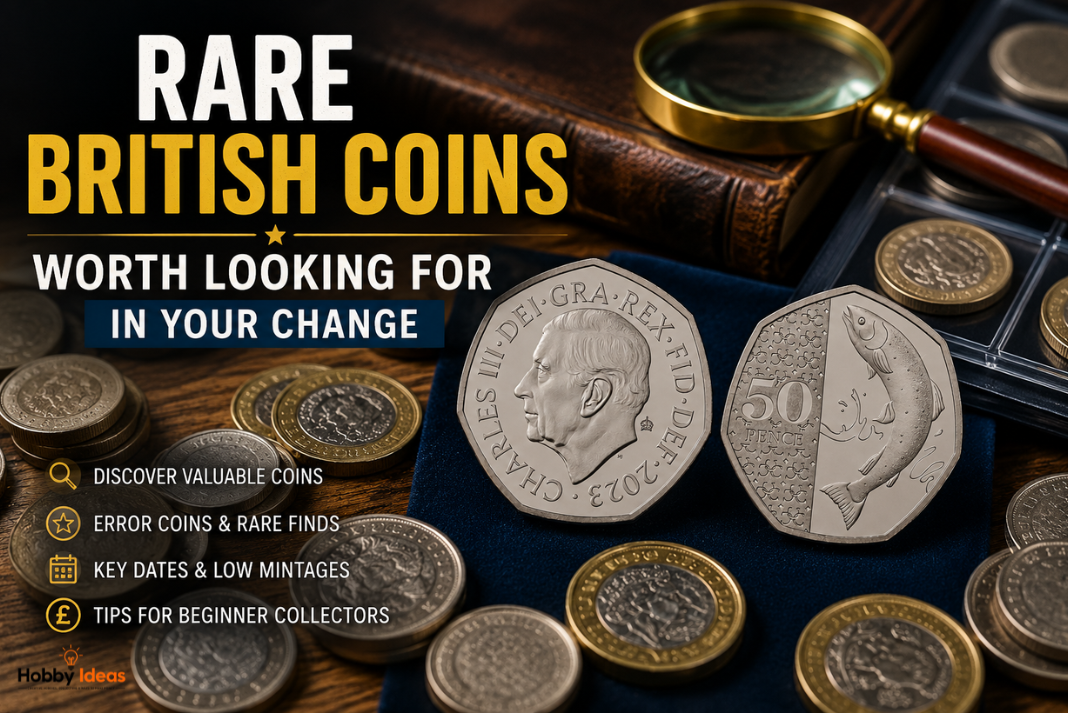
Rare British coins continue to fascinate collectors because they combine history, treasure hunting, and the exciting possibility that something valuable might be hiding in ordinary pocket change.
Admittedly, most people searching through loose coins will not suddenly discover a life-changing fortune beside an old receipt and a slightly melted mint. However, unusual coins genuinely do appear in circulation more often than many people realise.
That possibility alone keeps millions of people checking their spare change regularly.
Why Some British Coins Become Rare
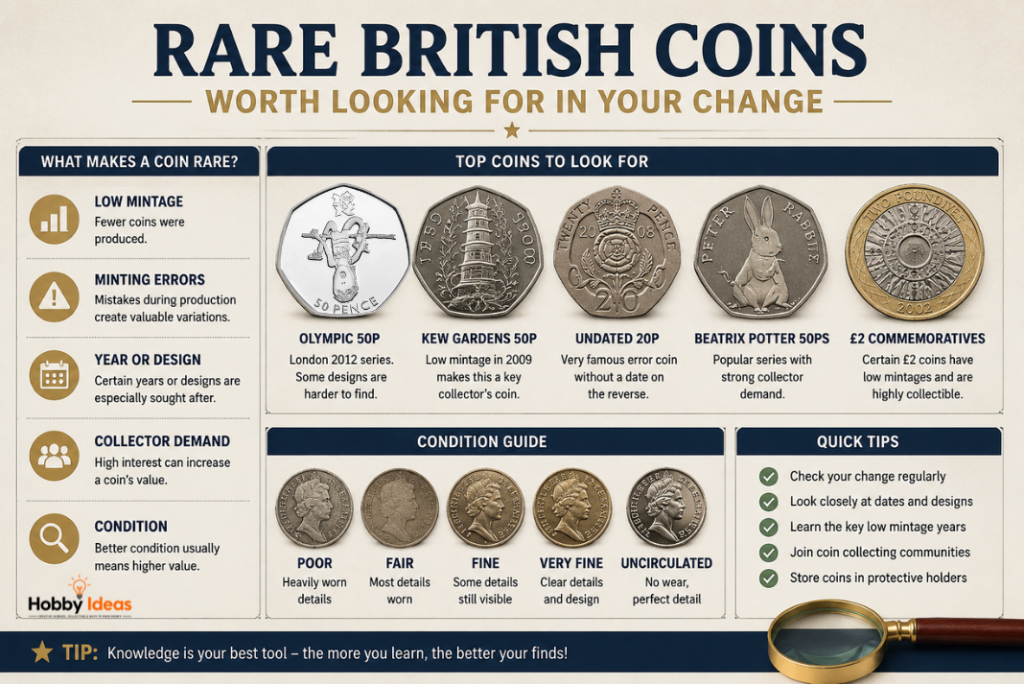
Not every old coin automatically becomes valuable. In fact, rarity usually depends on a combination of factors including:
- Low mintage numbers
- Errors during production
- Limited commemorative releases
- Historical importance
- Collector demand
- Condition
Consequently, two coins that appear almost identical at first glance may have dramatically different values.
According to the Royal Mint collecting guide, commemorative and low mintage coins often attract strong collector interest due to scarcity and design appeal.
The Famous Kew Gardens 50p
The 2009 Kew Gardens 50p remains one of the most talked-about circulating British coins ever released.
Featuring the famous Chinese Pagoda from Kew Gardens, this coin had a relatively low mintage compared to many other 50p releases.
As a result, collectors actively search for it in circulation even today.
Importantly, condition matters. Sharp detail, minimal scratches, and cleaner surfaces generally improve desirability.
However, even circulated examples still generate excitement because finding one unexpectedly feels like winning a tiny treasure hunt.
Olympic 50p Coins Remain Popular
The London 2012 Olympic 50p series introduced many people to coin collecting for the first time.
The collection featured sports-themed designs including: – football – swimming – athletics – judo – wrestling – cycling
Some Olympic coins became significantly harder to find than others due to lower mintages.
Additionally, many people kept these coins as souvenirs rather than spending them, which reduced circulation numbers further.
Today, Olympic 50ps remain highly popular among beginner collectors because they combine history, sport, and modern British design.
Error Coins Fascinate Collectors
Error coins attract enormous interest because mistakes made during production often create unusual and collectible variations.
Common examples include:
- Misaligned strikes
- Incorrect dates
- Off-centre designs
- Missing details
- Double strikes
Importantly, genuine minting errors differ from damage caused after circulation.
For example, scratches, dents, and general wear do not usually count as valuable errors, regardless of how enthusiastically sellers describe them online.
In fact, internet marketplaces regularly feature “extremely rare” coins that somehow appear available in suspiciously large quantities.
If you find minting mistakes especially interesting, you may also enjoy this detailed guide to collecting British error coins, which explains genuine minting errors, famous UK examples, and how to spot real errors versus ordinary damage.
Popular Rare British Coins
| Coin | Year | Why Collectors Like It |
|---|---|---|
| Kew Gardens 50p | 2009 | Low mintage |
| Olympic 50ps | 2011 | Popular themed set |
| Undated 20p | 2008 | Famous mint error |
| Beatrix Potter 50ps | 2016+ | Strong collector demand |
The Undated 20p Coin
The famous undated 20p became one of the UK’s best-known modern coin errors.
During a design transition between old and new reverse styles, some coins accidentally entered circulation without a visible date.
Naturally, collectors immediately became fascinated.
Although examples are not impossibly rare, they remain highly collectible due to the unusual production mistake.
Condition Matters More Than Many Beginners Expect
Collectors often use grading terms such as: – Fine – Very Fine – Extremely Fine – Uncirculated
Generally, coins with: – sharper detail – fewer scratches – stronger lustre – minimal wear
…tend to attract stronger collector interest.
However, beginners should not become obsessed with perfect condition immediately. Even worn coins provide excellent learning opportunities.
Where to Find Rare British Coins
Collectors regularly search for coins through:
- Loose change
- Bank bags
- Coin swap groups
- eBay
- Car boot sales
- Antique fairs
- Inherited collections
Interestingly, some collectors enjoy the hunt as much as the coins themselves.
After all, discovering an unusual coin unexpectedly still creates genuine excitement, even if you immediately spend the next hour googling values.
Should You Clean Coins?
Generally speaking, no.
Cleaning coins incorrectly can damage surfaces and reduce collector appeal significantly.
Many experienced collectors prefer original surfaces, even when coins show age and circulation wear.
Therefore, beginners should avoid polishing, scrubbing, or experimenting with internet “cleaning hacks” involving vinegar and kitchen ingredients.
Coin Collecting Remains One of the Best Beginner Hobbies
Coin collecting works brilliantly for beginners because: – coins are affordable – storage is easy – history is built into every piece – discoveries still happen in circulation
If you are interested in starting a collection yourself, you might also enjoy our guide on how to start coin collecting.
Final Thoughts
Rare British coins continue to capture attention because they combine collecting, history, design, and the excitement of discovery in a surprisingly accessible hobby.
Whether you search through spare change casually or build a serious collection over time, coin collecting offers endless opportunities to learn and explore.
Most importantly, collecting coins encourages curiosity. Even ordinary-looking coins sometimes carry fascinating stories, unusual designs, or unexpected rarity.
So, next time you receive change in a shop, perhaps take an extra look before throwing it into a jar. You never know what might be hiding there.