


Learning how to start coin collecting is much easier than many people imagine. You do not need rare coins, specialist knowledge or an expensive collection to begin. In fact, the hobby often starts with a single interesting coin found in your change, inherited from a family member or picked up during a holiday abroad.
Over time, that first coin can lead to a fascinating journey through history, art, geography and culture. Every collection grows differently because every collector develops their own interests, whether that means British coins, ancient coins, commemoratives or unusual error coins.
If you enjoy discovering the stories behind everyday objects, coin collecting offers a hobby that is affordable, rewarding and capable of lasting a lifetime.
Quick Answer: How Do You Start Coin Collecting?
To start coin collecting, begin by choosing a collecting theme that genuinely interests you, such as British coins, world coins or commemorative issues. Learn how to handle and store coins correctly, buy from reputable sellers and take time to understand grading before making expensive purchases. Most collectors begin with affordable coins and gradually build knowledge alongside their collection.
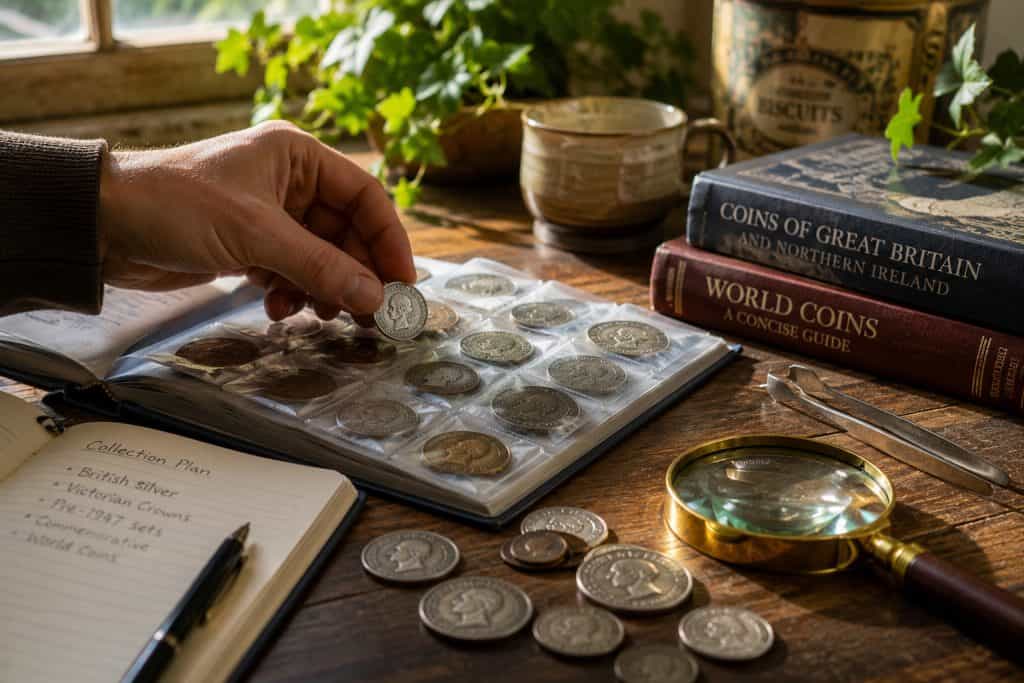
Why Coin Collecting Is Still One of the Best Beginner Hobbies
Coin collecting has remained popular for generations because it offers far more than simply owning old money. Every coin has a story to tell, whether it celebrates an important historical event, marks the reign of a monarch or reflects the culture and economy of the country that issued it.
Unlike many hobbies, getting started does not require a dedicated workshop or costly equipment. Coins take up very little space, collections can grow at your own pace and there is always something new to learn. Some people enjoy searching through pocket change, while others visit antique centres, coin fairs and auctions looking for their next discovery.
Although certain coins become valuable, most collectors quickly discover that the greatest reward comes from the hunt itself. Researching a new find, learning its history and gradually building a collection around your own interests often becomes far more satisfying than simply chasing expensive rarities.
According to the Royal Mint’s guide to coin collecting, the hobby offers an enjoyable way to connect with history while building a collection that reflects your own interests and curiosity.
How to Start Coin Collecting with What You Have
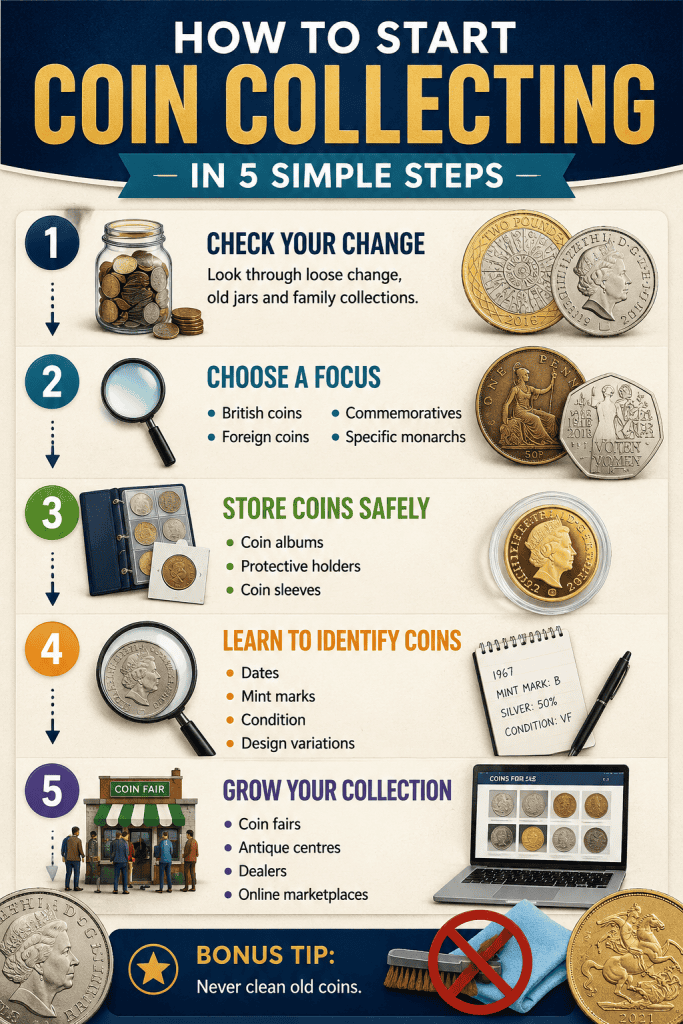
When you first consider how to start coin collecting, the easiest approach is to begin with coins you already own. For example, you can check loose change, old jars, or coins stored at home.
As you sort through your coins, you should look for differences in design, year, and condition. Over time, this simple process helps you understand what makes certain coins more interesting than others.
If you want broader ideas for starting new hobbies, you can explore our hobby ideas and beginner guides to find related interests.
Choose a Focus for Your Collection
Although you can collect almost any coin, choosing a clear direction from the beginning makes your collection easier to organise, research and enjoy as it grows.
British Coins by Date
Build a collection around monarchs, denominations or individual years while learning how British coinage has changed throughout history.
World Coins
Collect coins from different countries and discover fascinating designs, cultures, languages and historical events from around the world.
Commemorative Coins
Choose coins issued to celebrate important anniversaries, royal occasions and historic events, creating a collection full of stories.
Coins by Metal
Explore silver, bronze, copper or gold coins to learn how different metals influence appearance, rarity and collecting appeal.
Choosing a clear collecting theme gives every new coin a purpose, keeps your collection organised and makes the hobby far more rewarding as your knowledge grows.
Where to Find Coins for Your Collection
One of the most enjoyable parts of coin collecting is searching for new additions. Fortunately, there are many ways to find coins without spending a fortune.
Many collectors begin by checking their own change. In addition, family members often have old coin jars, foreign holiday coins, or inherited collections tucked away in drawers and cupboards.
As your interest grows, you may decide to visit coin fairs, antiques centres, car boot sales, auctions, and specialist dealers. Each source offers different opportunities, and importantly, each helps you learn more about the hobby.
Online marketplaces can also be useful. However, beginners should take time to research prices before making purchases. Knowledge remains your most valuable collecting tool.
Basic Tools You Will Need To Start Coin Collecting
When learning how to start coin collecting, you do not need expensive equipment. However, a few basic tools can make a big difference.
To begin with, you should consider:
- A simple coin album or storage folder
- Protective coin holders or sleeves
- A magnifying glass for closer inspection
These items help you protect your coins and, importantly, allow you to examine details more easily.
How to Store Coins Properly
Proper storage protects your collection and helps preserve condition. Although many beginners keep coins loose in boxes or jars, this approach can lead to scratches, wear, and unnecessary damage.
Coin albums, holders, and protective sleeves provide a much safer solution. They also make it easier to organise your collection by date, country, denomination, or theme.
Importantly, avoid handling valuable coins excessively. Where possible, hold coins by their edges and keep fingers away from the surfaces. Small habits like these can make a significant difference over time.
As your collection grows, good storage becomes just as important as finding new coins.
Understanding Coin Condition Takes Time
One of the most rewarding parts of coin collecting is learning to recognise the difference between an ordinary coin and one that has survived in exceptional condition. At first, many coins may appear very similar, but as your experience grows, you will begin to notice small details that make a significant difference.
Collectors gradually learn to look at the amount of wear on the highest parts of a coin, the sharpness of the design, the clarity of the lettering and the overall appearance of the surface. Even two coins of the same date can vary considerably in desirability depending on how well they have been preserved over the years.
It is also important to remember that condition is only part of the story. Rarity, historical interest and demand all influence value, which is why an older coin is not automatically worth more than a newer one. Some modern commemorative issues can be surprisingly sought after, while many very old coins remain affordable because large numbers have survived.
When you first start coin collecting, resist the temptation to focus solely on prices. Instead, spend time handling different coins, comparing examples and learning how experienced collectors describe condition. The knowledge you gain will prove far more valuable in the long term than chasing expensive purchases before you understand what makes them special.
What Makes a Coin Interesting to Collectors?
Many new collectors assume a coin must be valuable to be worth collecting. In reality, interest comes from many different factors.
Some coins attract attention because they are rare. Others become desirable because of unusual designs, historical importance, minting errors, or low production numbers.
For example, a coin linked to a major historical event may appeal to collectors even if it is not particularly valuable. Likewise, commemorative coins often attract interest because they celebrate important people, anniversaries, or achievements.
As you gain experience, you will begin developing your own preferences. Some collectors focus on monarchs, while others specialise in specific periods of history or particular denominations.
Recommended Reading for New Collectors
One of the fastest ways to improve your knowledge is to learn from experienced collectors. A good reference book can help you understand rarity, grading, identification, storage, and the factors that influence value.
Coin Collecting Bible: From Beginner to Expert
This comprehensive guide covers identifying, valuing, preserving, and organising coins while also helping collectors recognise rare finds and avoid common mistakes. For beginners, it provides a useful foundation that can make the hobby far more rewarding.
Common Mistakes to Avoid
While learning how to start coin collecting, many beginners make avoidable mistakes. However, you can prevent these issues with a simple approach.
Firstly, avoid cleaning coins, as this can damage their surface and reduce their value. Instead, store them safely and handle them carefully.
Secondly, do not rush into buying expensive coins. Instead, build knowledge gradually and make informed decisions.
Finally, avoid collecting without a plan. By choosing a focus, you will create a more enjoyable and organised collection.
Final Thoughts
Now that you understand how to start coin collecting, you can begin with confidence. Although it may seem complex at first, starting small and learning step by step makes the process straightforward.
Whether you collect coins for interest, history, or enjoyment, the key is to begin. Over time, your collection will grow, and as a result, your knowledge and appreciation will increase as well.
So, start today with the coins you already have, and enjoy building a collection that is entirely your own.
Continue Your Coin Collecting Journey
If today’s guide has inspired you to start your own collection, our Coin Collecting Essentials collection brings together many of the books, albums, magnifiers and beginner-friendly accessories featured throughout HobbyIdeas. Everything has been organised to help new collectors build knowledge, care for their coins and enjoy the hobby from day one.
Think of it as an extension of HobbyIdeas rather than a shop – a carefully curated collection of equipment designed to help you get even more from your coin collecting journey.
Browse the HobbyIdeas Coin Collecting Essentials Collection →
Disclosure: As an Amazon Associate, HobbyIdeas may earn a small commission from qualifying purchases made through our Amazon collections, at no extra cost to you.
What to Explore After Coin Collecting
Many collectors start with coins and then gradually branch out into other collecting hobbies. The skills you learn while identifying coins, researching history, and building a collection often transfer naturally into other areas of collecting.
You may also enjoy: