

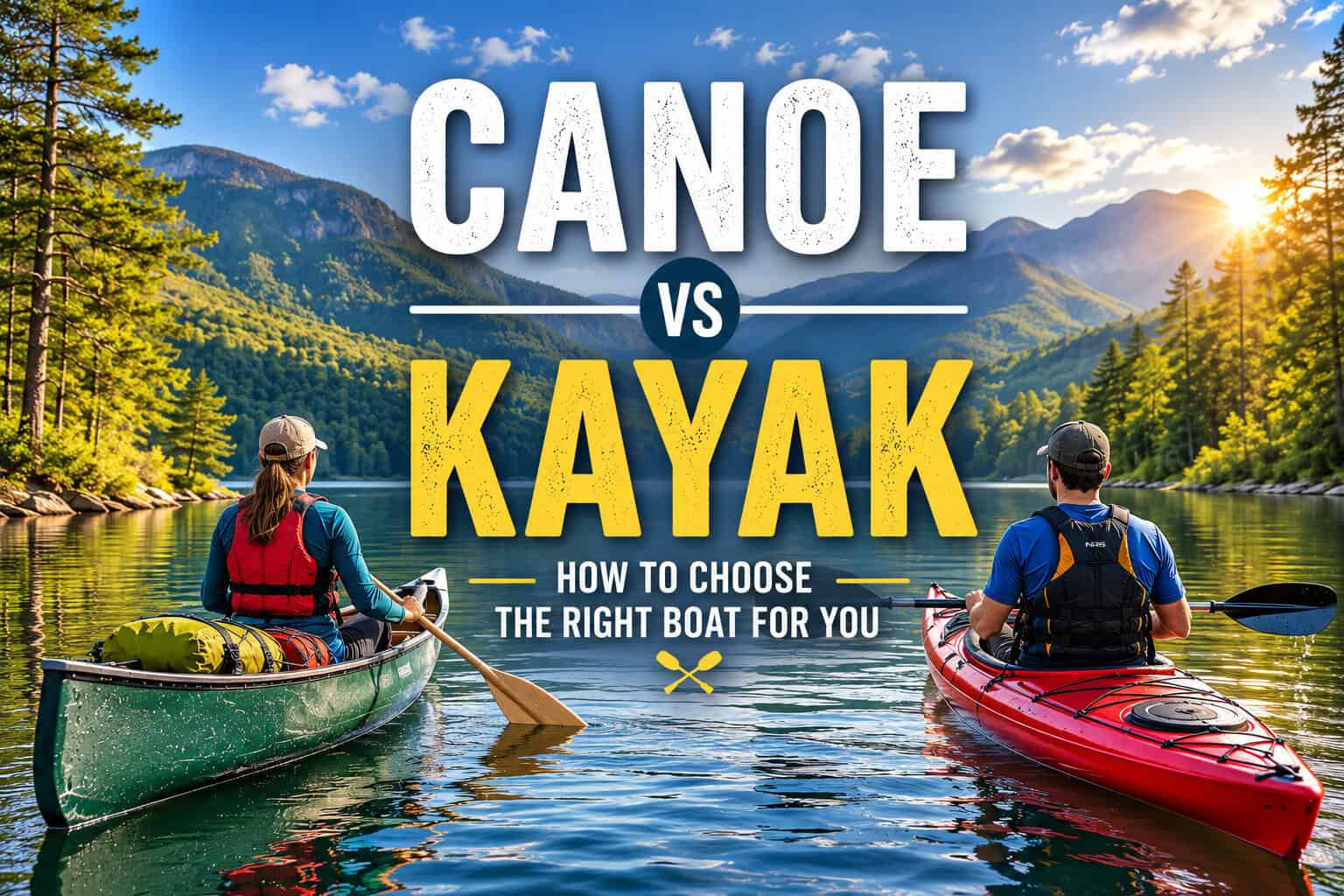
Think about standing beside a calm lake on a warm summer morning. It is easy to see why so many people decide they want to get out on the water. The only problem is deciding how. If you’ve been researching canoe vs kayak, you’ve probably discovered plenty of conflicting advice. Some people insist kayaks are easier, while others would never swap their canoe for anything.
The truth is that neither is automatically better. Instead, each offers a different experience. Choosing the right one depends on how you want to spend your time on the water. The decision depends on whether you plan peaceful family outings, adventurous river trips or quiet afternoons exploring hidden lakes.
Quick Answer: Canoe vs Kayak
If you’re comparing canoe vs kayak as a complete beginner, kayaks are usually easier to paddle solo. They are usually easier to steer and generally more confidence-inspiring on sheltered water. Canoes offer far more carrying capacity. Canoes make excellent family boats and are often the better choice for camping trips, fishing and relaxed days exploring rivers.
Fortunately, both sports are surprisingly easy to learn. You do not need Olympic-level fitness or years of experience before enjoying your first paddle. Many people discover that an afternoon on calm water is one of the most relaxing hobbies they have ever tried.

Canoe vs Kayak: What’s the Difference?
At first glance, both boats seem remarkably similar. They float, they use paddles and they both allow you to explore places impossible to reach on foot. However, the similarities end there.
A canoe is generally open on top, where paddlers sit on raised seats or kneel while using a single-bladed paddle. A kayak has a lower profile with an enclosed cockpit. The Kayak paddler sits with legs extended while using a double-bladed paddle.
These design differences completely change the paddling experience.
🚣 Canoe
- Open design
- Single-bladed paddle
- Excellent carrying capacity
- Ideal for families
- Perfect for camping gear
- Easy to enter and leave
🛶 Kayak
- Enclosed cockpit
- Double-bladed paddle
- Fast and efficient
- Excellent for solo paddling
- Tracks well in wind
- Sportier feel
“The best boat isn’t necessarily the fastest or the most expensive. It’s the one that makes you want to head back onto the water every weekend.”
HobbyIdeas • Paddling Inspiration
Which Is Easier for Beginners?
If you’ve never picked up a paddle before, you’re probably wondering which boat is likely to have you smiling rather than splashing within the first hour.
For many newcomers, that honour goes to the kayak. Sitting low in the boat creates an immediate feeling of security, while the double-bladed paddle naturally keeps you moving forwards with surprisingly little effort. After just a few minutes, most beginners find themselves concentrating less on controlling the boat and more on enjoying the journey.
Canoes ask a little more of you at first. Learning to paddle efficiently with a single-bladed paddle takes a little practice, particularly if you’re travelling solo. However, that gentle learning curve is also part of the appeal. As your confidence grows, so does the satisfaction of gliding quietly across the water using smooth, unhurried paddle strokes.
The encouraging news is that neither boat is difficult to learn. Most beginners discover that the first few minutes feel unfamiliar. The first hour feels exciting and, by the end of the day, they’re already planning where to paddle next.
If you’re looking for the quickest route to feeling confident, a recreational kayak probably has the edge. If you’re happy to spend a little longer learning a traditional skill that rewards patience, canoeing is equally welcoming and every bit as enjoyable.
Canoe vs Kayak for Stability
Ask someone who has never been paddling what worries them most and you’ll often hear the same answer: “I don’t want to end up in the water.”
Fortunately, modern recreational boats are designed with beginners very much in mind. Whether you choose a canoe or a kayak, today’s entry-level models feel far more reassuring than many newcomers expect, especially on calm lakes, gentle rivers and sheltered waterways.
Wide recreational kayaks inspire confidence by keeping you seated low in the boat, creating a secure feeling from your very first paddle strokes. Canoes achieve stability in a different way. Their broad, flat hulls provide a dependable platform that makes them popular with families, anglers, wildlife photographers and anyone who enjoys taking things at a relaxed pace.
The biggest difference isn’t usually while you’re paddling, it’s what happens when you stop. A canoe offers the freedom to shift position, reach for a camera, make a cup of tea or rummage through your camping gear with relative ease. A kayak, by comparison, encourages you to stay comfortably seated and enjoy the journey from one fixed position.
Whichever you choose, the fear of tipping over usually disappears surprisingly quickly. Within an hour or two, most beginners stop thinking about staying upright and start noticing the scenery instead.
Canoe vs Kayak for Camping Adventures
Imagine paddling along a quiet river as the afternoon sun begins to drop behind the trees. Around the next bend you discover a peaceful riverside campsite, pull the boat onto the bank and unpack everything. A tent, sleeping bag, camping stove, folding chair and enough food for a leisurely dinner all emerge from the boat with room to spare.
That is exactly where a canoe comes into its own. The open design makes loading and unloading bulky equipment wonderfully straightforward, while the generous carrying capacity means you rarely have to choose between comfort and practicality. Many paddlers find that a canoe quickly becomes more than simply a way of travelling. For many, it becomes part of the camping experience itself.
Touring Kayaks
Touring kayaks can certainly tackle overnight adventures and are used successfully by experienced expedition paddlers around the world. However, they demand a little more organisation. Every piece of equipment needs to fit neatly into storage hatches, encouraging a lighter, more minimalist style of travel that many kayakers come to enjoy.
Neither approach is right or wrong. If your idea of adventure is loading up plenty of gear before disappearing for a relaxed weekend on the water, a canoe probably offers the easier option. When enjoying travelling light and covering longer distances each day, a touring kayak may prove the more rewarding companion.
If that kind of trip appeals, our guide to Wild Camping Cooking is full of ideas for preparing satisfying meals after a day spent exploring Britain’s waterways.
Exercise That Doesn’t Feel Like Exercise
One reason so many people stick with paddlesports is that they rarely feel like a workout. Hours can pass exploring a winding river or crossing a quiet lake without ever thinking about calories, step counts or gym routines.
Every paddle stroke gently works your shoulders, back, arms and core, while your balance constantly makes small adjustments that strengthen muscles without feeling repetitive. By the time you arrive back at the launching point, you’ve often exercised far more than you realised.
Kayaks generally encourage a slightly quicker, more energetic paddling rhythm. Kayaks are a popular choice for those who enjoy covering longer distances. Canoes, meanwhile, invite a slower pace where the journey itself becomes the reward. Canoeing offers plenty of opportunities to pause for photographs, wildlife watching, or simply soaking up the scenery.
Whether you choose a canoe or a kayak, the greatest benefit may be something far harder to measure. A few peaceful hours on the water have a remarkable way of clearing the mind, leaving everyday stresses back on the shoreline where they belong.
Sharing the Water with Wildlife
One of the greatest pleasures of paddlesports has very little to do with the boat itself.
Gliding quietly across the water allows you to experience the countryside from an entirely different perspective. Places that feel busy from the footpath suddenly become peaceful, while stretches of river hidden behind reeds and overhanging trees reveal a world that many people never realise exists.
A kingfisher flashes electric blue across the water before disappearing around the next bend. A heron stands perfectly still in the shallows, seemingly untroubled by your gentle approach, while dragonflies skim across the surface only inches from your paddle.
Both canoes and kayaks offer unforgettable wildlife encounters. However, if photography is part of the attraction, many paddlers appreciate the extra space a canoe provides for cameras, binoculars and the occasional flask of coffee while waiting for the perfect shot.
Keeping Your Essentials Dry
Every paddler remembers the first time they opened a rucksack to find a soaked sandwich, damp camera or waterlogged spare jumper. It usually only happens once.
Whether you’re setting off for a gentle afternoon paddle or spending the whole day exploring a winding river, keeping your valuables dry quickly becomes second nature. A good dry bag protects everything from phones and cameras to lunch and spare clothing, allowing you to enjoy the water without worrying every time a paddle drips or a small wave splashes over the side.
Experienced canoeists and kayakers often regard a waterproof dry bag as one of the most useful pieces of equipment they own. It isn’t the most exciting purchase, but it’s almost always the one they’re glad they packed.
If you’re looking for a reliable option, the waterproof dry bag we researched while writing this guide can be found here: 20L Waterproof Dry Bag.
Which Should Most Beginners Buy?
If you’re paddling mainly on your own and want something easy to transport, a recreational kayak is probably the best starting point.
If you regularly paddle with family members, children or dogs, or dream of carrying picnic baskets and camping equipment, a canoe may suit your lifestyle much better.
Neither decision is permanent. Many experienced paddlers eventually own both because each offers something completely different.
Start with the Right Equipment
One of the easiest ways to enjoy your first experiences on the water is by choosing equipment designed specifically for beginners. Stable recreational kayaks are forgiving, comfortable and confidence inspiring, allowing you to concentrate on learning good paddling technique rather than constantly correcting the boat.
Browse Regarded Paddling Essentials
Every paddler develops a few favourite pieces of kit that make time on the water safer, more comfortable and more enjoyable. We’ve brought together many of those essentials into one carefully selected collection, making it easier to choose reliable equipment whether you’re canoeing, kayaking or paddleboarding.
Browse our Paddling Essentials collection to see the equipment we recommend for your next adventure.

Good Habits Make Better Adventures
Spend any time around experienced paddlers and you’ll notice something interesting. They all have their own favourite rivers, preferred boats and well-worn paddles, yet they almost always have one thing in common before leaving the shore.
They put on a buoyancy aid.
Comfort Brings Confidence on the Water
Ask experienced paddlers what makes the biggest difference during a day on the water and few will mention the boat first. More often, they’ll talk about feeling comfortable, moving freely and knowing they’re properly equipped before the first paddle stroke.
A well-fitting buoyancy aid soon becomes something you barely notice. Instead of feeling bulky or restrictive, modern designs allow plenty of freedom for paddling. While providing useful features such as storage pockets, an emergency whistle and adjustable straps for a secure fit. Many also include space for a hydration pack, making them ideal for longer days exploring rivers and lakes.
If you’re looking for the same buoyancy aid we researched while putting this guide together, you can find it here: Owntop Buoyancy Aid with Hydration Pack.
Not because they expect to capsize, but because good preparation quickly becomes part of the enjoyment. Knowing you’re properly equipped allows you to relax, concentrate on your surroundings and simply enjoy being on the water.
Whether you’re drifting quietly beneath overhanging willow trees, crossing a peaceful lake or stopping for lunch beside a secluded riverbank, confidence comes from good habits rather than good luck.
If your paddling adventures eventually lead to overnight trips, you’ll also enjoy our guide to How to Go Wild Camping Legally, which explains how to plan responsible outdoor adventures in the UK.
Frequently Asked Questions
Final Thoughts on Canoe vs Kayak
When comparing canoe vs kayak, there is no universal winner because both offer rewarding experiences in different ways.
If speed, solo paddling and straightforward handling appeal most, a kayak is likely to become your favourite companion on the water.
If relaxed family adventures, camping expeditions and carrying plenty of equipment sound more attractive, a canoe could provide decades of memorable outdoor experiences.
The important thing is simply getting out on the water. Once you hear nothing but, gently dipping paddles and the sound of water your’e hooked. You’ll quickly understand why paddlesports become lifelong hobbies.
Further Reading: For paddling advice, safety guidance and information about courses and local clubs, visit Paddle UK.
Disclosure: HobbyIdeas may earn a small commission from qualifying purchases made through affiliate links. This never affects our editorial independence or the price you pay.