

How to go wild camping legally is one of the most important questions to ask before you pack a tent, choose a quiet hillside and head into the countryside for the night.
Wild camping sounds wonderfully simple. You carry what you need, walk away from the noise, pitch a small tent under a wide sky and wake up with the world still quiet around you. At its best, it feels peaceful, adventurous and beautifully uncomplicated.
However, the legal side matters. In the UK, wild camping rules change depending on where you are. England, Wales, Scotland, Northern Ireland and Dartmoor all have different rules, customs and restrictions. Therefore, a little planning can make the difference between a respectful night outdoors and an awkward conversation with a landowner.
This guide explains how to go wild camping legally, where permission matters, what Dartmoor allows, how Scotland differs, and how to camp responsibly without damaging the places that make wild camping so appealing.
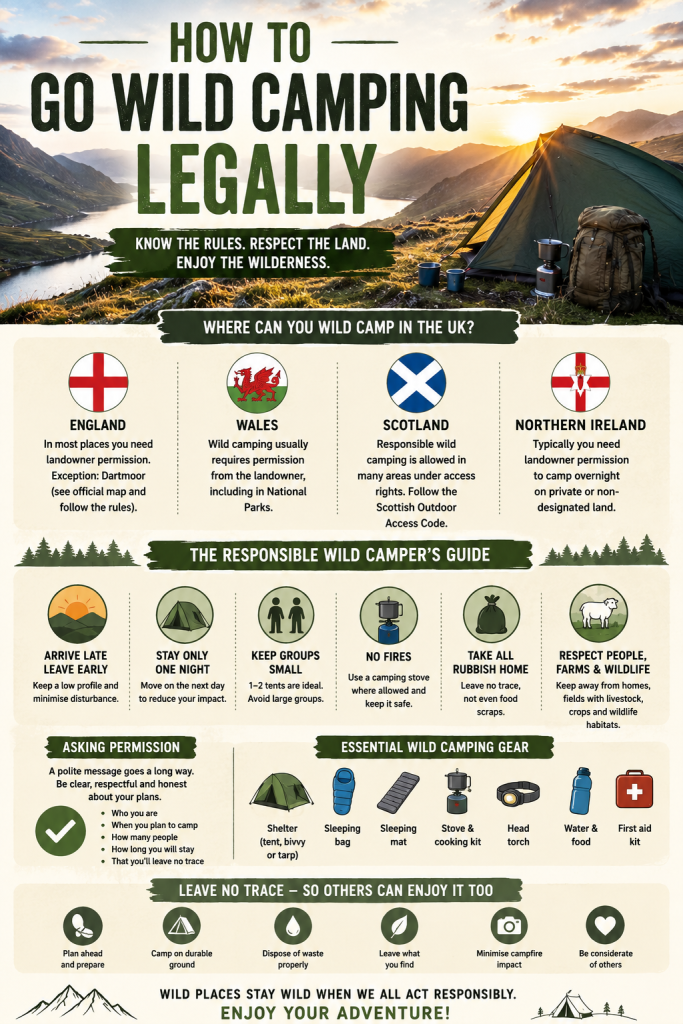
Quick answer: In most of England, Wales and Northern Ireland, you need landowner permission to wild camp legally. Scotland allows responsible wild camping in many places under access rights. Dartmoor allows backpack camping in specific permitted areas, but you must check the official camping map before you go.
Quick Answer – What Is Wild Camping?
Wild camping means sleeping outside away from an organised campsite. Usually, it involves a lightweight tent, tarp, hammock or bivvy bag. Unlike campsite camping, you will not normally have toilets, showers, bins, electric hook-ups or marked pitches.
That simplicity creates the appeal. You carry your shelter, food, water, warm clothing and safety gear. Then, you leave the place exactly as you found it.
However, wild camping does not mean parking in a lay-by, setting up a large family tent beside a road, lighting a fire, playing music and treating the countryside like a free campsite. That kind of behaviour often gets called fly camping, and it causes many of the problems that make landowners, farmers and national parks nervous.
Responsible wild camping looks much quieter. You arrive late, leave early, keep your group small, stay out of sight, avoid fires and take every scrap of rubbish home.
One unexpected benefit of wild camping is the opportunity to experience truly dark skies. Away from towns, streetlights and busy roads, many campers discover just how impressive the night sky can be. On a clear evening, constellations, planets, meteor showers and even the Milky Way may become visible. If that aspect of camping appeals to you, our guide to stargazing as a hobby explains how to get started and what you can expect to see.
Is Wild Camping Legal in England?
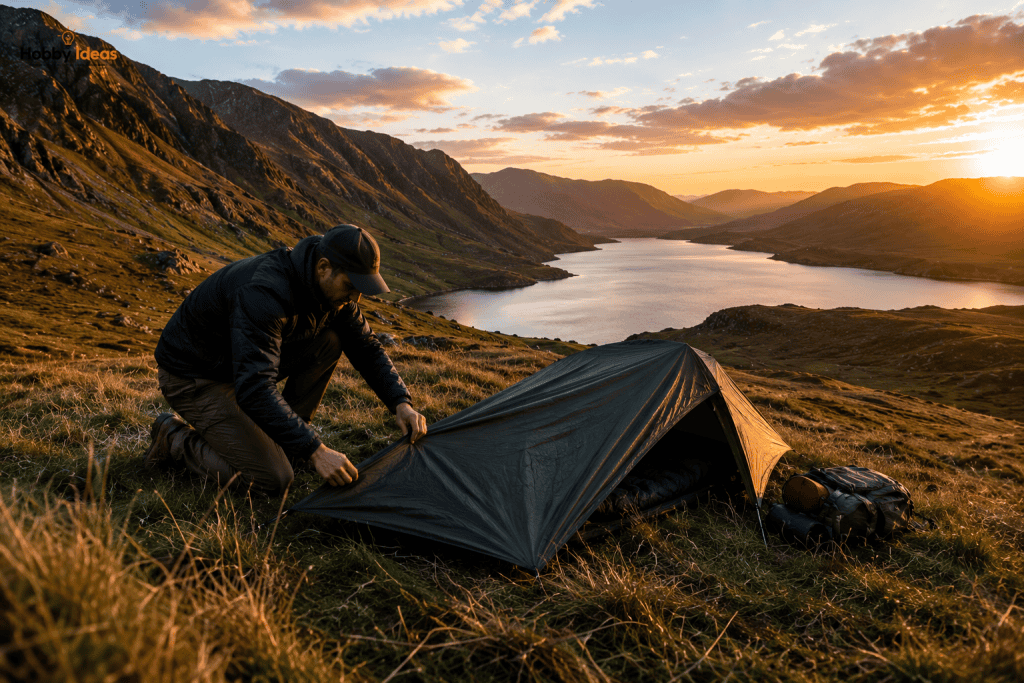
In most of England, wild camping is not a general legal right. Even on open access land, the right to walk does not usually include the right to camp overnight.
Therefore, if you want to wild camp legally in most parts of England, you should get permission from the landowner first.
There is one major exception: Dartmoor. After a long legal challenge, backpack camping remains allowed in certain parts of Dartmoor National Park. However, this does not mean you can camp anywhere on Dartmoor. You still need to use the official camping map and follow the local backpack camping rules.
If you enjoy outdoor hobbies more generally, wild camping can sit naturally alongside walking, birdwatching, nature watching and other countryside interests. You may also enjoy our wider guide to outdoor hobbies for adults.
Is Wild Camping Legal in Wales?
In Wales, wild camping usually requires landowner permission. This includes national parks such as Eryri, formerly Snowdonia, and the Brecon Beacons, now known as Bannau Brycheiniog.
Many people do discreetly camp in remote upland areas, especially during long-distance walks. However, common practice does not equal automatic legal permission.
So, if you want to stay on the right side of the law, ask first where possible. Some farms, estates and rural businesses offer simple low-facility camping that feels close to wild camping while keeping everything clear and above board.
Is Wild Camping Legal in Scotland?
Scotland has much broader outdoor access rights than England and Wales. In many areas, responsible wild camping forms part of those access rights.
However, this freedom comes with responsibilities. You still need to camp in small numbers, stay away from houses, avoid enclosed fields with crops or livestock, move on after a short stay and leave no trace.
Some areas also have local restrictions. For example, parts of Loch Lomond and The Trossachs National Park use camping management zones during busier months. Therefore, you should always check the local rules before travelling.
Scotland offers some of the best wild camping opportunities in the UK, but it also expects campers to behave with care, restraint and respect.
Is Wild Camping Legal in Northern Ireland?
In Northern Ireland, wild camping usually requires permission from the landowner. As with England and Wales, there is no broad legal right to pitch a tent wherever you like.
However, some walking routes, forests and rural areas offer designated camping spots or basic camping options. These can provide a good compromise if you want a wilder experience without legal uncertainty.
What About Dartmoor?
Dartmoor deserves its own section because it often causes confusion.
Backpack camping is allowed in some areas of Dartmoor, but only under specific conditions. To go wild camping legally, you must carry your own equipment as part of a walking trip, use a small tent, stay for one or two nights, keep away from roads and settlements, and leave no trace.
You should always check the official Dartmoor backpack camping map before you travel, because not every part of Dartmoor allows camping.
Dartmoor Backpack Camping Basics
Use a small lightweight tent, carry everything in your rucksack, stay only one or two nights, camp in permitted areas, avoid roads and settlements, and never light fires.
Dartmoor is not a free-for-all. It is a fragile landscape with livestock, rare habitats, working farms, archaeology and weather that can turn quickly. As a result, responsible behaviour matters enormously.
How to Ask Permission to Wild Camp
Asking permission may feel awkward at first, but many landowners appreciate honesty. A polite request often works better than sneaking onto land and hoping nobody notices.
Keep the message short and clear. Explain who you are, when you hope to camp, how many people will attend and how long you plan to stay. Also, make it clear that you will use a small tent, avoid fires, take rubbish home and leave early.
Simple Permission Request
Hello, I am planning a quiet walking trip in the area and wondered whether you allow responsible one-night wild camping on your land. I would use a small backpacking tent, arrive late, leave early, avoid fires and take all rubbish home. I completely understand if this is not possible, but I wanted to ask properly rather than assume. Many thanks.
Farm shops, rural pubs, campsites, local Facebook walking groups and village noticeboards can sometimes help you identify who owns land. Additionally, some farms already offer basic pitches for walkers.
Once you’ve found the perfect place to spend the night, there’s no reason to survive on instant noodles alone. With a little preparation, it’s surprisingly easy to enjoy satisfying one-pot meals outdoors. Our wild camping cooking guide explains how to pack simple ingredients and create delicious backpacking meals with minimal equipment.
How to Go Wild Camping Legally Without Stress
The safest route is simple: choose a place where wild camping is clearly allowed, get permission, or use a nearly-wild campsite.
Nearly-wild campsites can feel like a brilliant middle ground. You still get quiet fields, dark skies and simple surroundings, yet you avoid legal uncertainty. Often, these sites provide basic toilets, water and clear booking terms while keeping the experience rustic.
This can work especially well for beginners. You can test your tent, sleeping bag, cooking kit and night-time confidence before heading somewhere more remote.
If you are still choosing your next outdoor interest, our guide to how to start a hobby may help you find a manageable way into camping, walking or other countryside activities.
Of course, wild camping is only part of the adventure. Many campers also enjoy exploring nearby rivers, lakes and canals by paddle. If you’re considering taking up another outdoor hobby alongside camping, our guide to canoe vs kayak for beginners explains the differences between the two and will help you decide which craft best suits your style of adventure.
The Responsible Wild Camping Code
Legal permission matters, but behaviour matters just as much. Even where camping is allowed, poor behaviour can damage the landscape and create problems for everyone who comes after you.
So, treat wild camping as a privilege. Keep it small, quiet and temporary.
Arrive Late and Leave Early
Responsible wild campers usually pitch near dusk and leave soon after sunrise. This keeps your presence discreet and reduces disturbance.
Stay Only One Night Where Possible
A short stay limits impact. If you want to spend several nights outdoors, move on each day or use proper campsites along the route.
Keep Your Group Small
One or two tents create far less impact than a large group. Large gatherings look more like a campsite and often attract complaints.
Avoid Fires
Open fires can scorch grass, damage peat, spread quickly and leave ugly marks. Use a small stove where allowed, place it safely, and never cook directly on fragile ground.
Take All Rubbish Home
Pack out everything, including food scraps, tissues, packaging and broken equipment. If you carried it in, you can carry it out.
Camp Away from Homes, Farms and Livestock
Give people privacy. Avoid farmyards, barns, enclosed fields, crops, livestock, roads and historic sites.
Leave No Trace
When you leave, nobody should know you slept there. Flattened grass will recover, but litter, fire scars and damaged walls leave a lasting mark.
What Gear Do You Need for Legal Wild Camping?
🏕 Sleep Well
A lightweight tent or bivvy, a warm sleeping bag and a comfortable sleeping mat will make your first night outdoors far more enjoyable.
🥾 Stay Safe
Pack waterproof clothing, a reliable head torch, a paper map and a simple first-aid kit so you’re prepared if conditions change.
🎒 Pack Smart
Carry enough food and water for your trip, along with a power bank to keep your phone charged in case of emergencies.
Choose a Tent Designed for Backpacking
One of the biggest mistakes beginner wild campers make is carrying a tent designed for family campsites. Large tents are heavier, harder to carry and often stand out in the landscape.
Instead, look for a lightweight backpacking tent that packs down small and can cope with changing weather. For example, the Vango Hydra 200 Lightweight 2 Person Tent is designed specifically for hiking and backpacking trips. Its compact design, strong weather protection and lightweight construction make it well suited to responsible wild camping where keeping a low profile matters.
Whatever tent you choose, practise pitching it at home before your first trip. A windy hillside is not the best place to learn how your shelter works.
Then, test everything before your first proper night outside. Put the tent up at home. Check your torch. Try your stove. Pack your rucksack and walk around with it. These small steps can prevent a miserable night later.
Beginner tip: Your first wild-style camp does not need to feel heroic. A simple legal pitch close to a footpath, with a short walk in and an easy route out, can teach you more than an overambitious mountain trip.
Safety Matters More Than Romance
Wild camping can feel romantic in photographs, but real nights outdoors can bring wind, rain, cold, insects, uneven ground and strange noises in the dark.
Therefore, check the forecast carefully. Tell someone where you are going. Carry enough water. Keep your phone charged. Know your route before you leave. Also, avoid pitching beside rivers, cliff edges, unstable slopes or places that could flood.
In remote areas, paper maps still matter. Phone signal can vanish exactly when you need it most.
“The best wild camping trips aren’t the ones where you take the biggest risks. They’re the ones where good preparation lets you relax and enjoy the experience.”
HobbyIdeas.co.uk • Outdoor Adventures
Do Not Rely Entirely on Your Phone
Modern smartphones are useful, but batteries fail, screens break and signal can disappear surprisingly quickly in remote areas. For that reason, many experienced walkers still carry a paper map as a backup.
A simple accessory such as the Aquapac Waterproof Map Holder can protect maps, route notes and emergency information during wet weather. It weighs very little, costs far less than replacing damaged navigation equipment and helps ensure important information remains readable when conditions deteriorate.
Even if you mainly use digital navigation, carrying a protected paper map remains one of the simplest ways to improve your safety outdoors.
Wild Camping Mistakes to Avoid
Many beginner mistakes come from treating wild camping like ordinary campsite camping.
Avoid turning up with a huge tent, camping chairs, speakers, crates of drink, disposable barbecues and bags of loose food. That setup may suit a campsite, but it does not suit a quiet wild camp.
Also, avoid camping too close to roads. If you can see your car, you probably have not walked far enough for a proper wild camping experience.
Finally, never assume that remote land has no owner. Almost all land belongs to someone, even when it looks empty.
Can You Wild Camp on Beaches?
Beach camping can feel tempting, especially during summer. However, it brings its own legal and safety issues.
Many beaches have local bylaws, private ownership, protected wildlife areas or restrictions on overnight stays. Tides also create serious risk. A safe-looking beach at 8pm may look very different at 2am.
If you want to camp near the coast, use an official campsite, ask permission, or research local rules carefully before setting off.
Can You Sleep in Your Car Instead?
Sleeping in a car may sound simpler, but it still depends on where you park. Car parks, lay-bys, private tracks and beauty spots often have restrictions.
Some car parks ban overnight stays. Others allow campervans but not tents. Meanwhile, private land still requires permission.
So, check signs, use official overnight parking where available and avoid blocking gates, tracks or farm access.
Why Legal Wild Camping Protects the Hobby
Wild camping has a fragile reputation. Most responsible campers cause no trouble at all. However, a small number of careless visitors can create litter, fires, noise, damaged land and angry landowners.
That matters because access depends on trust. When campers behave well, landowners, national parks and local communities have fewer reasons to object. When people leave mess behind, restrictions often follow.
Therefore, learning how to go wild camping legally protects more than one night outdoors. It protects the future of the hobby.
Final Thoughts
Learning how to go wild camping legally does not remove the magic. In fact, it makes the experience better because you can relax, knowing you have chosen your spot properly and treated the countryside with respect.
Wild camping at its best is quiet, simple and careful. You carry what you need, sleep lightly on the land, watch the morning arrive and leave without a trace.
So, check the law, ask permission where needed, follow local guidance and keep your camp small. The reward is one of the most memorable outdoor hobbies you can try.