

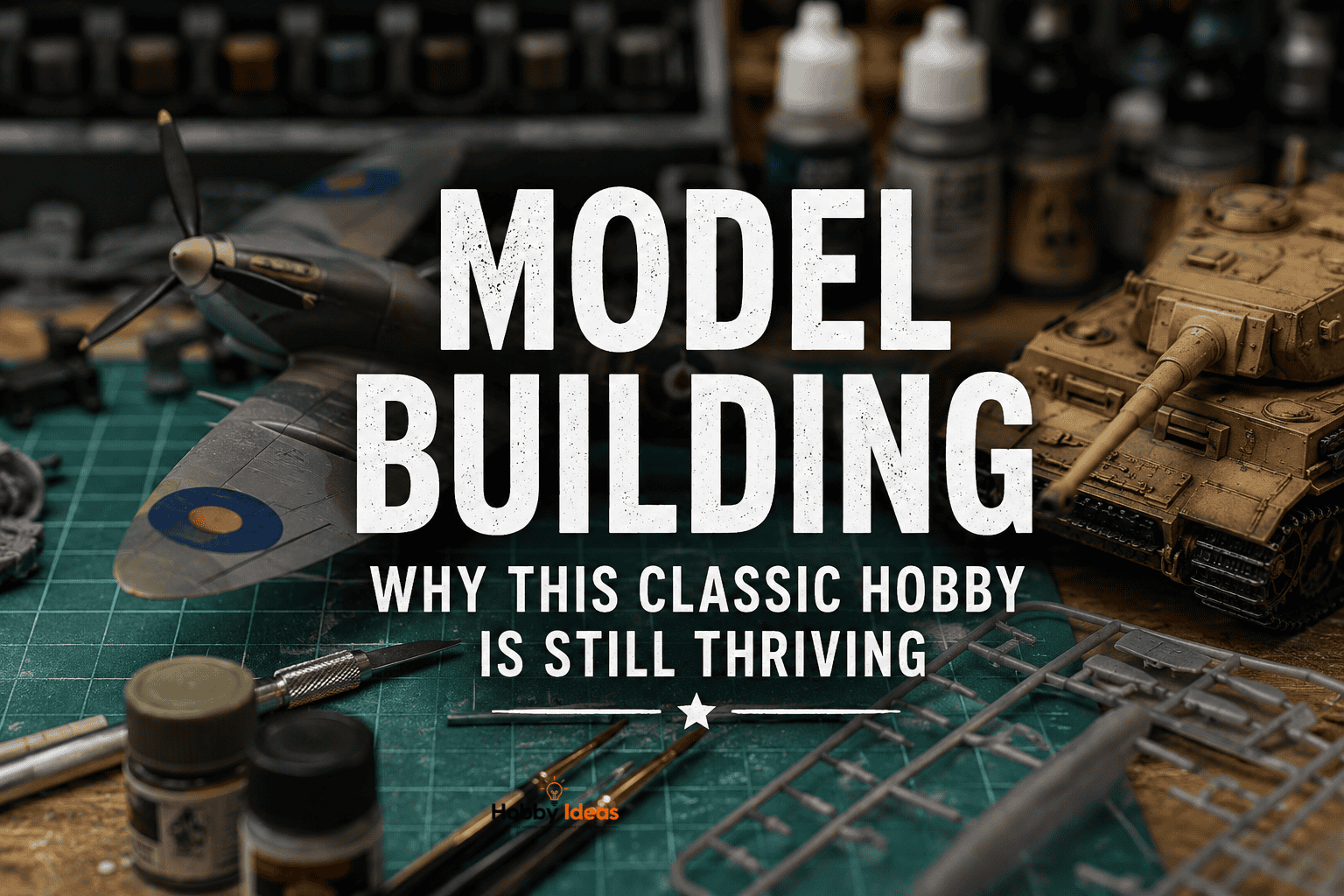
Model building is one of those wonderfully absorbing hobbies that transforms a collection of small parts into something extraordinary. Whether you dream of recreating a legendary Spitfire, assembling a classic sports car or building a magnificent sailing ship, every project offers a satisfying combination of creativity, patience and craftsmanship.
There is something special about opening a new model kit. Inside the box lies the promise of a finished miniature, but also an enjoyable journey of discovery. You learn how things fit together, develop practical skills and gradually watch your creation take shape.
And although model building has a long tradition, it remains a remarkably accessible hobby. Modern kits range from simple snap-together models to elaborate projects with hundreds of components, so there is something to suit almost every age, interest and ability.
Model building involves assembling miniature representations of aircraft, vehicles, ships, buildings, figures and other subjects. Beginners can start with simple plastic or wooden kits, while experienced enthusiasts often enjoy detailed scale models requiring painting, gluing and specialist finishing techniques.
Best for: Creative people, history enthusiasts, collectors and anyone who enjoys practical projects.
Difficulty: Beginner to advanced, depending on the kit.
Typical starting budget: Around £20–£50 for a straightforward project with basic equipment, although costs vary considerably.
Why Model Building Is Such a Rewarding Hobby
Unlike hobbies that produce instant results, model building rewards careful progress. Each completed stage brings its own satisfaction, whether you have fitted the cockpit of an aircraft, assembled a miniature engine or applied the final markings to a racing car.
It also offers a welcome opportunity to slow down. A quiet afternoon spent painting tiny details or fitting components together can provide a pleasant change from screens and everyday routines.
🎨 Creative satisfaction
Choose colours, explore finishes and add personal touches that make your finished model unique.
🧠 Focus and concentration
Working through instructions and solving small construction challenges encourages patience and attention to detail.
📚 History and discovery
Aircraft, ships, vehicles and historic buildings often inspire fascinating research into their real-world stories.
🏠 A hobby for home
Many projects need little more than a comfortable table, good lighting and somewhere safe to store your work.
For some enthusiasts, the attraction lies in historical accuracy. Others enjoy experimenting with colours and creating imaginative interpretations. There is no single correct way to enjoy the hobby.
Popular Types of Model Building
One of the greatest attractions of model building is its variety. Whatever captures your imagination, there is probably a kit waiting to be discovered.
✈️ Model Aircraft
From Second World War fighters to modern jets and civilian aircraft, aviation modelling combines history, engineering and intricate craftsmanship. Airfix remains a familiar name among British enthusiasts.
🏎️ Model Cars and Motorcycles
Classic sports cars, racing machines, rally vehicles and motorcycles offer opportunities to recreate beautiful bodywork, engines and detailed interiors.
🚢 Model Ships
Build everything from sailing vessels and historic warships to modern naval craft. Larger projects can provide months of enjoyable construction.
🚂 Model Railways
Combine miniature locomotives, buildings, landscapes and scenery to create an entire world. Many railway enthusiasts enjoy the hobby for decades.
🤖 Science Fiction and Gundam
Robots, spacecraft and fictional vehicles offer exciting designs. Many modern kits feature coloured snap-fit parts that reduce the need for glue or paint.
🏡 Wooden Models and Miniatures
Mechanical wooden puzzles, miniature houses and architectural models offer an alternative to traditional plastic kits.
Aircraft modelling is particularly appealing if you enjoy military or aviation history. Meanwhile, car modelling attracts collectors who appreciate automotive design, and miniature buildings appeal to those who enjoy architecture and decorative crafts.
How to Choose Your First Model Building Kit
Choosing the right project can make the difference between a thoroughly enjoyable introduction and a frustrating first attempt. Fortunately, a few simple considerations will help you find something suitable.
Start With a Manageable Difficulty Level
Manufacturers often provide age recommendations, skill ratings or information about the number of components. These are useful starting points, although difficulty ratings vary between brands.
For your first project, choose something with straightforward assembly and a modest number of parts. You can always progress to larger, more complicated models once you feel confident.
Understand Model Scales
Model scales describe how much smaller a miniature is than the original object. For example, a 1:72 aircraft is 72 times smaller than the real aircraft, while a 1:24 model is 24 times smaller.
Larger scales generally produce bigger finished models, often allowing more visible detail. However, they may also require additional workspace, equipment and display space.
Decide Whether You Want to Paint
Some model kits come with pre-coloured pieces and snap-together construction. Others require glue, primer, paint and decals.
Neither approach is inherently better. Snap-fit models offer a quick introduction, while traditional plastic kits provide more opportunities to develop painting and finishing skills.
Check the Contents Before Buying
A model kit does not necessarily contain everything required to complete it. Check whether the manufacturer includes paints, adhesive, brushes or other tools.
Starter sets often bundle basic supplies, while larger specialist kits may contain only the model components, instructions and decals.
From First Kit to Showpiece: Discover the Airfix Flying Dray Spitfire
Once you have experienced the pleasure of completing a straightforward model, it is tempting to tackle something more ambitious. Larger aircraft kits are particularly rewarding because they combine impressive display appeal with fascinating historical stories.
One especially interesting example is the Airfix Supermarine Spitfire Mk.IXc Flying Dray, a large-scale kit inspired by an unusual chapter of Second World War aviation history.
During the war, some Spitfires were adapted to transport beer to Allied personnel in France. The practice became associated with the nickname Flying Dray, creating one of the more unusual stories connected with Britain’s famous fighter aircraft.
Build a Spitfire With a Story
A spectacular large-scale model that combines aviation history, detailed craftsmanship and a fascinating wartime story.
 A substantial project for confident modellers
Airfix Supermarine Spitfire Mk.IXc – Flying Dray
For anyone who loves historic aircraft, this special-edition Airfix kit offers an opportunity to recreate a Spitfire with a particularly memorable story.
Produced in an impressive 1:24 scale, the model includes hundreds of components and provides considerable scope for careful assembly, detailed painting and an authentic-looking finish.
The distinctive Flying Dray configuration adds another dimension to the project, while the included commemorative pint glass makes this edition particularly appealing to aviation enthusiasts and collectors.
Why we like it: This is more than a straightforward model aircraft. It combines the unmistakable silhouette of the Spitfire with a fascinating wartime story and the satisfaction of completing a substantial display piece.
Who is it for? Experienced model builders, aviation enthusiasts and confident hobbyists ready to tackle a more involved project. It is not the easiest choice for someone assembling their very first model.
Before you begin: Paints, adhesive and suitable modelling tools are required separately. Check the manufacturer’s instructions and recommended equipment.
EXPLORE THE AIRFIX FLYING DRAY ON AMAZON UK →View the current price, product details and availability on Amazon. This is an affiliate product link.
Essential Model Building Tools for Beginners
You do not need a workshop full of expensive equipment to begin model building. A few carefully chosen tools will make assembly easier, improve your results and help protect delicate components.
✂️ Sprue Cutters
Specialist side cutters help remove plastic components from their frames without twisting or damaging them.
🧽 Sanding Sticks
Fine abrasive sticks smooth rough edges, attachment points and minor imperfections before assembly.
🖌️ Paintbrushes
A small selection of brushes allows you to paint larger surfaces and add delicate finishing details.
🧴 Suitable Adhesive
Plastic cement works with many conventional polystyrene kits, although different materials may require other adhesives.
📏 Cutting Mat
A self-healing cutting mat protects your table and provides a practical surface for trimming and preparing parts.
🔍 Tweezers and Lighting
Tweezers make small components easier to position, while a bright adjustable lamp helps reveal fine details.
As your skills develop, you may want to experiment with specialist tools such as airbrushes, precision clamps, magnifiers and weathering materials. However, there is no need to purchase everything at once.
How to Build Your First Model: Step by Step
The secret to successful model building is not speed. Instead, work methodically, follow the instructions and enjoy each stage of the process.
Read the Instructions
Before removing any components, study the assembly diagrams. Identify the main sections, required colours and any pieces that need painting before construction.
Prepare Your Workspace
Choose a well-lit table, protect the surface and organise your tools. Keep small containers nearby for loose components and delicate parts.
Remove Components Carefully
Use suitable sprue cutters to separate the parts from their frames. Trim any remaining attachment marks and smooth rough edges with fine abrasive material.
Test the Fit
Before applying adhesive, hold the components together to check their alignment. This process, known as dry fitting, helps prevent awkward gaps and assembly mistakes.
Assemble in Sections
Follow the recommended construction sequence. Apply small amounts of the correct adhesive and allow joints to set before handling delicate assemblies.
Paint and Apply Decals
Work with thin, even coats where appropriate and allow sufficient drying time. Follow the manufacturer’s instructions when applying decals and other markings.
Complete and Display
Inspect the finished model, attach any remaining delicate details and choose somewhere suitable to display your achievement.
Painting and Finishing Model Kits
Painting is one of the most enjoyable parts of model building. Even a relatively simple kit can look impressive with a careful finish, while more advanced techniques can produce remarkable realism.
Brush Painting
Brush painting is an excellent place to begin. Water-based acrylic model paints are widely available, and many are suitable for brush application when prepared according to the manufacturer’s directions.
Apply thin coats rather than attempting to cover everything in one heavy layer. This helps preserve fine surface detail and reduces visible brush marks.
Priming Your Model
Primer can help paint adhere to certain surfaces and reveal small imperfections. However, not every kit or painting method requires the same preparation, so follow the paint manufacturer’s guidance.
Applying Decals
Decals provide insignia, numbers, registration markings and other details that would be difficult to paint by hand.
Many traditional model decals require soaking in water before carefully sliding them into position. A smooth surface, patience and the correct setting products can help achieve a convincing finish.
Weathering and Realistic Effects
Once you feel comfortable with basic painting, try subtle weathering techniques to suggest wear, dirt, fading or mechanical use.
Aircraft models may benefit from restrained panel-line effects, while vehicles can feature dusty tyres, worn surfaces or carefully shaded details.
Remember that weathering is optional. A clean, beautifully painted model can be every bit as attractive as a heavily weathered example.
How Much Does Model Building Cost?
Model building can be an inexpensive creative pastime or a substantial collecting interest, depending on the projects you choose.
Under £20
Some small snap-fit kits, simple wooden models and introductory plastic kits fall within this range. Check whether additional supplies are required.
£20–£50
A practical starting budget for a modest model kit and some basic tools or paints, depending on what is included.
£50–£100
This range opens up larger kits, more detailed subjects and a broader choice of modelling equipment.
£100 and Above
Large-scale aircraft, elaborate ships, specialist kits and advanced equipment can represent significant long-term projects.
These are illustrative budgets rather than fixed retail prices. Always consider the complete cost of a project, including paint, adhesive, tools and any display accessories.
One advantage of model building is that good-quality tools can serve you across numerous projects, making subsequent builds less expensive.
Common Model Building Mistakes and How to Avoid Them
Every modeller makes mistakes, particularly when learning new techniques. Fortunately, many common problems are easy to prevent.
Choosing an Overly Complicated Kit
Start with a manageable project and gradually increase the difficulty as your confidence develops.
Using Too Much Adhesive
Excess glue can damage surfaces or obscure fine details. Apply small amounts using the recommended method.
Rushing the Paintwork
Allow each coat to dry properly and avoid applying heavy layers that hide moulded detail.
Skipping the Dry Fit
Check alignment before permanently joining components, especially around wings, fuselages and vehicle bodywork.
Losing Small Components
Leave parts attached to their frames until needed and keep loose pieces in a suitable container.
Expecting Immediate Perfection
Every project teaches something useful. Your second model will benefit from the lessons learned during your first.
Model Building Safety: Tools, Paints and Adhesives
Model building is generally a manageable home hobby, but some equipment and materials require care.
Sharp blades and cutting tools can cause injury, while certain adhesives, paints and solvents may be flammable or produce harmful vapours. Always follow the manufacturer’s instructions and safety warnings.
Work in a suitably ventilated area, keep products away from food and drink, and store sharp tools and chemicals securely. Younger builders should use age-appropriate kits and receive suitable adult supervision.
For information about chemical safety, labelling and safe handling in Great Britain, consult the Health and Safety Executive’s chemical classification guidance.
Displaying and Photographing Your Finished Models
Completing a model is a satisfying achievement, and displaying it properly allows you to appreciate your work long after the final component has been fitted.
A simple shelf may be sufficient for smaller models, while delicate or valuable pieces benefit from enclosed display cases that reduce dust and accidental damage.
Keep finished models away from excessive heat and prolonged direct sunlight, which can affect some paints, plastics and adhesives over time.
Photography is another enjoyable extension of the hobby. A plain background, soft natural lighting and a carefully chosen camera angle can make a miniature aircraft or vehicle look surprisingly realistic.
Some enthusiasts even create small dioramas with miniature buildings, landscapes or historical scenes to give their models a convincing setting.
Taking Your Model Building Hobby Further
Once you have completed several projects, you may discover a particular subject that captures your imagination.
Perhaps you will specialise in historic aircraft, classic British cars or sailing ships. Alternatively, you might enjoy experimenting with different styles and techniques.
Local model clubs, exhibitions and online communities offer opportunities to exchange ideas, learn from experienced builders and discover unusual kits.
If you enjoy collecting as well as building, our sister magazine Antiques & Homes explores the wider world of collectables, craftsmanship and decorative objects.
You can also discover more creative and practical pastimes in the Hobby Ideas UK Hobby Directory.
Frequently Asked Questions About Model Building
Is model building a good hobby for beginners?
Yes. Many manufacturers produce straightforward starter kits and snap-fit models suitable for people with no previous experience. Choose a manageable project and follow the instructions carefully.
What is the easiest type of model to build?
Simple snap-fit plastic kits and some wooden models are among the easiest options. Traditional glue-together kits can also be beginner-friendly when they contain relatively few components.
Do all model kits need painting?
No. Some kits use pre-coloured components and require little or no painting. Others need several colours, decals and finishing materials to achieve the intended appearance.
How long does it take to build a model?
A simple snap-fit model may take an hour or two, while more detailed kits can require several days, weeks or even months. Drying time and the level of detail make a considerable difference.
Is model building an expensive hobby?
It does not have to be. Small kits and basic equipment offer an affordable introduction. Larger specialist projects can cost considerably more, particularly when additional paints, tools and accessories are required.
Can adults enjoy Airfix model kits?
Absolutely. Airfix produces kits across a range of difficulty levels, including detailed projects designed to appeal to experienced adult modellers and aviation enthusiasts.
Is the Airfix Flying Dray Spitfire suitable for a complete beginner?
The 1:24 Flying Dray is a substantial kit with hundreds of components, so it is better suited to confident or experienced modellers. Someone completely new to the hobby may prefer a smaller starter kit first.
What is the difference between model building and model collecting?
Model building involves assembling and often painting a miniature, while model collecting may involve acquiring ready-made examples. Many enthusiasts enjoy both activities.
Final Thoughts: Discover the Pleasure of Model Building
Model building offers something increasingly valuable: the opportunity to create something tangible through patience, imagination and practical skill.
Whether you begin with a modest starter kit or eventually tackle an ambitious project such as the Airfix Flying Dray Spitfire, every model brings new challenges and new rewards.
Perhaps the greatest pleasure comes from looking at a completed miniature and remembering how it began: a collection of components, a set of instructions and the simple decision to give something new a try.
So choose a subject that inspires you, clear a little space on the table and enjoy the process. Your next favourite hobby could be waiting inside a model kit box.
Looking for more inspiration? Explore our complete UK hobby ideas directory and discover creative, collecting and practical hobbies to enjoy at home.
Amazon Affiliate Disclosure: As an Amazon Associate, Hobby Ideas earns from qualifying purchases. If you purchase through an eligible Amazon affiliate link in this article, we may receive a small commission at no additional cost to you.