

Selling handmade crafts online has become one of the most popular ways to turn creative hobbies into extra income because people increasingly value handmade, personalised, and unique products.
Additionally, modern platforms make it far easier for beginners to start selling without opening physical shops or investing huge amounts of money immediately.
However, successful craft selling usually works best when people approach it gradually rather than expecting instant full-time income after uploading three mugs and a candle.
That expectation rarely ends well.
Quick Answer: How Do You Start Selling Handmade Crafts Online?
Selling handmade crafts online begins with choosing one clear product type, creating a small collection and presenting it with strong photographs, accurate descriptions and realistic prices. Popular platforms include Etsy, Folksy, social media and your own website. However, successful sellers usually grow gradually by learning what customers want, improving their listings and building a recognisable style rather than launching a huge shop immediately.
Why Handmade Products Continue Growing
Many buyers now prefer handmade products because they feel more personal and distinctive than mass-produced alternatives.
According to Etsy’s Seller Handbook, successful handmade businesses often focus on strong photography, branding, and niche products rather than trying to sell everything at once.
Handmade Products That Continue to Sell Well
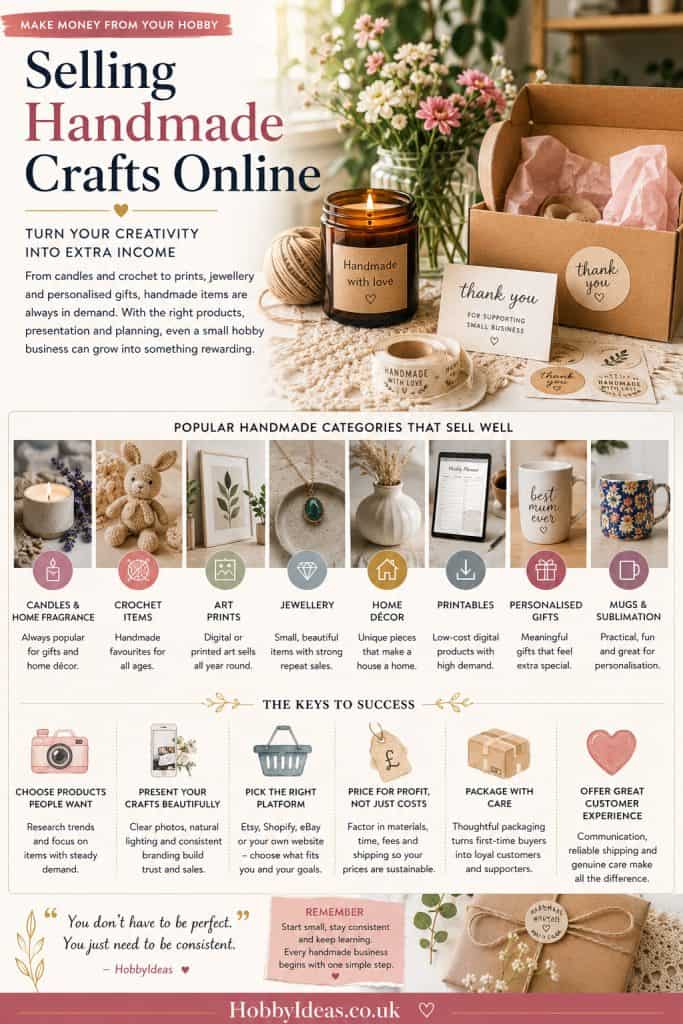
The strongest handmade businesses usually begin with products people genuinely enjoy buying rather than simply making. These categories remain consistently popular throughout the year.
Candles & Home Fragrance
Handmade candles and wax melts remain popular gift items throughout the year. Seasonal fragrances, attractive packaging and repeat customers make them one of the strongest craft categories.
Creative Handmade Gifts
Crochet, jewellery, personalised mugs, sublimation products and artwork continue to perform well because buyers are looking for thoughtful gifts that feel unique.
Home Décor & Printables
Art prints, downloadable printables and handmade home décor appeal to customers looking to personalise their homes while supporting independent makers.
Start With One Product Type
One of the easiest mistakes new sellers make is trying to launch a shop that offers a little bit of everything. While variety may seem appealing, it often creates extra work, inconsistent branding and a confusing shopping experience for customers who are unsure what your business actually specialises in.
A much stronger approach is to begin with a single product category and become known for doing it well. Whether that’s handmade soy candles, crochet gifts, printable games, personalised mugs, greeting cards or wall art, a focused collection allows you to refine your products, improve your photography and develop a recognisable style. Customers are also far more likely to remember a business that specialises in one thing than one that appears to sell everything.
Once you’ve established a loyal customer base and gained confidence, expanding into complementary products becomes much easier. Starting small doesn’t limit your business—it gives it a stronger foundation to grow from.
Many successful craft sellers actually begin very casually with hobbies they already enjoy at home. Our article on how to start a hobby explains how small creative interests often grow naturally over time.
Good Photos Matter Enormously
Photography remains one of the biggest differences between successful and unsuccessful handmade shops.
Buyers cannot physically handle products online, so photographs become extremely important.
Good product photos usually include:
- natural lighting
- clean backgrounds
- multiple angles
- lifestyle images
- close-up details
Packaging Creates a Better Customer Experience
Customers begin forming an opinion of your business long before they see the product itself. Thoughtful packaging helps handmade items feel more professional, memorable and gift-worthy.
Add a Personal Touch
A handwritten thank-you card or a short printed message shows customers there is a real person behind the business and encourages repeat purchases.
Build Your Brand
Simple logo labels, branded stickers and neatly wrapped tissue paper create a consistent identity that customers quickly recognise and remember.
Include Helpful Information
Care instructions, product information and contact details help customers enjoy your handmade items while reinforcing your professionalism long after the parcel has been opened.
Fortunately, modern phones now produce excellent images for beginners.
Importantly, packaging does not need to become wildly expensive.
Otherwise you eventually discover you spent £14 packaging a £6 keyring.
That becomes mathematically unhelpful fairly quickly.
Popular Platforms for Selling Handmade Crafts
Beginners now have several options for selling handmade products online.
Popular platforms include:
- Etsy
- eBay
- Shopify
- Numonday
- WooCommerce websites
- Facebook Marketplace
- Instagram shops
Each platform offers different advantages depending on product type and long-term goals.
Handmade candles are an excellent example of a craft that combines creativity with genuine earning potential. From scented container candles and wax melts to beautifully packaged gift sets, many makers begin with a simple hobby before gradually building a loyal customer base. If candle making appeals to you, our guide to how a candle making hobby can earn extra income explains how to get started, price your products and sell with confidence.
SEO Helps Handmade Products Get Found
Search engine optimisation matters surprisingly even for small handmade businesses.
Product titles, descriptions, keywords, and categories all influence visibility.
Additionally, blog posts often help attract traffic organically.
For example, someone selling candles might write articles about: – candle care – home fragrance ideas – cosy home décor – seasonal gift guides
This creates extra traffic opportunities beyond product listings alone.
Social Media Helps Build Brand Personality
Many successful handmade businesses use social media to show: – behind-the-scenes work – packaging orders – product creation – customer photos – new launches
Importantly, people often enjoy supporting creators rather than simply buying objects.
Printables and Digital Products Scale Well
Not every successful handmade business needs shelves full of stock or a constant queue at the post office. In recent years, digital products have opened the door for creative people to earn income from work that can be created once and sold repeatedly.
Instead of packaging physical items, digital creators design products that customers download immediately after purchase. This approach removes the costs of postage, storage and damaged parcels while allowing hobbyists to concentrate on creating new ideas rather than repeatedly making the same product by hand.
Some creators produce attractive planners that help people organise their daily lives, while others design printable party games, educational activity packs, colouring pages or decorative wall art. Templates for invitations, budgets, meal planning and business organisation have also become increasingly popular as more people look for affordable resources they can print at home.
Because there are no physical products to manufacture, digital businesses can often grow more easily than traditional craft businesses. Once a product has been carefully designed and uploaded, it can continue generating sales while the creator works on the next project or simply enjoys another hobby. Although customer support and occasional updates are still important, there is far less day-to-day production compared with making handmade items.
Funneling
Digital products also fit naturally alongside websites, blogs and social media accounts. Rather than relying entirely on marketplace traffic, creators can build an audience by sharing useful articles, tutorials and inspiration before introducing downloadable products that genuinely help their readers. Over time, this creates a business that feels less like chasing individual sales and more like building a trusted creative brand.
For many hobbyists, digital products become an excellent second income stream alongside physical crafts. A candle maker might sell printable candle care cards, a crochet designer could offer downloadable patterns, while an artist may combine original artwork with printable wall prints. By mixing physical and digital products, creative businesses can diversify their income while reaching customers all over the world.
Consistency Matters More Than Perfection
One of the biggest misconceptions about selling handmade products online is that every listing needs to be perfect from day one. In reality, almost every successful maker looks back at their first photographs, product descriptions and packaging with a smile. What separates thriving businesses from those that quietly disappear is rarely natural talent; it’s the willingness to keep improving.
Successful sellers refine their photography, develop better products, learn how customers search online and gradually build an audience that trusts their work. They experiment, learn from mistakes and make small improvements with every new listing. Over time, those steady changes create businesses that look polished and professional, even though they began in exactly the same place as everyone else.
The aim isn’t perfection. It’s simply to be a little better with your next product than you were with your last.
If you enjoy creative hobbies, you might also enjoy our guide to how to start candle making at home.
Final Thoughts about Selling Handmade Crafts Online.
Selling handmade crafts online offers a realistic and flexible way to turn creative hobbies into additional income.
More importantly, small creative businesses allow people to build something personal around hobbies they already enjoy.
Whether you eventually sell handmade candles, printables, crochet items, or art prints, success usually comes from consistency, learning, and gradual improvement rather than overnight viral success.
Most importantly, beginners should remember that every successful handmade seller once stared nervously at their very first product listing wondering whether anyone would actually buy it.
Many still do.