

A candle making hobby often begins with curiosity. You melt a little wax, position a wick in a glass jar and add a fragrance that makes the kitchen smell like warm vanilla, woodland pine or freshly cut lavender. Then, after waiting patiently for the wax to set, you light your first handmade candle and discover something rather satisfying: you have created both an atmosphere and a useful object from scratch.
Before long, friends begin admiring the candles around your home. Someone asks whether you could make one in their favourite fragrance. Another wonders whether you could produce a small gift set for a birthday. Eventually, the question arrives that turns many enjoyable hobbies into something more: “Could I buy one from you?”
That does not mean transforming the spare room into a factory or spending every weekend filling hundreds of jars. Instead, a carefully managed candle making hobby can begin with a small collection, a handful of local customers and enough sales to cover materials while providing a little extra income. Moreover, because candles lend themselves so beautifully to fragrance, colour, packaging and seasonal themes, the hobby offers almost endless room for creativity.
Quick Answer: Can a Candle Making Hobby Make Money?
Yes. A candle making hobby can earn extra income through local orders, craft fairs, gift shops, social media, online marketplaces and seasonal collections. However, successful sellers need to test every candle carefully, calculate their true costs, use appropriate safety and fragrance labelling, and create products that customers can enjoy with confidence.
Why a Candle Making Hobby Has Genuine Selling Potential

Handmade candles occupy an appealing space between a practical household product and a personal treat. People buy them to create a relaxing atmosphere, add fragrance to a room, decorate their homes or give as thoughtful gifts. Consequently, customers are often willing to pay more for a candle that feels distinctive, carefully made and beautifully presented.
Unlike many handmade items, candles also encourage repeat purchases. Once a customer burns through a favourite fragrance, they may return for another rather than keeping the original product indefinitely. Therefore, a modest number of loyal customers can become more valuable than a large audience that buys only once.
Seasonality creates further opportunities. Fresh floral scents suit spring, citrus and coastal fragrances feel natural in summer, while autumn invites warming notes of cinnamon, apple and woodsmoke. Meanwhile, Christmas brings demand for gift sets, festive packaging and familiar fragrances such as orange, clove, pine and gingerbread.
Nevertheless, the market is competitive. Large retailers sell inexpensive candles in almost every imaginable fragrance, so a handmade candle should offer something more personal. That difference might come from an unusual scent combination, refillable containers, locally inspired names, attractive packaging or simply the reassurance of buying from a maker within the community.
Start Your Candle Making Hobby with a Small Collection
One of the easiest ways to overwhelm a new candle making hobby is to launch with too many choices. Ten jar styles, twelve fragrances, several colours and three different waxes may sound exciting, but they also create a cupboard full of materials, complicated stock control and endless testing.
Instead, begin with a small collection that feels deliberate. Three or four fragrances are enough to learn what customers prefer while keeping production manageable. For example, you might choose one fresh scent, one floral fragrance, one warm or woody option and one seasonal candle.
Container candles make an excellent starting point because the wax is poured directly into a jar or tin. They also travel well, offer plenty of space for labels and feel familiar to customers. Meanwhile, wax melts can provide a lower-priced introduction to your range and allow people to sample fragrances before committing to a larger candle.
Gift sets can follow once you have reliable products. A candle paired with wax melts, matches or a small decorative accessory can make an attractive birthday, housewarming or Christmas present. However, the candle itself must remain the star. Beautiful packaging cannot rescue a product that burns poorly or produces very little fragrance.
Hobby Ideas • Featured Candle Making Kit
Start Creating Beautiful Candles with the ZEROMX Candle Making Kit
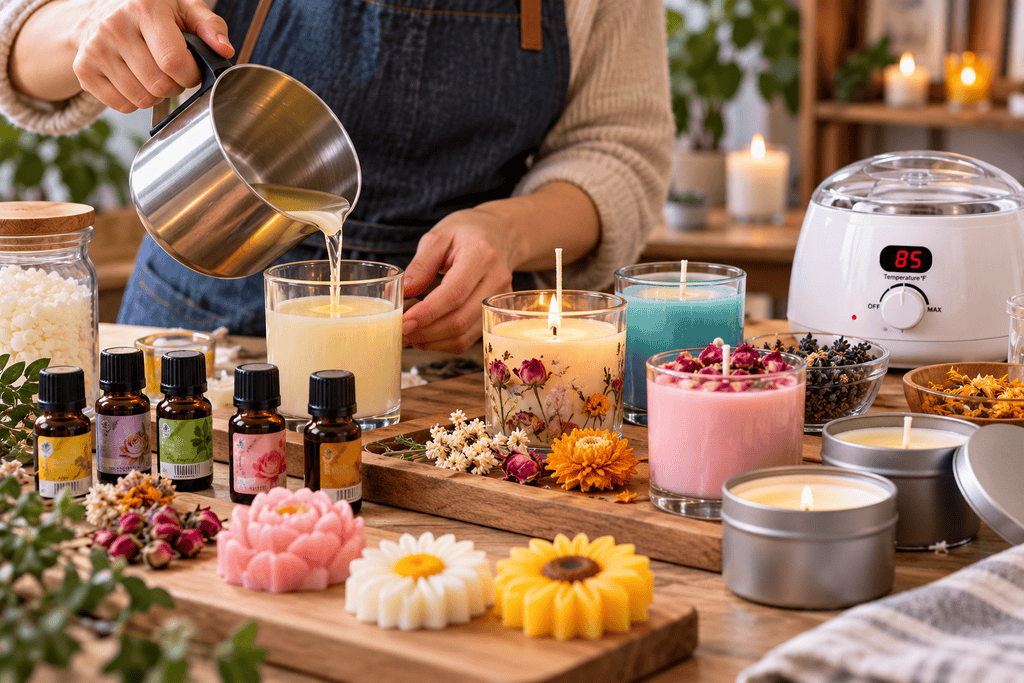
Imagine making your own beautifully scented candles, experimenting with colours and fragrances, and creating thoughtful handmade gifts. The ZEROMX Premium Soy Candle Making Kit brings together an impressive collection of materials, equipment and creative accessories to help beginners discover this rewarding hobby.
At the heart of the kit is an electric wax melter with adjustable digital temperature control, making it easier to monitor the wax as it melts. Alongside this, you’ll find 1,200g of soy wax and plenty of opportunities to experiment with decorative candle designs.
What makes this kit appealing?
Everything together: Soy wax, fragrance oils, candle dyes, wicks, jars, tins and useful candle-making accessories.
Creative possibilities: Three reusable flower-shaped moulds let you explore sunflower, peony and daisy designs.
Beautiful handmade gifts: Decorative accessories, labels and gift boxes help you present your finished candles.
Beginner-friendly: Illustrated instructions guide you through the basic candle-making process.
Whether you’re making candles for your own home, preparing personalised presents or exploring the creative possibilities of a future small candle-making business, this kit offers an enjoyable introduction to the craft.
Remember that candles intended for sale need proper burn testing, appropriate safety information and compliant labelling.
Three Strong Starting Points for Candle Makers
Begin with products that are straightforward to test, easy to present and appealing to a wide range of customers.
Container Candles
Glass jars and tins feel familiar, travel well and provide plenty of space for branding, fragrance details and safety information. They are also one of the easiest styles for beginners to test and produce consistently.
Wax Melts
Wax melts require less wax, allow customers to sample your fragrances and provide an affordable introduction to your handmade collection before buying larger candles.
Seasonal Gift Sets
Small coordinated gift sets become especially popular at Christmas, birthdays, weddings and housewarming celebrations once your core range of candles has been thoroughly tested.
Testing Is the Foundation of a Reliable Candle Making Hobby
A candle may look perfect when the wax sets, yet appearance tells you very little about how it will perform. The real test begins when the wick is lit.
Every combination of container, wax, wick, fragrance and colour can behave differently. A wick that works beautifully in one jar may create a weak flame or excessive heat in another. Similarly, adding more fragrance does not automatically produce a stronger or better candle. It may change how the wax burns and can create unnecessary safety or labelling complications.
Therefore, each recipe needs a proper burn test. Light the candle in suitable conditions, monitor the flame, observe how the melt pool develops and record what happens over several sessions. Check whether the candle burns evenly, whether the container becomes excessively hot and whether the wick produces smoke, soot or an unstable flame.
Keep a notebook for every batch. Record the wax, fragrance percentage, wick type, container, pouring temperature and curing time. Although this can feel overly methodical at first, detailed records make it much easier to repeat successful candles and investigate any disappointing results.
Most importantly, never sell an untested candle simply because it looks attractive. Customers are trusting you with a product that contains a live flame, so dependable performance matters far more than rushing a new fragrance onto the market.
Discover What Customers Want Before You Make Too Much
Friends and relatives can provide useful early feedback, although compliments alone do not prove that a product will sell. Ask specific questions instead. Is the fragrance too strong or too subtle? Does the jar suit the scent? Would they buy it for themselves, give it as a gift or choose something different?
Small sample batches offer a sensible way to test demand. You could create six candles in each of three fragrances, photograph them carefully and offer them locally. Then observe which candle attracts enquiries, which sells first and which customers return to buy again.
Attractive photography becomes particularly important when customers cannot smell a candle before ordering. Soft natural light, uncluttered backgrounds and a little styling can communicate warmth, quality and atmosphere. Our guide to how to photograph handmade items explains how to create appealing product images without investing in an expensive studio.
Names matter too. A candle called “Lavender” describes the fragrance accurately, but “Norfolk Lavender Evening” creates a stronger sense of place and mood. Nevertheless, clarity should always come before cleverness. Customers need to understand roughly what a candle will smell like before they purchase it.
Selling Handmade Candles Locally
Local selling provides an ideal first step because customers can see the candles, smell the fragrances and speak directly to the person who made them. Craft fairs, village fêtes and seasonal markets also offer immediate feedback that online listings cannot easily provide.
A well-presented stall does not require elaborate furniture. A clean table covering, varied display heights, clear pricing and a few carefully chosen decorations are usually enough. Moreover, leaving space between products often feels more professional than filling every inch of the table.
Local Facebook groups can also generate early sales, particularly when you combine clear photographs with collection details and a simple fragrance list. Meanwhile, workplace orders, friends of existing customers and community events can gradually build word-of-mouth recommendations.
Independent gift shops, florists and farm shops may consider stocking a small local candle range. However, wholesale selling usually means accepting a lower price per candle, so you must understand your costs before agreeing to supply another business.
Online marketplaces can reach a much larger audience, although competition, postage, platform fees and fragile glass containers create additional challenges. Therefore, many new sellers gain valuable experience locally before expanding online.
Give Your Candle Making Hobby a Recognisable Identity
Customers rarely remember wax specifications or wick codes. Instead, they remember how a candle made their home feel.
Your brand might focus on calming fragrances, bold modern scents, countryside inspiration, minimalist jars or colourful seasonal collections. Whatever direction you choose, consistency helps customers recognise your products across labels, photographs, packaging and market displays.
That does not require an expensive logo or professionally printed boxes from the beginning. A simple name, readable labels and a small collection with a clear personality can feel far more convincing than an elaborate brand covering products that have little connection with one another.
As your candle making hobby develops, allow the identity to grow naturally from the products customers enjoy most. Frequently, the collection that succeeds is not exactly the one a maker originally imagined, and listening to customers can reveal opportunities that planning alone would never uncover.
Price Your Candles for Profit, Not Just to Sell
Many people beginning a candle making hobby make the same mistake. They calculate the cost of the wax, fragrance oil and container, then add a pound or two and assume they have made a profit.
Unfortunately, there is much more involved.
Your selling price should also reflect labels, packaging, postage materials, electricity, equipment, replacement tools, testing, failed batches and, most importantly, your own time. Handmade candles are a premium product. Customers are paying for craftsmanship, consistency and presentation, not simply melted wax in a glass jar.
If your prices feel slightly uncomfortable at first, that is perfectly normal. Underselling your work rarely attracts the right customers and almost always removes the enjoyment from the hobby.
Three Habits That Help a Candle Making Hobby Stay Profitable
Successful candle makers focus on consistency, careful planning and long-term customer satisfaction rather than chasing quick sales.
Keep Detailed Records
Record every successful recipe, every burn test and every production cost. Good notes make successful batches much easier to repeat and help identify where small improvements can increase quality or profit.
Perfect a Small Range
Customers remember reliable favourites. Build your reputation with a carefully tested collection of excellent fragrances before introducing seasonal or limited-edition additions.
Protect the Enjoyment
Accept only the number of orders you can comfortably manage. A candle making hobby should continue to feel creative, rewarding and enjoyable rather than becoming stressful or overwhelming.
Presentation Can Make All the Difference
Beautiful candles deserve beautiful presentation. Clean labels, attractive jars and thoughtful packaging immediately increase perceived value and encourage customers to buy candles as gifts rather than simple household items.
Presentation extends beyond the candle itself. Clear, professional-looking labels instantly build confidence and help customers recognise your brand. A compact label maker makes it easy to create consistent fragrance labels, safety information and seasonal collections, giving your handmade candles a polished finish without adding much extra time to the production process.
Photography also plays a surprisingly important role. Warm lighting, natural textures and uncluttered backgrounds allow customers to imagine your candles in their own homes. Consistent branding across labels, packaging and social media creates confidence and helps customers remember your business.
Transporting finished candles safely matters too. Protective packaging reduces breakages and ensures customers receive their purchases exactly as you intended.

Understand Candle Safety and Labelling
Unlike many handmade crafts, candles involve an open flame. Therefore, safety should become part of every stage of your candle making hobby.
Every candle should be thoroughly tested before sale, supplied with appropriate safety information and labelled correctly. Depending on the fragrances you use, additional CLP labelling requirements may also apply. Although the regulations can appear daunting initially, they become much easier to manage once you establish a consistent production process.
The UK Government product safety guidance provides useful information for anyone planning to sell handmade products responsibly.
Likewise, if your hobby begins generating regular income, remember to understand your tax responsibilities. Our guide to the Hobby Tax Threshold explains when a hobby may become taxable.
Keep Your Candle Making Hobby Enjoyable
The greatest strength of a candle making hobby is that it begins because you enjoy creating something beautiful.
As sales increase, resist the temptation to accept every order. Many successful makers limit seasonal collections, close their order books before holidays or release fragrances only a few times each year.
Those boundaries protect both quality and enthusiasm. Customers appreciate consistency far more than unlimited availability.
Frequently Asked Questions
Can a candle making hobby really make money?
Yes. Many people earn extra income by selling handmade candles at craft fairs, through local retailers, on social media and via online marketplaces.
Which candles sell best?
Container candles, seasonal gift sets and wax melts remain consistently popular with customers.
Do I need insurance?
If you begin selling candles regularly, product liability insurance is strongly recommended and may be required by some craft fairs.
Should I make lots of fragrances?
No. Most successful makers begin with a carefully tested collection of just a few fragrances before expanding.
Final Thoughts
A candle making hobby offers far more than the possibility of earning extra income. It combines creativity, craftsmanship and practical skills while giving you the satisfaction of producing something people genuinely enjoy using in their homes.
Whether your goal is funding your hobby, selling at local craft fairs or gradually building a recognised handmade brand, success usually comes from patience rather than speed. Test thoroughly, package beautifully, price fairly and continue creating candles that you would be proud to display in your own home.
If you’re interested in turning other creative hobbies into extra income, you may also enjoy our guide on How a Home Baking Hobby Can Earn Extra Income
Continue Your Candle Making Journey
If today’s article has inspired you to try candle making, we’ve also created a Candle Making Essentials collection within the HobbyIdeas Storefront. Rather than listing hundreds of products, we’ve simply gathered together the equipment, tools and supplies we believe offer a good starting point for beginners based on the topics covered in this guide. Browse the HobbyIdeas Candle Making Essentials collection →
Affiliate Disclosure: HobbyIdeas participates in the Amazon Associates Programme. If you purchase through one of our recommended links, we may earn a small commission at no extra cost to you. Thank you for supporting HobbyIdeas.