

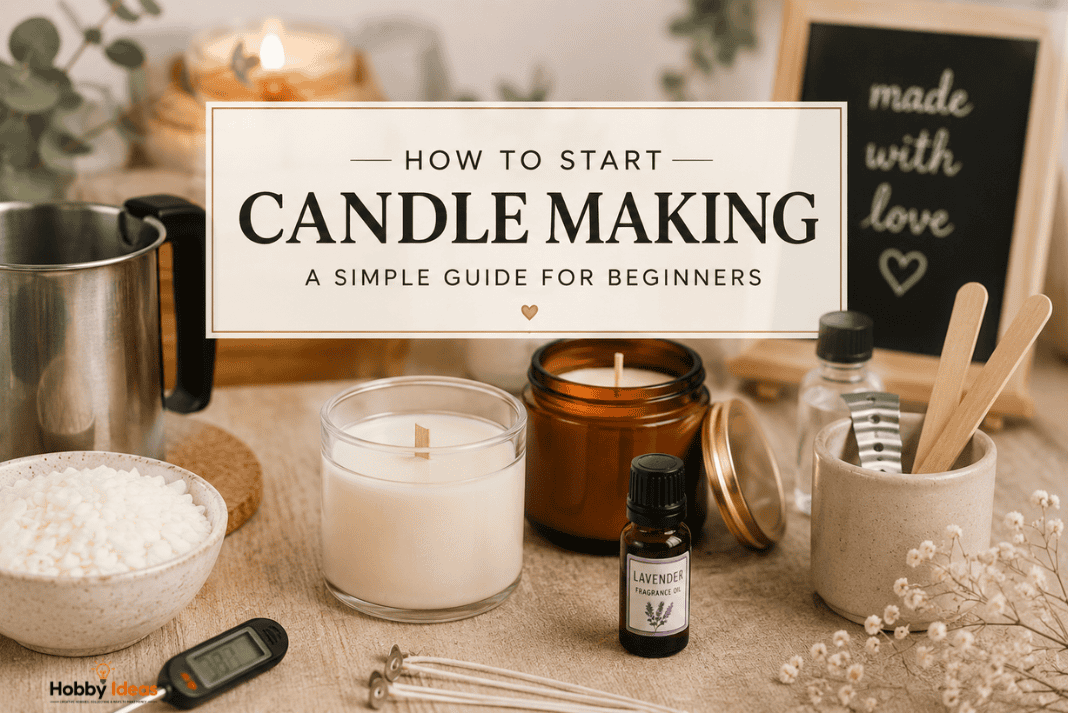
Learning how to start candle making at home has become increasingly popular because candle making combines creativity, practicality, and relaxation in one surprisingly satisfying hobby.
Additionally, homemade candles make excellent gifts, decorative items, and even potential small business products for people who eventually want to sell handmade creations.
Fortunately, beginners can start fairly simply without needing expensive specialist equipment immediately.
Why Candle Making Appeals to Beginners
Candle making works well for beginners because the hobby feels creative while still following straightforward processes.
Additionally, many people enjoy candle making because the process itself feels calming and creative, especially during slower evenings at home. If you enjoy peaceful creative activities, you might also enjoy our guide to relaxing hobbies to help you slow down and unwind.
Unlike some crafts that require years of practice before producing attractive results, beginners can create usable candles fairly quickly.
Many people enjoy: – experimenting with scents – choosing colours – testing containers – creating seasonal candles – designing personalised gifts
According to Craftsy’s beginner candle guide, soy wax candles remain especially popular among beginners due to their simplicity and clean-burning properties.
Basic Candle Making Supplies
Beginners usually need only a few basic materials to start making simple candles at home.
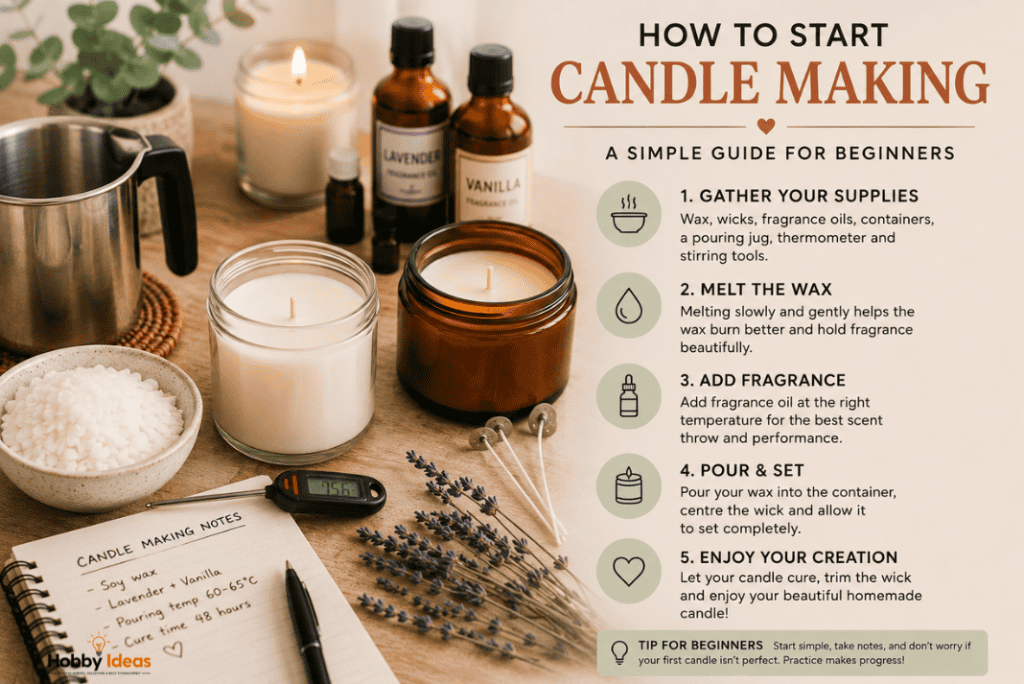
A beginner setup often includes:
- Wax
- Wicks
- Fragrance oils
- Containers or moulds
- A pouring jug
- A thermometer
Importantly, many beginners start with container candles because they feel easier and more forgiving than complex moulded designs.
Choosing the Right Wax
Different wax types create different candle characteristics.
Popular beginner options include:
- Soy wax
- Paraffin wax
- Beeswax
- Coconut wax blends
Soy wax remains especially common because it burns cleanly and works well with fragrance oils.
Meanwhile, beeswax appeals to people who prefer more natural materials.
Fragrance Makes a Huge Difference
One of the most enjoyable parts of candle making involves experimenting with fragrance combinations.
Popular beginner scents include:
- Vanilla
- Lavender
- Citrus
- Cinnamon
- Fresh linen
- Sandalwood
However, beginners quickly discover that adding too much fragrance oil can create problems.
Suddenly the entire kitchen smells like an aggressively scented garden centre for three days.
Moderation helps.
Temperature Matters More Than Beginners Expect
Candle making depends heavily on temperature control.
Wax that becomes too hot or too cool can affect: – scent throw – surface appearance – burn quality – adhesion to containers
Consequently, thermometers become surprisingly important during the process.
Beginners often improve quickly once they learn proper pouring temperatures.
Container Candles Work Best for Beginners
Container candles allow beginners to focus on mastering the basics without worrying about complicated mould release issues.
Simple glass jars work perfectly well for early projects.
Additionally, containers create opportunities for: – personalised labels – decorative lids – seasonal designs – gift presentation
Safety Matters With Candle Making
Because candle making involves hot wax and fragrance oils, safety should always remain important.
Beginners should: – work carefully – avoid overheating wax – keep workspaces organised – monitor melting temperatures closely
Fortunately, once routines develop, the process becomes fairly straightforward.
Like many creative hobbies, candle making becomes far more enjoyable once beginners stop worrying about perfection and focus on enjoying the learning process. If you struggle to stay consistent with new hobbies, you might also enjoy our guide on how to stay motivated when starting a new hobby.
Candle Making Can Become Addictive
Many beginners start with one simple candle kit and quickly find themselves researching: luxury fragrance oils, decorative jars, wooden wicks, seasonal collections, and professional label printers.
Interestingly, many successful small candle businesses originally began as simple weekend hobbies before gradually growing into creative side incomes. If you enjoy hobbies with income potential, explore our guide to hobbies that make money without turning life into constant work.
This escalation appears extremely common within the hobby.
Apparently, nobody truly intends to own seventeen unused candle jars initially.
Creative Hobbies Often Overlap
People interested in candle making frequently explore related hobbies including:
- soap making
- journaling
- watercolour painting
- home crafts
- sublimation printing
Creative hobbies naturally connect because they encourage experimentation and hands-on creativity.
If you enjoy calm creative hobbies, you might also enjoy our guide on how to start journaling for beginners.
Final Thoughts On How To Start Candle Making
Learning how to start candle making at home offers beginners a creative hobby that feels both relaxing and practical.
More importantly, candle making allows people to create useful handmade items while experimenting with colour, scent, and presentation.
Whether you eventually make candles for gifts, relaxation, or potential small business ideas, the hobby offers endless room for creativity and improvement.
Most importantly, beginners should remember that early imperfect candles still smell perfectly acceptable most of the time.
Usually.