


Collecting iconic fashion begins when clothing stops being something we simply wear and becomes part of a wider story. A battered denim jacket may recall a particular decade, a pair of trainers can represent a turning point in street culture, and an old football shirt may carry more emotion than anything hanging in a designer boutique.
Fashion collectors rarely agree on what matters most. Some pursue immaculate limited-edition trainers still sealed in their original boxes. Others prefer vintage garments that have already lived a life, complete with softened fabric, faded labels and the occasional repair. One collector may treasure an early band T-shirt, while another searches for classic British outerwear, rare sportswear or a handbag from a celebrated fashion house.
What connects them is the pleasure of recognising something special before everybody else does. Iconic fashion can be beautiful, historically interesting, culturally important and deeply personal. Better still, you do not need a walk-in wardrobe or a luxury budget to begin.
Quick Answer: What Is Collecting Iconic Fashion?
Collecting iconic fashion involves seeking out clothing, trainers and accessories that hold particular cultural, historical, design or nostalgic importance. Collectable pieces may include vintage denim, designer garments, limited-edition trainers, early sportswear, football shirts, band T-shirts, handbags, workwear and clothing connected with influential designers or subcultures.
Value does not depend on age alone. A relatively modern release can become collectable because it was produced in small numbers, linked to an important collaboration or worn during a defining cultural moment. Likewise, an older garment may remain inexpensive if demand is limited or its condition has deteriorated beyond practical display or use.
When Clothing Becomes More Than Clothing
Every generation produces garments that seem ordinary at the time. Harrington jackets, football shirts, work boots, track tops and branded trainers were designed to be worn rather than preserved. Yet decades later, the best surviving examples often become reminders of how people dressed, worked, travelled and expressed themselves.
Fashion carries social history particularly well because it sits so close to everyday life. Clothing reveals changing attitudes towards class, gender, music, sport, work and identity. A sharply tailored suit tells a different story from a patched punk jacket, although both can become important collectables for exactly the same reason: each represents the people and culture that wore it.
That emotional connection separates fashion collecting from simply buying clothes. A collector might search for the trainers they wanted as a teenager but could never afford, the jacket worn by a favourite musician or a football shirt associated with an unforgettable season. The object matters, but so does everything remembered through it.
Why Vintage Clothing Attracts Collectors
Vintage clothing offers something modern production often struggles to reproduce convincingly: character created through time. Fabric softens, denim fades and leather develops a surface that reflects years of use. These changes can make a garment feel individual rather than imperfect.
Construction also matters. Collectors learn to notice heavyweight fabrics, unusual stitching, original metal fastenings, period labels and details that disappeared when manufacturing methods changed. An older garment may reveal how a brand once worked before production expanded, materials altered or styling became more commercial.
However, “vintage” does not automatically mean rare, valuable or well made. The word is sometimes used rather generously in online listings, occasionally for clothes that are barely old enough to have finished school. Serious collectors look beyond the description and study the garment itself.
They examine labels, seams, zips, buttons, fabric content and construction. They compare the piece with catalogues, advertisements and known examples. Over time, these details become familiar in much the same way that a toy collector learns packaging variations or a stamp collector recognises a suspicious overprint.
If the pleasure of tracking down objects connected with a particular period appeals to you, our guide to vintage toy collecting explores another hobby where nostalgia, condition and small production differences can transform ordinary objects into desirable collectables.

Modern Trainers and the Rise of Wearable Collectables
Trainer collecting has brought an entirely new audience into fashion collecting. What began with sports footwear developed into a global culture built around design, music, celebrity, limited releases and brand collaborations.
For some collectors, the appeal lies in engineering and design. They notice soles, panels, materials, colour combinations and the way familiar models have evolved. Others collect around a particular brand, athlete, designer, year or colourway.
Then there is the decision that divides almost every trainer collection: should they be worn?
Some collectors believe trainers only fulfil their purpose once they leave the box. They accept creases and scuffs as part of ownership and enjoy pairing rare footwear with everyday clothes. Others preserve every tag, insert, lace and sheet of tissue paper because condition and completeness can affect future desirability.
Neither approach is wrong. A collection should suit the person building it. However, anyone buying older unworn trainers should remember that materials can deteriorate even when the footwear looks perfect. Foam can crumble, glue may fail and soles can separate after years in storage. A pristine appearance does not always mean a pair remains wearable.
Designer Clothing, British Style and Cultural Identity
Designer fashion collecting can appear intimidating from the outside, particularly when auction headlines concentrate on rare couture and extravagant prices. In reality, many collections begin with one affordable piece from a designer or brand that means something to the owner.
British fashion provides particularly rich territory. Tailoring, punk, workwear, country clothing, music scenes and football culture have all produced garments with distinct identities. A well-used waxed jacket can be as culturally recognisable as a runway dress, while a vintage polo shirt may carry associations with several different youth movements depending on its colour, date and styling.
The strongest collections usually have a clear point of view. A rail containing random expensive labels may impress visitors, but it often says less than a smaller collection devoted to one designer, one subculture or one period of British street style.
That focus also makes collecting more manageable. Instead of chasing everything, you begin to understand a particular area. You learn which labels belong to which period, how sizing changed, which details collectors value and where reproductions commonly differ from originals.
One of the quickest ways to develop that knowledge is by studying the garments that shaped fashion history rather than simply following current trends. The Fashion Classics: A Celebration of the Most Iconic, Influential and Innovative Garments and Accessories in Modern Fashion History explores many of the designs that collectors still search for today, making it an enjoyable reference for anyone wanting to understand why certain pieces remain influential decades after they first appeared.
Football Shirts, Band T-Shirts and Clothes With a Story
Some of the most compelling fashion collectables were never sold as luxury products. Football shirts and band T-shirts often began as souvenirs, fan clothing or everyday wear. Their importance arrived later through memory.
A football shirt may represent a promotion season, cup run, famous match or much-loved player. The most evocative examples often include details that immediately return supporters to a particular era: an old sponsor, an unusual collar, heavy embroidered badge or goalkeeper pattern that could only have escaped from the 1990s.
Band T-shirts work in a similar way. Original tour shirts, early merchandise and designs connected with small venues can become cultural records. Unfortunately, they are also frequently reproduced. A convincing-looking print does not guarantee that the shirt dates from the event shown on it.
Provenance can therefore add enormous interest. Photographs, receipts, concert tickets, old wardrobe labels or a believable account of ownership help connect the garment with its past. Even when the item is not especially valuable, that supporting story makes it more complete.
What Fashion Collectors Look For
Originality
Collectors generally prefer pieces that retain their original labels, fastenings, trims and construction. Alterations do not always ruin a garment, particularly when they form part of its history, but undisclosed replacements can affect desirability.
Condition
Condition must be judged realistically. A fifty-year-old jacket need not look unworn, and honest signs of use can add character. However, moth damage, weakened seams, brittle soles, heavy staining and unpleasant storage odours can turn an exciting purchase into a difficult restoration project.
Rarity
Limited production, unusual sizing, short-lived designs and regional releases can all create scarcity. Nevertheless, rarity only matters when collectors actually want the item. Something can be genuinely scarce and still attract very little interest.
Cultural Significance
The strongest pieces often connect with a recognisable movement, person, event or design moment. Cultural importance can give an ordinary garment a depth that has little to do with its original retail price.
Authenticity: The Skill Every Collector Needs
Counterfeits present one of the biggest challenges in collecting iconic fashion. Popular trainers, handbags, sportswear and designer labels attract convincing imitations, while online photographs can hide poor stitching, incorrect materials and altered labels.
The safest approach begins before the purchase. Study genuine examples, compare labels and construction, and ask for clear photographs of every important detail. Check the seller’s history and make sure the written description matches the item shown.
Be particularly cautious when a supposedly rare item appears in several sizes or quantities. Genuine vintage stock occasionally survives, but an endless supply of identical “rare” pieces deserves closer attention.
The UK Intellectual Property Office has published practical guidance on spotting fake fashion when shopping second-hand. It advises buyers to examine seller profiles, listing photographs, labels, tags, sizing and inconsistencies between the description and the actual item. :contentReference[oaicite:0]{index=0}
Authentication services can help with expensive purchases, although no system should replace careful research. If the price would be painful to lose, take your time and seek an independent opinion before committing.
Where to Find Collectable Fashion
Fashion collecting rewards patience because worthwhile pieces appear in unexpected places. Specialist resale platforms and established vintage dealers offer convenience, but car boot sales, charity shops, house clearances and local auctions can still produce discoveries.
Each source requires a slightly different approach. A specialist dealer should offer knowledge, accurate descriptions and confidence in authenticity. A general market stall may offer lower prices, although the buyer must do more of the research. Online marketplaces provide enormous choice but demand careful study of photographs, feedback and return policies.
Vintage fairs are useful because they allow you to handle garments, compare construction and speak directly with sellers. Touch matters. Fabric weight, stitching and wear can be much easier to judge in person than through a brightened photograph.
Do not ignore your own wardrobe or family cupboards either. Clothing that survives because nobody bothered to throw it away can become the most personal part of a collection. An old work jacket, wedding outfit, football shirt or pair of boots may have modest financial value but extraordinary family significance.
Should Collectable Fashion Be Worn?
Fashion presents a collecting dilemma that stamps and coins avoid: it was created for the body. Wearing a collectable garment can bring it back to life, yet every outing also exposes it to sunlight, rain, friction and accidental damage.
The answer depends on rarity, condition and personal philosophy. Some collectors maintain separate “wearable” and “archive” pieces. Others accept that careful use forms part of the object’s continuing story.
Before wearing older clothing, inspect seams, fabric strength and fastenings. Vintage sizing can also differ sharply from modern expectations, so measurements matter far more than the number printed on the label.
Trainers need particular caution because hidden deterioration may only reveal itself under pressure. If an older pair has substantial value or sentimental importance, display may be safer than a long walk through wet streets.
Storing a Fashion Collection Properly
Good storage protects both appearance and structure. Heavy garments should rest on supportive hangers, while knitwear is usually safer folded because hanging can distort the shoulders. Delicate pieces benefit from breathable, acid-free tissue and clean storage away from direct sunlight.
Avoid sealing valuable textiles in ordinary plastic for long periods. Trapped moisture and poor air circulation can encourage mildew, while some plastics may react with fabrics and prints over time. Looking after collectable clothing extends beyond careful storage. Many collectors also avoid unnecessary washing whenever possible, particularly with older or delicate garments. Instead, they often use a quality garment steamer to freshen fabrics, remove light creases and prepare clothing for display or careful wear. The Steamery Cirrus 2 Handheld Clothes Steamer is designed specifically for garment care and offers a gentle way to refresh vintage clothing without repeatedly exposing fabrics to the heat and pressure of traditional ironing.
storing Trainers
Trainers should be stored clean and dry, with their shape supported gently. Original boxes add completeness, but the shoes still need occasional inspection. Storage does not stop ageing; it simply slows the process and gives problems a better chance of being noticed early.
Most importantly, do not overcrowd the collection. Clothes crushed tightly together develop creases, restrict airflow and become difficult to examine. A smaller collection stored well will usually bring more pleasure than a larger one packed into every available corner.
Many experienced collectors also invest in proper wooden wardrobe hangers rather than thin wire or plastic alternatives. Broad-shouldered cedar hangers help jackets, coats and tailored garments keep their natural shape while allowing fabrics to breathe during long-term storage. Products such as the StorageWorks Red Cedar Wood Suit Hangers are designed specifically for heavier garments and demonstrate the kind of careful storage that helps preserve a collection for years to come.
Building a Collection Without Chasing Hype
Fashion markets move quickly. A collaboration sells out, social media declares it essential and resale prices rise before many buyers have even decided whether they like the design.
Chasing every fashionable release can turn an enjoyable hobby into an expensive race. It also creates collections built around other people’s excitement rather than your own interests.
Instead, choose a direction. You might collect British outerwear, 1980s sportswear, vintage denim, classic trainers, football shirts from one club or designs connected with a favourite music scene. A clear theme helps every new addition feel connected.
Set a budget and leave room for mistakes. Early purchases teach you what condition you can tolerate, which sizes display well and whether you enjoy research, wearing or preservation most.
It also helps to keep records. Note where each item came from, what you paid, its measurements, condition and any research supporting its date or authenticity. Photographs of labels and construction details create a useful reference if the item is later stored, insured or sold.
Collectors who enjoy the research behind fashion may also appreciate our wider UK hobby ideas directory, which includes collecting, creative and practical hobbies for people searching for their next long-term interest.
Is Collecting Iconic Fashion a Good Investment?
Some fashion collectables increase substantially in value. Rare trainers, early designer pieces and garments with exceptional provenance can attract intense demand. However, fashion should never be treated as a guaranteed investment.
Tastes change, condition deteriorates and yesterday’s highly promoted release may become tomorrow’s forgotten stock. Selling costs, authentication fees and storage also reduce apparent profits.
The healthiest approach is to buy pieces you would still enjoy owning if their value never increased. Financial potential can add excitement, but it should not become the only reason the collection exists.
A collector who understands their subject, buys carefully and keeps excellent records will be in a stronger position than someone purchasing solely because an online price chart points upwards. Knowledge remains the most reliable advantage available.
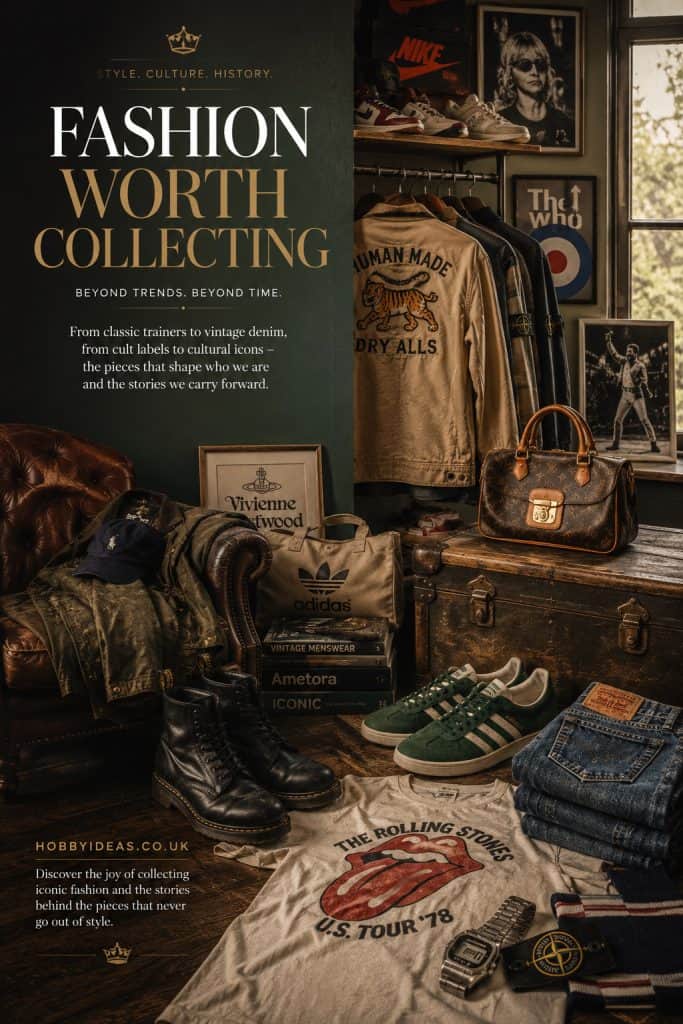
Starting Your First Iconic Fashion Collection
Begin with one piece rather than a shopping list. Choose something connected with your own interests: a jacket from a brand you admire, trainers you remember from your youth or a shirt linked to a team, musician or period that matters to you.
Research that item properly. Learn how it was made, when it appeared, which details identify the original version and how often it reaches the market. This small investigation will teach you more than buying several random pieces in quick succession.
Then decide what you want the collection to become. Perhaps you enjoy the historical side and want an archive of changing labels and designs. Maybe you prefer wearable pieces that add individuality to your wardrobe. You might simply enjoy searching for undervalued clothes and rescuing them from neglect.
There is no correct size or value for a collection. One carefully chosen rail can tell a stronger story than a room filled with fashionable purchases.
Frequently Asked Questions About Collecting Iconic Fashion
What types of fashion are most collectable?
Popular areas include vintage designer clothing, limited-edition trainers, football shirts, band T-shirts, handbags, denim, workwear, sportswear and garments connected with influential designers or cultural movements.
How can I tell whether vintage clothing is genuine?
Study labels, stitching, fastenings, fabric and construction, then compare them with verified examples from the correct period. Seller history and provenance also matter. For expensive items, consider using a reputable authentication service.
Should I keep collectable trainers in their original box?
Original boxes, labels, spare laces and inserts can improve completeness and desirability. However, trainers still need dry, stable storage and regular inspection because materials may deteriorate even when unworn.
Can I wear pieces from my fashion collection?
Yes, provided the item remains strong enough and you accept the risk of wear or damage. Many collectors enjoy using their collections, while others preserve rare or fragile pieces purely for display.
Is all designer clothing valuable?
No. Brand name alone does not guarantee value. Demand, rarity, condition, authenticity, design importance and provenance all influence what collectors are willing to pay.
What is the best way to begin collecting iconic fashion?
Choose one area that genuinely interests you and buy slowly. Learn the labels, materials and common reproductions before spending heavily. A focused collection built with knowledge usually becomes more satisfying than a random assortment of fashionable names.
Final Thoughts on Collecting Iconic Fashion
Collecting iconic fashion reveals that clothing can carry far more than style. It records identity, youth culture, sport, music, work and the changing way people choose to present themselves.
A faded denim jacket, early football shirt or carefully preserved pair of trainers may look like a simple object. To the right collector, it can represent an entire period.
The most rewarding collections rarely begin with investment plans or expensive purchases. They begin with recognition: a moment when you see a garment and understand why it matters.
Buy what interests you, learn the details and give each piece the care its story deserves. Fashion constantly changes, but the best examples never completely disappear. They wait in wardrobes, boxes, shops and online listings for somebody to notice them again.
Affiliate Disclosure: HobbyIdeas.co.uk participates in the Amazon Associates Programme. This means we may earn a small commission if you purchase through selected links, at no additional cost to you. We only mention products and resources that are genuinely relevant to the hobby being discussed and believe they may be useful to our readers.
Looking for more inspiration? Visit our curated Hobby Ideas Amazon Storefront, where we’ve organised recommended books, tools and equipment into easy-to-browse hobby collections.