

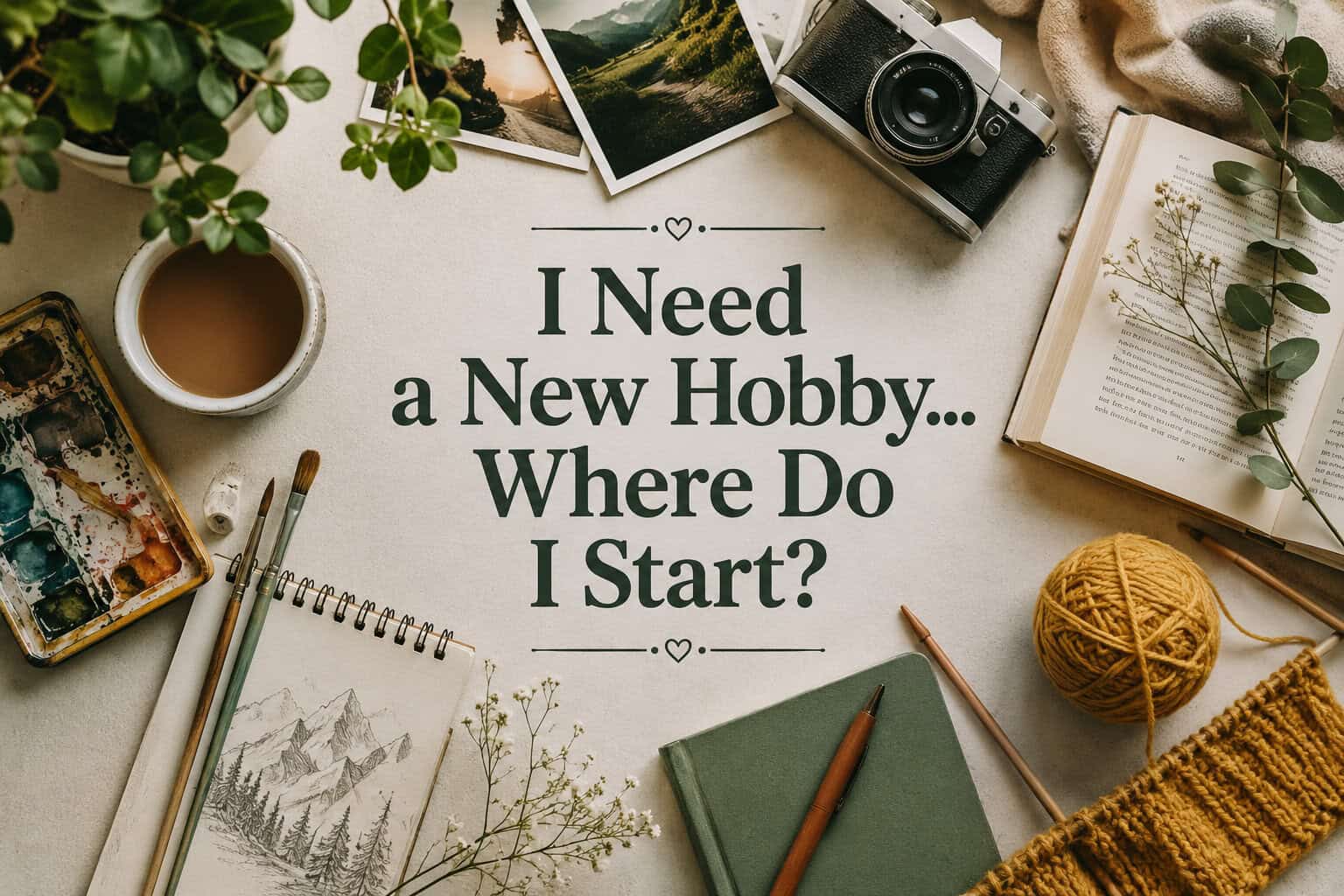
I need a new hobby. It is a thought that often arrives quietly. Perhaps your evenings have begun to feel repetitive, weekends disappear without anything memorable happening or scrolling through your phone no longer feels particularly rewarding. You know you would like something different, yet the sheer number of possible hobbies makes choosing one surprisingly difficult.
The answer is not to find the hobby everybody else recommends. Instead, it is to discover an activity that fits your personality, available time, budget and the way you genuinely enjoy spending an afternoon.
Your new hobby might involve making something with your hands, exploring the outdoors, studying history, growing plants or learning a practical skill. It could become a lifelong passion, or it might simply introduce you to something else that suits you even better. Either outcome makes trying worthwhile.
Quick Answer: I Need a New Hobby. Where Should I Start?
If you are thinking, I have spare time to kill, I need a new hobby, begin by deciding what you want from your free time. You may want to relax, create something, become more active, meet people or learn about a subject that already interests you. Choose one affordable activity, try it several times and avoid buying lots of equipment until you know you enjoy it. The right hobby should feel inviting enough that you look forward to returning to it.

Why Finding the Right Hobby Matters
A hobby can do far more than fill an empty evening. It creates a part of life that belongs entirely to you, without deadlines, performance reviews or pressure to produce a perfect result.
Some hobbies give the week a sense of anticipation. You begin looking forward to Sunday morning because that is when you walk, bake, paint or visit a local antiques fair. Others turn ordinary moments into opportunities. A foreign coin in your change becomes something to investigate, while a clear night invites you outside to look at the stars.
Hobbies also change the way free time feels. Two hours spent scrolling often disappear without leaving much behind. Two hours spent assembling a model, planting herbs or learning a new stitch usually produce a memory, a discovery or visible progress.
Most importantly, there is no single hobby that suits everyone. The activity itself matters less than the way it makes you feel while you are doing it.
Which of These Sounds Most Like You?
Finding the right hobby often begins by understanding what you enjoy rather than choosing from a long list of activities.
I Like Creating
If you enjoy making things with your hands and seeing ideas become real, creative hobbies could be exactly what you are looking for. Activities such as painting, candle making, sewing and model building reward imagination while giving you something tangible to enjoy afterwards.
I Like Exploring
If your favourite moments happen outdoors, hobbies that involve walking, gardening, hiking or discovering new places can replace routine with fresh air, exercise and regular adventures.
I Like Discovering
If you are naturally curious and enjoy learning how things connect, collecting hobbies, local history and practical skills can provide years of fascinating discoveries without ever feeling repetitive.
I Like Slowing Down
If everyday life already feels busy enough, choose a hobby that encourages patience instead of pressure. Slower activities often become the perfect antidote to constant notifications and busy schedules.
You do not need to fit neatly into one category. Most people enjoy a mixture of creativity, curiosity, fresh air and relaxation. If more than one of these sounds like you, that simply means you have several exciting hobbies waiting to be discovered.
Start with Curiosity, Not Equipment
Buying equipment can feel like progress, but it is not the same as beginning. A cupboard full of untouched supplies quickly becomes a reminder of pressure rather than possibility.
Before spending heavily, notice what already attracts your attention. Which programmes, shops or museum displays make you pause? What do you enjoy reading about even when nobody asks you to? Which activity would you try tomorrow if the equipment appeared in front of you?
These small clues often reveal more than a generic list of popular hobbies. Someone who always stops to examine old objects may enjoy collecting. A person who notices birds and wildflowers during every walk might prefer nature photography or wildlife watching. Meanwhile, somebody who enjoys careful detail could lose hours in model building, embroidery or miniature painting.
Once an activity interests you, borrow, improvise or buy a simple beginner kit. Give the hobby enough time to move beyond the awkward first attempt. Almost every activity feels slightly uncomfortable before your hands and attention learn what to do.
Explore the HobbyIdeas UK Hobby Directory
One of the hardest parts of finding a hobby is simply knowing what exists. Most people can name perhaps twenty activities, yet there are hundreds of creative, outdoor, practical, relaxing and collectable hobbies waiting to be discovered.
The HobbyIdeas UK Hobby Directory brings those possibilities together in one place. Each entry includes a simple indication of cost, difficulty and money-making potential, followed by a link to a practical beginner guide where one is available.
You might arrive expecting to choose gardening and leave curious about bonsai. You may begin by exploring painting, then discover needle felting, printmaking or sublimation. That is exactly what a good directory should do. It does not tell you which hobby to choose. Instead, it helps you notice the one that makes you want to learn more.
Do Not Choose a Hobby Because It Looks Impressive
Social media makes certain hobbies look effortless. The finished cake appears without the collapsed sponge, the perfect painting hides the failed sketches and the immaculate garden rarely shows the weeds removed beforehand.
Choosing an activity because its final results look impressive can create disappointment when the early stages feel ordinary. Instead, ask whether you would enjoy the process even before you became good at it.
A suitable hobby has something rewarding at every level. Beginner walks still provide fresh air. A first collection still contains stories. An uneven handmade bowl still proves that you shaped clay with your own hands.
Results matter, but the process is what fills your evenings. Choose a process you enjoy.
Give Yourself Permission to Be a Beginner
Adults often avoid new activities because they dislike feeling inexperienced. We become accustomed to knowing how things work, so dropping stitches, misreading instructions or producing an untidy first attempt can feel surprisingly uncomfortable.
However, being a beginner carries its own excitement. Every small improvement feels significant because almost everything is new. The first plant cutting that roots, the first coin correctly identified or the first loaf that rises properly can create a satisfaction that experienced hobbyists sometimes struggle to recapture.
Do not compare your first week with somebody else’s tenth year. Instead, compare today’s attempt with your previous one. Progress becomes much easier to notice when you measure it against your own experience.
Our guide to why a hands-on hobby can make an effective digital detox explores how physical activities replace passive screen time with curiosity, focus and visible progress.
Try a Hobby Before You Commit to It
You do not need to decide whether an activity will become a lifelong passion before trying it. Treat the first few sessions as an experiment rather than a commitment.
A local workshop, club open day or beginner class can provide access to equipment and guidance without a major investment. Libraries, community centres, museums and independent craft shops often host affordable activities that allow newcomers to see what a hobby feels like in practice.
At home, begin with the smallest workable version. Grow three herbs instead of redesigning the garden. Sketch with one pencil before buying a complete art set. Walk a local circular route before investing in specialist hiking equipment.
Starting small keeps the hobby light enough to enjoy. If it grows naturally, you can add equipment and ambition later.
Three Signs You May Have Found the Right Hobby
A hobby rarely announces itself immediately. More often, you notice small changes in the way you think, plan your time and look forward to doing it again.
You Make Time for It
Instead of waiting for a completely free afternoon, you begin finding small moments during the week because spending time on the hobby feels worthwhile rather than another task on your list.
You Keep Thinking About It
Ideas appear when you least expect them. You notice books, places, tools or objects connected with the hobby and naturally want to learn more without forcing yourself.
You Enjoy the Journey
Mistakes become part of the experience instead of a reason to stop. Improving feels satisfying, but simply taking part is enough to make you want to come back tomorrow.
Your New Hobby May Surprise You
The activity you eventually love may not match the picture you have of yourself. Someone who never considered themselves creative may discover an instinct for arranging flowers or decorating cakes. A person who disliked sport at school might enjoy hiking because it offers freedom rather than competition.
Age rarely limits a hobby as much as assumption does. Adults begin painting, collecting, gardening, sewing and walking at every stage of life. You do not need childhood experience or natural talent. Interest is enough to begin.
It is also perfectly acceptable to move on. A hobby can serve you for one season and still have been worthwhile. Perhaps it taught you patience, introduced you to new friends or led towards another activity you would never otherwise have discovered.
Exploration is part of the hobby journey, not evidence that you failed to choose correctly.
Choose a Hobby That Fits Your Real Life
A hobby needs to work with the life you actually have, not the one you imagine having later. Consider your available space, physical ability, budget and realistic free time.
If you live in a small home, compact hobbies such as stamp collecting, sketching, crochet or jigsaw puzzles may suit you better than furniture restoration. If your week feels unpredictable, choose something you can pick up for twenty minutes without extensive preparation.
Outdoor hobbies may work beautifully for people who need a reason to leave the house, while home-based activities can provide comfort during dark evenings or poor weather. Some people benefit from a scheduled club because it creates commitment. Others prefer hobbies they can enjoy quietly and independently.
The right choice should fit comfortably enough that beginning does not require reorganising your entire life.

Frequently Asked Questions About Finding a New Hobby
What should I do when I need a new hobby?
Think about the experience you want from your free time. Decide whether you want creativity, relaxation, exercise, learning or social contact, then choose one affordable activity that matches that goal.
How do I know whether a hobby is right for me?
Give it several genuine attempts. A hobby may suit you when you begin making time for it, thinking about it between sessions and enjoying the process even while you are still learning.
What hobbies are easy to start at home?
Sketching, indoor gardening, baking, needle felting, model building, coin collecting, stamp collecting, puzzles and simple sewing projects can all begin at home with modest equipment.
How much should I spend on a new hobby?
Spend only enough to try the activity properly. Beginner kits, borrowed tools and small projects allow you to test your interest before investing in specialist equipment.
What happens if I lose interest?
Move on without feeling guilty. Trying a hobby still teaches you about your interests, and it may lead towards another activity that suits you better.
Can a hobby become a source of income?
Yes, although enjoyment should usually come first. Baking, photography, craft making, collecting and personalised products can gradually develop into modest income streams once your skills and confidence grow.
So, Where Should You Start?
Start with the activity that creates the strongest spark of curiosity, not the one that sounds most productive or impressive.
Spend a little time exploring the UK Hobby Ideas Directory. Open the guides that catch your attention and notice which ones make you imagine yourself taking part. Then choose one simple first step.
That step might involve buying a small sketchbook, joining a local walking group, planting a windowsill herb pot or sorting through old family coins. It does not need to be dramatic. It only needs to move the hobby from an idea into your real life.
Every hobby begins in exactly the same way. With curiosity.
Final Thoughts: I Need a New Hobby
If you keep thinking, I need a new hobby, take that feeling seriously. It may be telling you that your free time needs more creativity, movement, discovery or connection.
You do not need expensive equipment, natural talent or a perfect plan. You simply need an activity interesting enough to try and enough patience to remain a beginner for a while.
The hobby you eventually love may be the one you expected to choose. Equally, it may surprise you completely. Either way, the only reliable method is to begin exploring.
Choose one idea. Give it twenty minutes. Then see whether you want to return tomorrow.
Continue Your Hobby Journey
If this article has encouraged you to try something new, the HobbyIdeas Amazon Storefront brings together books, tools and beginner-friendly equipment connected with many of the hobbies featured throughout the magazine.
Think of it as an extension of HobbyIdeas rather than a conventional shop. The collections are organised by hobby, making it easier to explore practical starting equipment without searching through thousands of unrelated products.
Browse the HobbyIdeas Amazon Storefront →
Disclosure: As an Amazon Associate, HobbyIdeas may earn a small commission from qualifying purchases made through our Amazon Storefront, at no extra cost to you.