

Hobby starter kits can make a new pastime feel much easier to begin, especially when you have no idea which tools, materials or supplies you need first. However, not every kit offers good value, and some look far more impressive in the box than they feel once you start using them.
That is why starter kits deserve a closer look.
At their best, they remove the guesswork. They give you enough equipment to try a hobby properly, follow a first project and decide whether you want to continue. At their worst, they fill a box with weak tools, tiny samples and vague instructions that leave beginners more confused than inspired.
So, are hobby starter kits worth buying?
The honest answer is yes, but only when the kit suits the hobby, the tools are usable and the project feels realistic for a beginner.
Quick Answer: Are Hobby Starter Kits Worth Buying?
Hobby starter kits are worth buying when they include proper basic tools, clear instructions and enough materials to complete at least one real beginner project. They are less useful when they rely on novelty packaging, poor-quality tools or tiny samples that do not let you properly try the hobby.
Why Hobby Starter Kits Appeal to Beginners
Starting a new hobby can feel surprisingly awkward.
You might know you want to try needle felting, model building, calligraphy, soap making or watercolour painting, but then the questions begin. Which tools do you need? Which ones can wait? Which materials work together? What should a beginner avoid buying too soon?
That early confusion stops many people before they begin.
A good starter kit solves that problem by gathering the basics in one place. Instead of spending an evening comparing needles, paints, papers, blades, brushes or wool fibres, you can open the box and start. For many beginners, that convenience matters.
Starter kits also reduce the fear of getting it wrong. You do not need to build a perfect setup. You simply need enough to try the hobby and see whether you enjoy the process.
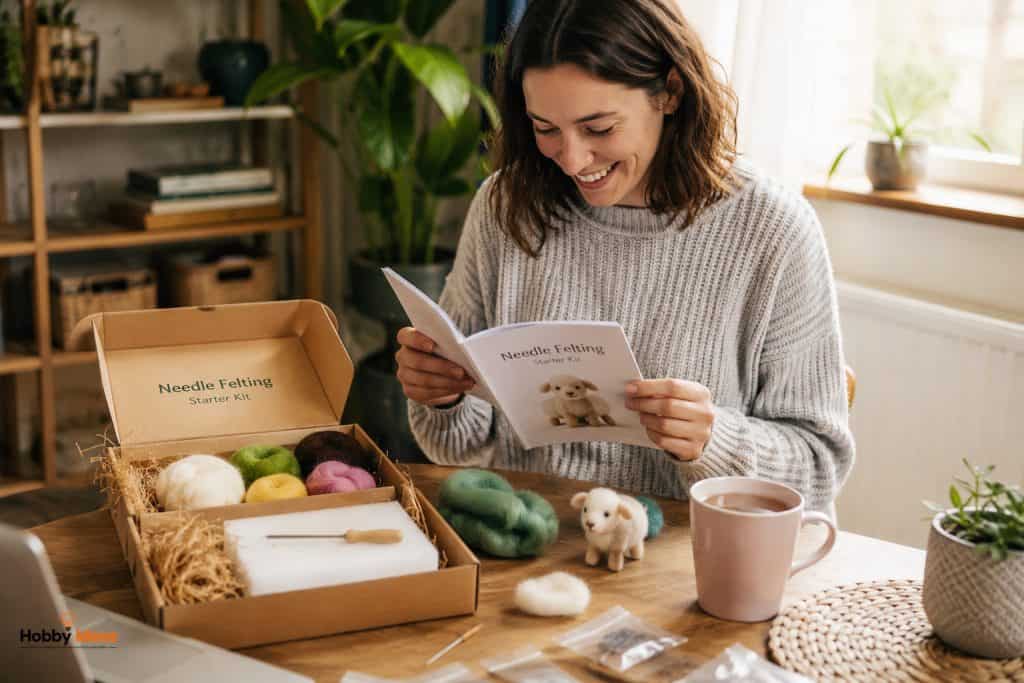
This is especially useful for hands-on hobbies. If you are trying needle felting for beginners, for example, a kit can provide wool, felting needles, a mat and basic shapes in one go. If you are trying model building, a kit gives you a defined project with a clear finish line.
That clear starting point can make all the difference.
The Starter Kit Sweet Spot
The best hobby starter kits sit in the middle ground. They do not promise everything forever, but they do give you enough to begin properly.
A useful kit should feel like a doorway into the hobby, not a dead end. It should include the main tools, enough materials for a real attempt and instructions that make sense to someone starting from scratch.
Good kits also leave room to grow. Once you understand the basics, you can replace materials, upgrade tools or move towards more ambitious projects without starting again completely.
A poor kit usually feels exciting for five minutes and disappointing for much longer. The box may look generous, yet the tools bend, the materials run out quickly or the instructions assume you already know what you are doing.
That does not mean starter kits are a bad idea. It simply means the best ones support the hobby itself rather than relying on gift-box appeal.
When Hobby Starter Kits Are Worth Buying
Hobby starter kits work best when the hobby needs several small items before you can begin.
Needle felting needs wool, barbed needles and a felting surface. Calligraphy needs suitable pens, nibs or brush pens, paper and practice sheets. Candle making needs wax, wicks, containers and scent if you want to use it. Soap making needs moulds, safe ingredients and clear instructions. Embroidery needs fabric, thread, needles and a hoop.
Buying those things separately can quickly become confusing.
In those cases, a starter kit can save time and sometimes money. More importantly, it removes the awkward first step. Instead of trying to design the perfect beginner setup, you can simply try the hobby.
Starter kits also suit hobbies where the first project matters. A beginner often needs a small success. That does not mean the result has to look perfect. However, it should feel possible, enjoyable and complete enough to encourage a second attempt.
This is where kits can shine.
A simple embroidery kit with a printed pattern can help someone finish their first hoop. A small model kit can give a beginner a vehicle, aircraft or figure to build over several evenings. A beginner art set can encourage quick experiments without demanding a full studio.
That early sense of progress keeps people going.
When Starter Kits Are Not Worth It
Some starter kits disappoint because they try to look bigger than they really are.
They may include dozens of pieces, but many of those pieces add little value. A kit with twenty weak tools can feel less useful than one with five decent ones. A huge craft kit may look impressive in a product photo, yet if the instructions are poor or the materials feel flimsy, beginners quickly lose confidence.
Starter kits are also less useful when the hobby does not need much equipment.
If you want to begin journalling, you may only need a notebook and a pen you enjoy using. If you want to try birdwatching, you can start by watching garden birds before buying binoculars. If you want to explore family history, your first steps may involve conversations, old photographs and online records rather than a physical kit.
Some collecting hobbies also work better when you buy storage and reference items separately. A stamp collecting starter pack can be fun, but many collectors benefit more from a good stockbook, tweezers and a basic guide. Coin collecting often starts with careful observation, safe handling and simple storage rather than a themed kit full of mixed coins.
Therefore, the question is not simply whether a kit exists.
The better question is whether the kit genuinely helps you begin the hobby in a better way.
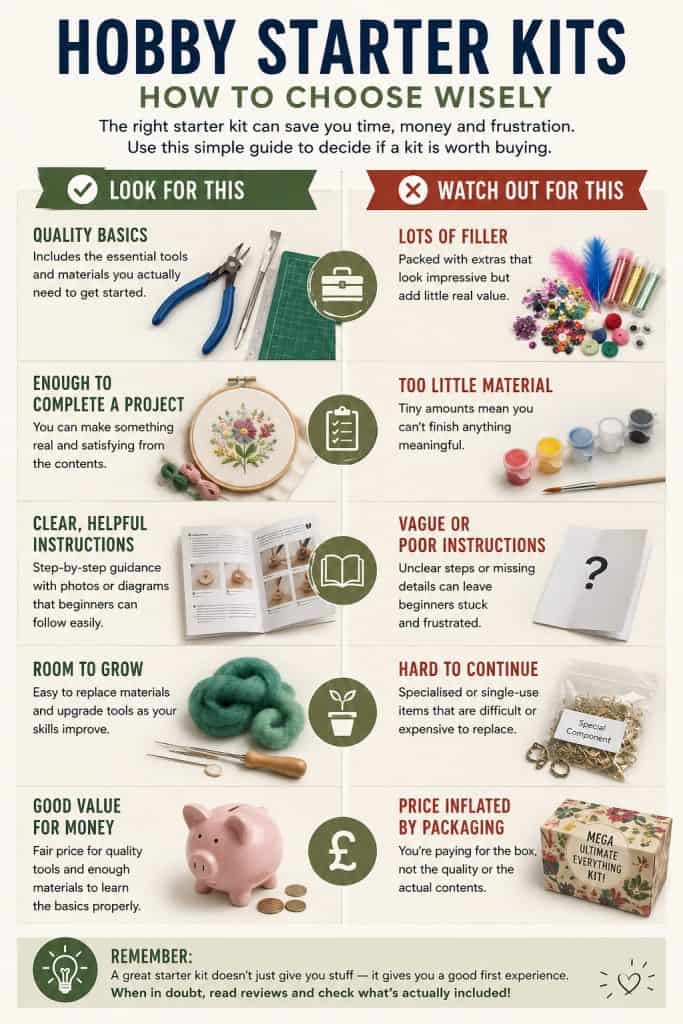
A Good Starter Kit Should Pass This Test
Before buying a hobby starter kit, imagine opening it on a quiet Saturday afternoon. A good one should make the next step feel obvious, not leave you wondering what to do next.
🧰 Does It Include the Real Basics?
Look for the tools and materials the hobby actually needs, not decorative extras that simply make the box look fuller.
✅ Can You Complete a First Project?
A starter kit should give you enough supplies to finish something small, satisfying and realistic.
📖 Are the Instructions Clear?
Beginner instructions should explain the process plainly, ideally with photos, diagrams or simple stages.
🌱 Can You Continue Afterwards?
The best kits introduce a hobby you can keep developing, rather than leaving you stuck once the first materials run out.
HobbyIdeas Tip: If a starter kit passes all four checks, it is much more likely to help you begin properly rather than simply giving you a nice-looking box of bits.
The Best Hobbies for Starter Kits
Some hobbies suit starter kits beautifully because they rely on several small supplies working together.
Creative Hobbies
Needle felting is a good example. Beginners need the right wool, suitable needles and a safe surface. A kit can make the hobby feel far less mysterious. It also gives you a few colours and shapes to experiment with before you decide whether to buy more wool or attempt larger figures. If needle felting appeals to you, a needle felting kit with a pad, needles, wooden holders and storage bag gives beginners a practical way to start without buying every tool separately. It suits the kind of hobby starter kit that makes sense, because the main supplies work together and you can begin with small, manageable projects before deciding whether to take the hobby further.
Embroidery also lends itself well to kits. A printed pattern, hoop, thread and needle create a clear path from first stitch to finished piece. Because the project stays contained, beginners can build confidence without needing to design anything from scratch.
Calligraphy and brush lettering kits can work well too, as long as they include decent pens and practice sheets. The best ones encourage repetition, because lettering improves through steady practice rather than instant results.
Construction
Model kits offer a slightly different kind of starter experience. They give you a project with structure, instructions and visible progress. A beginner may still need glue, paint or basic tools depending on the kit, so it always pays to check what the box actually includes before buying. If model building feels more your style, an unbuilt H.M.S. Victory plastic model kit gives you a focused project with history, structure and visible progress. It suits beginners who like patient, detailed hobbies because you can build in stages, learn as you go and enjoy the satisfaction of creating something display-worthy over time.
Craft Kits
Craft kits for candles, soap, jewellery making and small sewing projects can also make sense when they explain the process clearly. However, these kits vary hugely in quality, so beginners should check the contents carefully and read reviews that mention the instructions, not just the packaging.
Hobbies Where Buying Separately May Work Better
Not every hobby needs a starter kit.
Sometimes, a better first purchase is one reliable tool, one good book or one simple storage item.
Stamp collecting offers a good example. A themed starter pack may feel exciting, but a beginner often gets more long-term value from a stockbook, stamp tweezers and time spent learning how to sort and identify stamps. If you want the collecting route, our guide to how to start stamp collecting explains the hobby in a more practical way.
Coin collecting works in a similar way. You do not need a box of random coins to begin. You can start with coins you already own, learn how to handle them safely and then choose a direction. A simple album or coin tray may prove more useful than a general beginner bundle.
Photography can also become expensive if you chase kits too early. Many beginners can learn composition, light and presentation with a phone before buying extra equipment. If you sell or display handmade work, our guide to how to photograph handmade items may help more than a box of accessories.
Indoor gardening sits somewhere in the middle. A cactus growing kit or herb kit can be fun, especially as a gift. However, many beginners can also start with one healthy plant, a suitable pot and good compost. If you enjoy small-space growing, our guide to how to grow cactus plants at home gives more detailed advice. If indoor gardening appeals to you, a grow your own cactus kit with seed varieties and starter tools offers a simple way to try plant growing from scratch. It fits the starter kit idea well because everything stays small, manageable and beginner-friendly, while still giving you the slow satisfaction of watching something grow at home.
Match the Kit to the Kind of Beginner You Are
The right kit depends on your temperament as much as the hobby. Some people want freedom. Others want instructions. Both approaches can work.
If you like clear steps, choose a kit with one defined project. Embroidery hoops, model kits, beginner candle sets and simple craft kits work well because they tell you what to do next. You can relax into the process rather than inventing the whole project yourself.
If you prefer experimenting, choose a kit with flexible materials. Watercolour sets, collage packs, needle felting wool bundles and sketching sets give you room to play, test and make mistakes without feeling tied to one finished result.
If you lose interest quickly, avoid huge kits with too many options. A small, focused kit often works better because it gives you a finish line. Once you complete one project, you can decide whether the hobby deserves more time, space and money.
If you already know the hobby appeals to you, it may be worth buying fewer items of better quality instead of a large starter bundle. Better tools can make the learning curve feel smoother from the beginning.
How to Choose a Good Hobby Starter Kit
Start by looking at the contents list, not the product photo.
Product photos can make a kit look generous, especially when everything appears neatly arranged on a table. However, the contents list tells you what you are actually buying. Check quantities, sizes, materials and whether anything important requires a separate purchase.
Then look at the instructions.
A kit aimed at beginners should not assume knowledge. It should explain the tools, the order of work and the likely mistakes. If reviews repeatedly mention confusing instructions, missing steps or poor translations, take that seriously.
Also check whether the materials can be replaced.
A good starter kit opens the door to more of the hobby. If you enjoy it, you should be able to buy more wool, thread, paint, wax, paper, blades or refills without needing a completely new kit every time.
Safety matters too, especially with kits involving heat, blades, chemicals, electrical items or children. GOV.UK offers useful consumer product safety advice, including checks to consider before buying and what to do after a purchase.
Finally, read the reviews carefully.
Do not only look at star ratings. Look for reviews from genuine beginners. The most useful comments often mention whether the kit helped someone start, whether the tools lasted and whether the finished project matched expectations.
What to Avoid When Buying Hobby Starter Kits
Be cautious with kits that promise too much.
A box that claims to include everything for a complete hobby may sound tempting, but hobbies rarely work that way. A starter kit should begin the journey, not replace learning, practice or better tools later on.
Also watch out for kits that include lots of tiny items but very little substance. A painting kit with many colours may still disappoint if the paint feels weak. A sewing kit may include plenty of accessories yet no project worth making. A model kit may look appealing but still need extra tools, glue and paint before you can start.
Instructions should matter as much as contents.
Beginners need guidance. A kit without clear instructions may become a box of supplies rather than a proper starting point. If the hobby involves technique, the instructions should help you understand what your hands need to do, not just show a finished result.
Price can mislead too.
The cheapest kit is not always the best value. However, the most expensive one may not suit a beginner either. The sweet spot usually sits somewhere in the middle, where the tools work, the materials feel usable, and the project looks realistic.
Hobby Starter Kits: Common Questions
Starter kits can make a new hobby feel easier, but they also raise a few sensible questions. Here are the answers worth checking before you buy.
Are Cheap Hobby Starter Kits Worth Buying?
Sometimes. A cheap kit can work well for a quick trial, especially with simple crafts. However, very cheap kits often cut corners on tools, materials or instructions, so check reviews carefully before buying.
What Should a Good Starter Kit Include?
A good starter kit should include the essential tools, enough materials for at least one real beginner project and clear instructions that do not assume previous experience.
Which Hobbies Work Best as Starter Kits?
Needle felting, embroidery, model building, calligraphy, candle making, soap making, watercolour painting and jewellery making often work well because they need several small supplies to begin.
Should I Buy a Kit or Separate Supplies?
Buy a kit if you want an easy first project and do not know what to buy. Choose separate supplies if you already understand the hobby, want better quality tools or only need one or two specific items.
HobbyIdeas Tip: A good starter kit should reduce confusion, not create more of it. If the contents, instructions and first project all feel clear, you are much more likely to enjoy your first attempt.
Final Thoughts: Starter Kits Should Help You Begin, Not Impress You
The best hobby starter kits do one simple thing well.
They help you begin.
They do not need to include every tool you will ever use. They do not need to promise professional results. They do not need to turn you into an expert over one weekend.
Instead, a good kit should make the first step feel easy, enjoyable and realistic. It should give you a taste of the hobby, enough confidence to continue and enough information to understand what you might need next.
That is why hobby starter kits can be worth buying, especially when you choose carefully.
Look past the packaging. Check the contents. Read the instructions. Think about the kind of beginner you are. Then choose a kit that helps you spend less time worrying about what to buy and more time actually enjoying the hobby.
Because in the end, the right starter kit is not the one with the fullest box.
It is the one that gets you started.
Affiliate disclosure: This article may contain affiliate links. If you buy through these links, HobbyIdeas may earn a small commission at no extra cost to you.