

Paddleboarding for beginners can look wonderfully calm from the bank. A board glides across still water, the paddle dips quietly, and the person standing there appears completely at ease.
Then you try it for the first time and realise your knees have developed opinions.
That is part of the charm.
Paddleboarding is not about looking elegant on day one. It is about learning how the board feels beneath you, understanding the water, building confidence and discovering a slower kind of outdoor adventure. In 2026, it remains one of the most appealing ways to spend time outside, especially if you like the idea of fresh air, gentle movement and a hobby that can turn an ordinary weekend into something memorable.
However, paddle boarding also deserves respect.
Water changes quickly. Wind matters. Leashes matter. Buoyancy aids matter. Therefore, the best way to begin is not to rush out, buy the biggest inflatable board you can find and head for open water. The best way is calmer, safer and far more enjoyable.
Quick Answer: What Should Beginners Know About Paddleboarding?
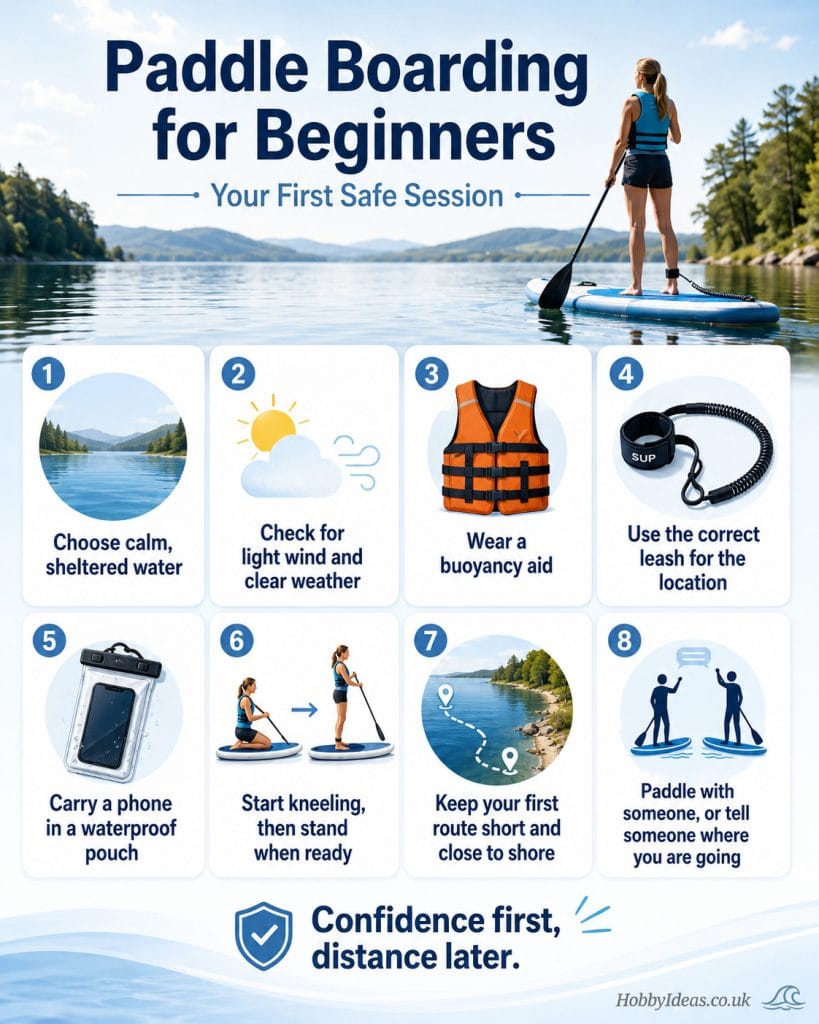
Paddleboarding for beginners works best on calm, sheltered water with light wind, proper safety kit and a short first route. Beginners should wear a buoyancy aid, carry a phone in a waterproof pouch, use the correct leash, check the weather and avoid offshore winds before heading out.
Why Paddleboarding Has Become Such an Appealing Hobby
Paddleboarding has a simple appeal.
You do not need to race. It’s not necessary to compete. You do not need to be especially athletic before you start. Instead, you step onto a board, learn how to balance, move gently through the water and see familiar places from a completely different angle.
That change of viewpoint is powerful.
A quiet river feels different when you are level with the reeds. A broad lake feels bigger when you are standing in the middle of it. Even a short paddle close to shore can feel like a small escape from the usual week.
For many people, that is exactly what makes paddle boarding so attractive. It sits somewhere between exercise, outdoor adventure and mindful wandering. You can make it gentle or challenging. You can paddle alone once experienced, join friends, hire equipment on holiday, take a lesson or build it into weekends away.
It also fits naturally alongside other outdoor hobbies. If you already enjoy walking, camping, cycling, wildlife watching or exploring local places, paddle boarding can add a new layer to that outdoor life.
However, the water always sets the terms.
A good first paddle should feel calm, short and controlled. It should leave you smiling, not exhausted. It should build confidence rather than test your courage.
Your First Paddleboarding Day Should Feel Like This
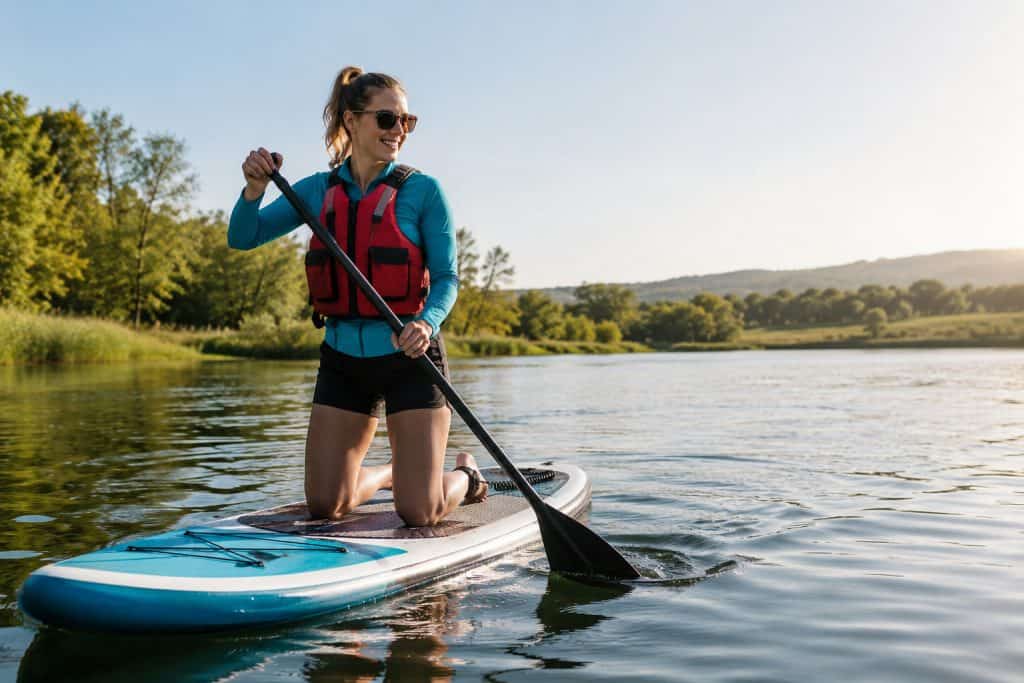
A good first paddleboarding session should feel calm, unhurried and slightly exciting. You are not trying to prove anything. You are simply learning how board, body, paddle and water work together.
Choose sheltered water, light wind and an easy launch spot. A calm lake, quiet beginner-friendly centre or sheltered section of canal usually gives you a much better first experience than open sea, strong river flow or a busy harbour.
Start close to the bank or shore. Spend time kneeling before standing. Paddle for a short distance, turn around while you still feel fresh, and treat the first outing as a confidence-building session rather than a journey.
The best beginner days also include the right kit. A buoyancy aid, suitable leash, waterproof phone pouch and sensible clothing may not look glamorous, but they make the hobby safer and more enjoyable from the start.
If you finish your first session thinking, “I could do that again,” you have done it properly. Distance can wait. Confidence comes first.
Paddleboarding Safety Comes Before Everything Else
Paddleboarding looks gentle, but beginners should never treat it casually.
The board may feel stable on the grass. The water may look flat from the edge. However, wind, tide, current, cold water and fatigue can change a simple paddle very quickly. That is why the safety basics matter before you think about technique, boards or routes.
The RNLI paddleboarding safety advice highlights four important points: wear a buoyancy aid, carry a phone in a waterproof pouch, wear the correct leash and avoid offshore winds.
Those four points give beginners a strong foundation.
A buoyancy aid helps you float if you fall in or become tired. A phone in a waterproof pouch lets you call for help, but it needs to stay on you, not tucked away in a dry bag attached to the board. If you become separated from the board, a phone on the board cannot help you.A simple floating waterproof phone pouch with a lanyard is one of the most sensible low-cost accessories for beginner paddle boarding. It keeps your phone close to you rather than stored on the board, which matters if you fall in, drift away from your kit or need to call for help quickly.
The correct leash also matters. On calm open water, beginners commonly see ankle leashes. However, moving water, rivers and some inland conditions may require a quick-release waist system instead, because a leash can become trapped. If you are unsure, ask a qualified instructor, hire centre or local paddling club before going out.
When Offshore wind deserves special attention.
An offshore wind blows from the land out towards open water. It can make the water near the shore look deceptively calm while pushing you further away. Beginners should avoid it completely.
Good safety habits are not there to spoil the hobby. They protect the quiet, enjoyable version of paddle boarding that beginners actually want.
Paddleboarding For Beginners: Green Flags and Red Flags
Before you launch, pause for one minute and look at the whole situation. A safe first paddle usually has several green flags and very few doubts.
If you’re still exploring different ways to enjoy time on the water, our guide to canoe vs kayak for beginners explains the key differences between the two and will help you decide which is the better choice for your next adventure.
Green Flags and Red Flags for Beginner Paddleboarders
Before you launch, the conditions should feel reassuring rather than doubtful. A good beginner session usually comes with several green flags and very few warning signs.
✅ Green Flags
- Calm, sheltered water
- Light wind and clear weather
- Easy launch and landing point
- Buoyancy aid worn properly
- Phone carried on you in a waterproof pouch
- Correct leash for the location
- Short route close to shore
- Someone knows where you are going
⚠️ Red Flags
- Offshore wind
- Fast-flowing water
- Cold water without suitable clothing
- No buoyancy aid
- Phone packed away on the board
- Unclear tide or current conditions
- Busy boat traffic
- Feeling rushed, tired or unsure
HobbyIdeas Tip: If the red flags feel stronger than the green ones, do not launch. The best beginner paddle boarding sessions are the ones that build confidence, not the ones that test it.
HobbyIdeas Tip: If the day feels questionable, choose another day. Paddleboarding for beginners should build confidence, not test your luck.
What Kit Do You Need for Paddleboarding for Beginners?
Beginner paddleboarding kit can look complicated at first, but the core setup is fairly simple.
You need a board, paddle, leash, buoyancy aid, suitable clothing and a way to call for help. If you use an inflatable paddle board, you also need a pump and space to dry and store the board afterwards.
Inflatable Boards
Inflatable boards remain popular with beginners because they store more easily than hard boards and can fit in a car boot. However, quality varies. A stable beginner board should suit your weight, the type of water you plan to paddle and your ability level. A very cheap board may feel tempting, but poor stiffness, weak accessories or an awkward paddle can make learning harder.
If you decide paddle boarding is a hobby you want to take seriously, an extra-wide inflatable stand-up paddle board package with SUP accessories can make sense as a first proper setup. A wider beginner-friendly board can feel more stable while you build confidence, and a package that includes the main accessories helps you avoid buying every item separately before your first few sessions.
The paddle should feel comfortable and adjustable. Many beginners set it slightly taller than themselves, then adjust as they learn. A lightweight paddle feels easier over time, although beginners do not need to buy the most expensive one immediately.
A buoyancy aid should fit properly and allow you to paddle without restriction. Try it on, fasten it correctly and make sure it feels secure. This is not the item to skip because the water looks calm.
The Correct Clothing
Clothing depends on the season, water temperature and location. In warm weather, lightweight quick-drying clothing may work on sheltered water. In colder conditions, you may need a wetsuit, drysuit or thermal layers designed for water use. Cotton clothing can become cold and heavy when wet, so it rarely makes sense for paddling.
A dry bag helps protect spare layers, snacks and keys. However, your emergency phone should stay on you in a waterproof pouch, not only inside the dry bag.
Once you have decided on Paddleboarding as a hobby, a handful of well-chosen accessories can make every trip more enjoyable.
Every paddler develops a few favourite pieces of kit that make time on the water safer, more comfortable and more enjoyable. We’ve brought together many of those essentials into one carefully selected collection, making it easier to choose reliable equipment whether you’re canoeing, kayaking or paddleboarding.
Browse our Paddling Essentials collection to see the equipment we recommend for your next adventure.
Should Beginners Take a Paddleboarding Lesson?
A lesson is one of the best ways to start.
You can learn alone in ideal conditions, but a good instructor speeds everything up. They show you how to carry the board, fit the leash, kneel safely, stand up, paddle efficiently, turn, fall in, climb back on and judge conditions.
That knowledge removes a lot of guesswork.
Lessons also let you try equipment before buying. This matters because boards vary in size, shape and stability. What looks right online may not feel right on the water. A hire centre or beginner session can help you understand what suits you before you spend money.
There is also a confidence benefit.
Many beginners worry about falling in, drifting away or looking foolish. A lesson normalises all of that. Everyone wobbles. Everyone learns. Falling in safely is part of the process, not a failure.
If you feel nervous, book a beginner session on calm water. It may be the difference between buying a board that sits in the shed and discovering a hobby you genuinely want to continue.
Your First Paddleboarding Kit, Without the Panic
Beginners do not need every accessory on day one. Start with the essentials, then add extras once you know where and how you enjoy paddling.
The essentials are the board, paddle, suitable leash, buoyancy aid and waterproof phone pouch. These are the items that affect your safety, control and ability to enjoy the water with confidence.
If you buy an inflatable board, the pump matters more than you might expect. A properly inflated board feels firmer and more stable, while an under-inflated board can flex, wobble and make paddling harder.
Useful extras include a dry bag, spare warm layer, water bottle, small towel and change of clothes. However, extras should support the paddle, not replace good judgment about weather, water and ability.
The best beginner setup feels simple, safe and manageable. If your kit takes all your energy before you reach the water, simplify it.
How to Paddle Board for the First Time
Start on land.
Look at the board, the fin, the leash and the paddle. Check the wind direction. Choose your launch point. Make sure you know where you will get out before you get in.
Then begin on your knees.
Kneeling lowers your centre of gravity and helps you feel how the board moves. Keep your hands on the paddle, look ahead and take a few gentle strokes. The temptation is to stare down at the board, but that usually makes you wobble more.
When you feel ready to stand, place your feet where your knees were, roughly either side of the carry handle. Rise slowly, keep your knees soft and look towards where you want to go. You do not need to stand perfectly straight. A relaxed stance works better than a stiff one.
Short paddle strokes help at first.
Put the blade into the water near the front of the board, draw it back towards your feet and lift it out. Swap sides every few strokes to keep the board moving straight. If the board turns too much, shorten the stroke and slow down.
Practise turning before you travel far.
You can sweep the paddle in a wide arc to turn gradually. Later, you may learn quicker turns, but beginners should focus on control rather than style.
Most importantly, return before you feel tired.
The journey back often feels harder than the journey out, especially if the wind changes or your legs begin to tire. Your first paddle should end while you still feel pleased, not when you feel relieved.
Where Should Beginners Go Paddle Boarding?
Beginners should start on calm, sheltered water with easy access and little boat traffic.
Managed lakes, beginner-friendly watersports centres and sheltered canals can work well. A supervised session gives you even more reassurance, especially if you have never paddled before.
Coastal paddle boarding can be beautiful, but it adds extra considerations. Tides, offshore wind, currents, waves, rocks, swimmers and boats all matter. If you are new, avoid unsupervised coastal paddling until you understand local conditions or have guidance from someone experienced.
Rivers also vary. Some sections feel gentle. Others include strong flow, weirs, strainers, hidden hazards and access issues. Do not assume a river is safe because it looks slow from the bank.
Licensing also matters. Paddle UK explains that most rivers and canals in England and Wales require a waterways licence for canoes, kayaks and stand-up paddleboards. Scotland and Northern Ireland follow different arrangements, so check the rules for the place where you plan to paddle.
Good beginners ask local questions.
Where is the safest launch point? What does the wind usually do here? Are there boats? Do I need a licence? Are there local restrictions? Is this suitable for a first paddle?
Those questions make the hobby easier, not more complicated.
Paddleboarding for Beginners as Part of a Bigger Outdoor Life
Paddle boarding works beautifully as a stand-alone hobby, but it can also become part of a wider outdoor lifestyle.
You might start with an hour on a lake, then slowly build towards longer routes, gentle wildlife watching, sunrise paddles, holiday hire sessions or relaxed weekends near the water. Some people combine paddle boarding with camping trips, photography, swimming or exploring new local places.
However, every outdoor hobby benefits from respect for place.
Use proper access points, avoid disturbing wildlife, take litter home, check local rules and leave the water as you found it. If you enjoy planning responsible outdoor trips, our guide to how to go wild camping legally covers a similar mindset: enjoy the outdoors, but do it with care and common sense.
That attitude suits paddle boarding perfectly.
The best paddlers are not always the fastest or most adventurous. Often, they are the ones who read the water, respect the weather and know when to turn back.
Paddleboarding for Beginners: Common Questions
Most beginners have the same worries before they start. The good news is that sensible choices make the first few sessions much easier, safer and more enjoyable.
💪 Do You Need to Be Fit to Start Paddle Boarding?
You need reasonable mobility and confidence around water, but you do not need to be an athlete. Beginners can start kneeling, take short sessions and build stamina gradually.
🏄 Is an Inflatable Paddle Board Good for Beginners?
Yes, a good-quality inflatable board can suit beginners well because it stores easily and often feels stable. However, choose one that suits your weight, intended water and ability level.
👥 Should Beginners Paddle Alone?
It is better to paddle with someone else or join a supervised beginner session at first. Once you have experience, still tell someone where you are going and when you expect to return.
📄 Do You Need a Licence to Paddle Board?
Many rivers and canals in England and Wales require a waterways licence. Rules vary by location, so check before paddling, especially on managed inland waterways.
HobbyIdeas Tip: The best beginner paddle boarding sessions are short, calm and well planned. If the water, weather or route makes you hesitate, choose another day or book a supervised session.
Final Thoughts: Your First Good Paddle Is About Confidence
Paddleboarding for beginners should feel exciting, but it should not feel reckless.
The best first days on the water are usually simple. Calm conditions. Short routes. Proper safety kit. A realistic place to launch. Someone nearby. Enough time to learn without rushing.
Expect to wobble a little, begin on your knees and perhaps even take an unexpected dip. Your first session is more likely to be about learning how the board responds than covering long distances, and that’s exactly how it should be.
That is all part of it.
Paddleboarding rewards patience. Each small improvement changes how the board feels beneath you. Your strokes become smoother, and balance settles. Confidence grows. Eventually, the nervous first few minutes turn into the quiet pleasure that made you want to try the hobby in the first place.
So start gently.
Choose safe water. Respect the weather. Wear the right kit. Learn the basics properly.
Then let the hobby unfold one calm paddle at a time.
Affiliate disclosure: This article may contain affiliate links. If you buy through these links, HobbyIdeas may earn a small commission at no extra cost to you.