

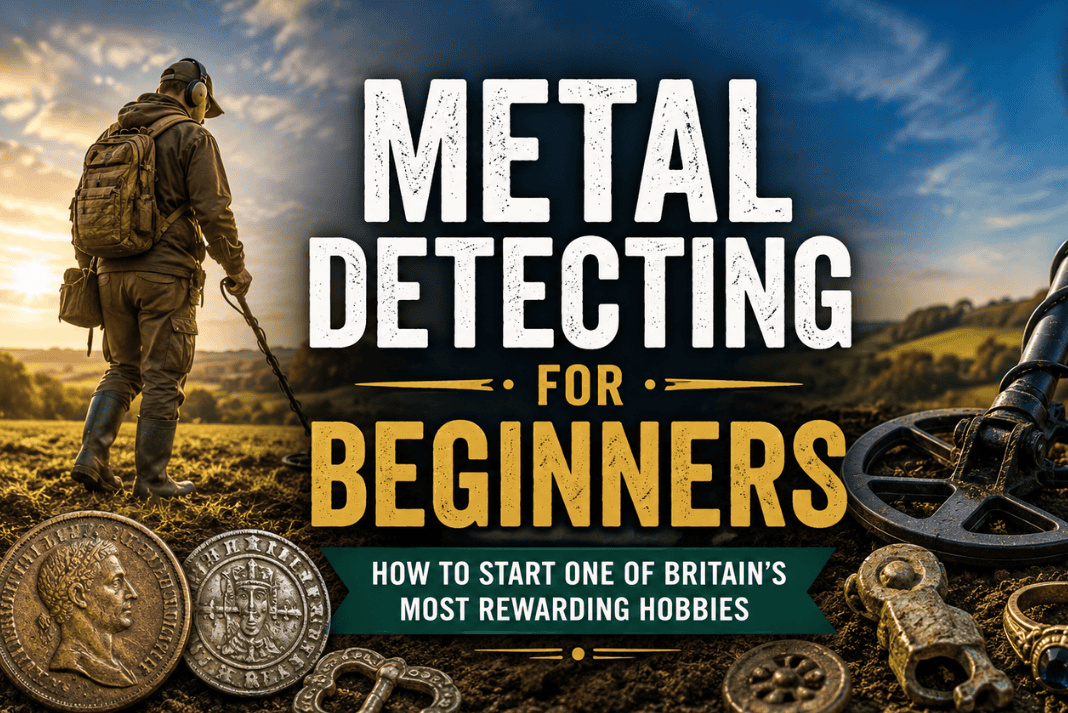
Metal detecting for beginners often looks deceptively simple. Someone walks across a field, hears a signal, digs a hole, and uncovers a fascinating piece of history. However, anyone who has spent time in the hobby soon discovers there is much more to it than that.
Metal detecting combines history, research, exploration, and pure curiosity. One day you may recover a modern coin dropped only weeks ago. The next day you could uncover an artefact that has remained hidden underground for hundreds of years.
Quick Answer: Is Metal Detecting a Good Hobby for Beginners?
Yes. Metal detecting is one of the easiest outdoor hobbies to start because you do not need years of experience before making interesting finds. Most beginners recover modern coins, buttons, lead seals, old tools and other historical objects within their first few outings.
Success comes from choosing suitable land, learning how your detector works and digging neat, responsible plugs rather than buying the most expensive equipment. In England and Wales, you should also understand the Treasure Act, always obtain the landowner’s permission and consider recording significant finds with the Portable Antiquities Scheme.
A Unique Outdoor Hobby
Unlike many hobbies, every outing feels different. Furthermore, every signal carries a small element of mystery. Most turn out to be ordinary objects. Occasionally, however, a find emerges that makes all the effort worthwhile.
After more than forty years of metal detecting, one lesson stands out above all others. The greatest reward is rarely financial. Instead, it comes from the excitement of discovery and the connection with the people who walked the same ground long before us.
Whether you are considering buying your first detector or simply want to learn more about the hobby, this guide will show you how to get started and what to expect along the way.
Why Metal Detecting Captivates So Many People
Metal detecting is one of those rare hobbies that offers something different to everyone. Some people enjoy the history, others love being outdoors, while many simply appreciate the excitement of never knowing what the next signal might reveal.
Of course, most newcomers dream of uncovering buried treasure. Although remarkable discoveries still happen, experienced detectorists soon discover that the real enjoyment comes from the hunt itself. Every permission, every field and every outing presents a fresh opportunity to learn something new about the landscape beneath your feet.
That combination of history, fresh air, exercise and genuine discovery is what keeps people returning year after year, even when the best find of the day turns out to be nothing more valuable than an old button.
The Appeal
The excitement comes from not knowing what the next signal will reveal.
A small piece of lead might tell a story about medieval trade. A worn coin can reveal the history of a local village. Even a simple button can provide a fascinating glimpse into everyday life from centuries ago.
Consequently, many detectorists develop a deep appreciation for local history. They begin researching old maps, studying historical records, and learning how the landscape around them has changed over time.
The hobby also provides an excellent excuse to spend time outdoors. Fields, beaches, woodland paths, and open countryside become places of possibility rather than simply places to walk through. If the mystery of searching for hidden objects is what appeals to you, there is another outdoor hobby that takes the same curiosity beneath the water. Magnet fishing for beginners swaps the detector and digging tool for a powerful magnet and rope, with the same irresistible question each time you search: what will you find?
What Is Metal Detecting?
At its simplest, metal detecting is the search for buried metal objects using a handheld electronic detector. As you slowly sweep the search coil across the ground, the detector alerts you when it passes over something hidden beneath the surface.
The next step is to carefully dig a neat plug and recover whatever has caused the signal. Sometimes it’s an old coin or an interesting artefact, while other times it’s nothing more exciting than a rusty nail or a discarded drinks can. Until the object comes out of the ground, you simply don’t know.
Modern detectors are remarkably clever and can often give clues about the type of metal they have found. Even so, no machine is perfect, and that element of mystery is one of the reasons metal detecting remains such an enjoyable hobby.
The Finds
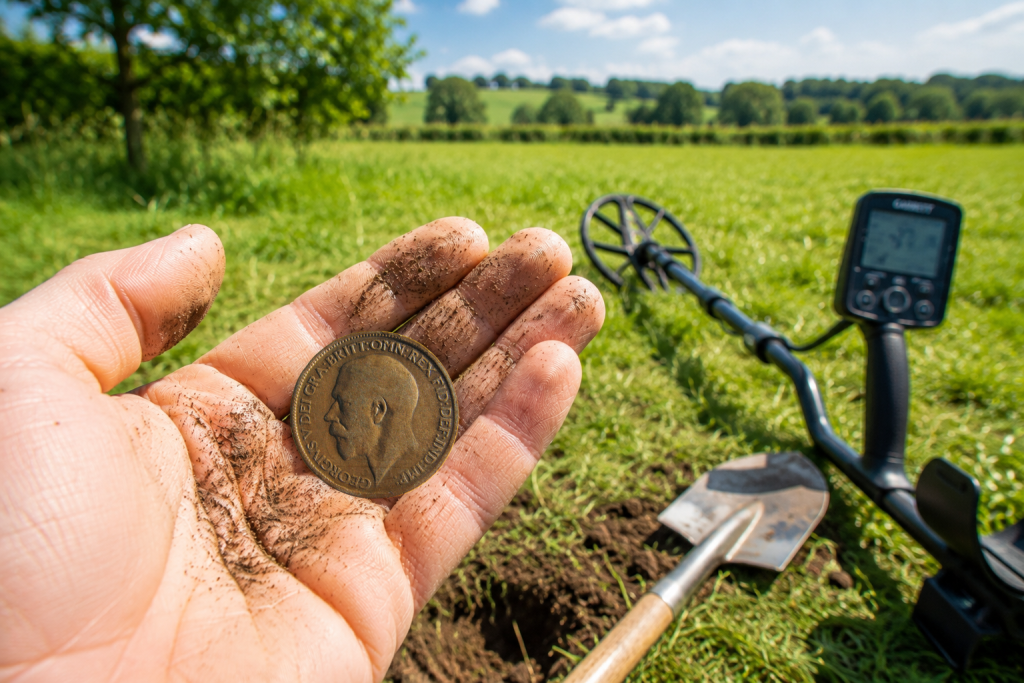
What Do Metal Detectorists Find?
The objects recovered vary enormously, and that uncertainty is part of the appeal. A single field may produce anything from modern pocket change to an object that has been buried for centuries.
From modern losses to Roman, medieval and Georgian examples.
Plain working buttons, decorated examples and military insignia.
Shoe, belt and harness buckles from many different periods.
Local trade tokens, jettons and unofficial small change.
Rings, brooches, pendants and fragments of personal ornament.
Badges, uniform fittings, cap badges and wartime relics.
Lead weights, harness fittings and pieces of old farm equipment.
Keys, thimbles, cutlery, furniture fittings and everyday objects.
Finds may date from the Roman, Saxon, medieval, post-medieval or Victorian periods, although many outings also produce plenty of modern rubbish.
Of course, they also uncover plenty of scrap metal, pull tabs, and other modern rubbish. Learning to accept those less glamorous discoveries forms part of every detectorist’s journey.
Why Metal Detecting Is About More Than Treasure
Ask someone who has never been metal detecting what the hobby is about and they’ll probably mention buried treasure. It’s an understandable assumption, but it only tells part of the story.
While every detectorist dreams of uncovering a hoard of gold coins or a rare historical artefact, those discoveries are incredibly uncommon. Most outings produce a fascinating mixture of everyday objects that were simply lost, discarded or forgotten by the people who lived and worked there generations ago.
That’s where the real fascination begins. A simple medieval buckle, an eighteenth-century trade token or even a worn copper coin can reveal something about the people who once passed through that landscape. Individually they may not be valuable, but together they help build a picture of local history that has been hidden beneath the soil for centuries.
For many detectorists, bringing those forgotten pieces of the past back into the daylight is every bit as rewarding as finding something worth a fortune.
Patience When Searching
The hobby also encourages patience and persistence.
Some outings produce very little. Yet experienced detectorists understand that every signal contributes to a larger picture. The next find could appear five minutes later or several outings down the line.
That uncertainty keeps people coming back.
After four decades in the hobby, I still feel a sense of anticipation whenever a detector produces a promising signal. Even now, the possibility of uncovering something unexpected remains just as exciting as it was when I started.
A Brief History of Metal Detecting in Britain
Although people have searched for lost objects for centuries, metal detecting as we know it today only became popular during the 1970s and 1980s. As detectors became more affordable and reliable, thousands of people discovered they could explore Britain’s history in an entirely new way.
In the early days, the hobby was often misunderstood. However, as detectorists began working alongside archaeologists, museums and local history groups, attitudes gradually changed. Responsible detectorists proved that carefully recording important finds could add valuable pieces to Britain’s historical record.
Today, metal detecting has a thriving community across the UK. Local clubs, organised rallies and group digs welcome newcomers every year, while the Portable Antiquities Scheme encourages significant discoveries to be recorded so they can benefit future research.
Despite huge advances in technology, the appeal of the hobby remains remarkably simple. Every clear signal still brings the same question it did fifty years ago: what’s waiting beneath the ground?
What Can You Realistically Expect to Find?
One of the biggest mistakes beginners make involves expecting treasure on the first day. Metal detecting for beginners feels exciting because anything could turn up, yet the reality often looks much more ordinary, and that is part of the charm.
You might find a Victorian penny, a Georgian halfpenny, a musket ball, a lead token, a broken buckle, an old button, a horse brass, a toy car, a shotgun cartridge, or half a pocketful of mysterious scrap. However, each signal teaches you something. Each field tells a story. And every object, even a humble one, once belonged to a real place, a real person, and a real moment in time.
Some finds look disappointing at first. A bent piece of copper might seem worthless until you clean it carefully and realise it has lettering. A plain disc might turn into a worn coin. A strange lump of lead might reveal itself as a trade weight, seal, or decorative mount. Therefore, the best detectorists learn patience before they learn anything else.
Surprise Metal Detecting Finds
Of course, wonderful finds do happen. Roman coins, hammered silver, medieval artefacts, military buttons, trade tokens, jewellery and even hoards still come from British soil. However, those finds usually reward persistence, research, careful technique, and plenty of ordinary days in muddy fields.
That is why metal detecting for beginners should never start with the promise of riches. Instead, it should start with curiosity. If you enjoy history, fresh air, walking, problem-solving and the thrill of not knowing what lies beneath your feet, this hobby can become incredibly rewarding.
The Best Places to Go Metal Detecting
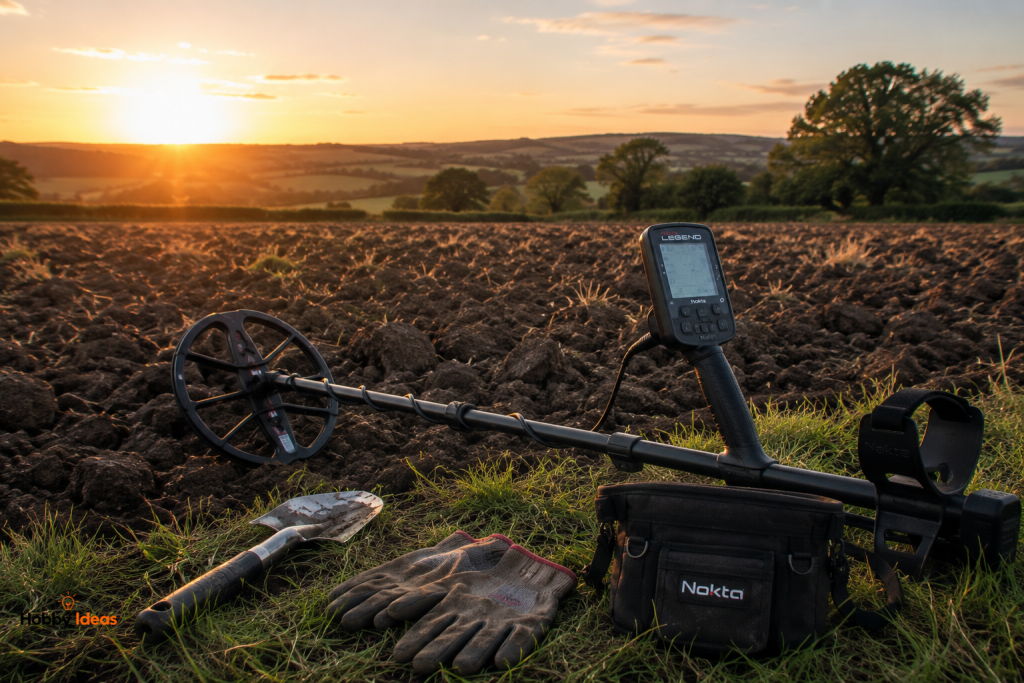
Britain offers a fantastic variety of detecting locations. However, every site needs the correct permission, and some places carry extra rules. Beginners should start with simple, legal and responsible locations before trying anything more complicated.
Farmland
Farmland remains one of the classic places to go metal detecting in Britain. Ploughed land can bring older objects closer to the surface, especially after cultivation, rain and frost have moved the soil around.
Fields near old settlements, footpaths, churches, former markets, Roman roads, medieval villages and ancient trackways can produce interesting finds. However, farmland also produces plenty of scrap, including machinery parts, lead, foil and modern rubbish. As a result, beginners need patience and realistic expectations.
Even so, farmland gives detectorists a real connection with the landscape. One field might produce Georgian coins and Victorian buttons, while another might suggest older activity through pottery, lead fragments or hammered coins. Therefore, research matters just as much as the detector itself.
Pasture
Pasture can feel very different from ploughed land. The soil often remains less disturbed, which means older finds may sit deeper. Digging can also feel harder, especially when roots and compacted turf get in the way.
However, pasture can produce excellent finds. Since the ground has not faced regular ploughing, objects may survive in better condition. Old grazing land, former fair sites, village edges and land near historic buildings can all hold surprises.
Beginners should take extra care on pasture. Always cut neat plugs, replace turf properly, and leave the ground looking as if nobody has touched it. Good manners help protect future permission.
Beaches
Beaches offer one of the easiest starting points for many newcomers. They often produce modern coins, jewellery, keys, watches and other lost items. In busy holiday areas, summer detecting can feel especially productive.
However, beach detecting still needs common sense. Check local rules before you start, avoid protected areas, watch the tides, and never detect in unsafe conditions. Wet sand, dry sand and shingle all behave differently, so beginners should practise with different settings and signal responses.
Beach detecting can also build confidence quickly. Signals often dig easily, targets come out cleanly, and newcomers can learn how their detector responds without cutting plugs in a field.
Woodland
Woodland can look tempting, especially when old paths, boundary banks or abandoned tracks run through it. However, detecting in woodland can prove difficult. Tree roots, leaf litter, uneven ground and modern rubbish can all slow you down.
Permission still matters, even if the woodland looks quiet or unused. In addition, some woodland sits on protected land or contains archaeology that needs special care. Therefore, beginners should only detect woodland with clear permission and a sensible understanding of the site.
Organised Rallies
Organised rallies give detectorists access to land they may never otherwise search. These events can attract anything from a small group to hundreds of people, depending on the organiser and location.
Rallies suit confident beginners who want a full day out, plenty of atmosphere and a chance to meet other detectorists. However, large events can feel busy, and the best areas often attract plenty of search coils quickly.
Even so, rallies can teach you a lot. You see different machines, hear different opinions, compare finds, and start to understand how experienced detectorists read the land.
Club Digs
Club digs can offer one of the best routes into the hobby. They usually feel smaller, friendlier and more relaxed than large rallies. As a result, beginners can ask questions, watch experienced detectorists and learn proper habits from the start.
Many local detecting groups arrange regular digs across one area of the country. These digs often cost around £20 per day, which makes them excellent value when you consider the access, organisation and support involved.
For metal detecting for beginners, club digs can remove one of the biggest early barriers: finding somewhere legal and worthwhile to detect.
“Join a local club and you’ll soon discover that experienced detectorists are often just as happy helping you find your first coin as they are finding their own.”
— Hobby Ideas
Understanding Permission and Landowner Access
Permission sits at the heart of responsible metal detecting. You cannot simply walk onto a field, woodland, riverbank or private beach and start detecting. The land belongs to someone, and detecting without permission damages the hobby for everyone.
Good detectorists build trust. They speak politely to landowners, respect crops and livestock, close gates, fill holes properly, remove rubbish and share important finds honestly. Over time, that good behaviour can lead to long-term permissions and better opportunities.
When asking for permission, keep things simple. Explain who you are, what equipment you use, how you dig, and how you will treat the land. Some detectorists also offer a written agreement, especially when detecting farmland. This helps avoid confusion over finds, access and expectations.
Beginners should also understand that a refusal does not mean failure. Many landowners already have detectorists, dislike the idea, or simply do not want people on their land. Thank them politely and move on. A good reputation matters far more than one field.
Don’t Want to Ask for Permission? Join an Organised Dig
For many beginners, asking landowners for permission feels awkward. Fortunately, organised digs provide a brilliant alternative. Many detecting groups operate through Facebook and arrange regular club digs across specific regions.
These organised days usually cost around £20 per person, although prices can vary. For that, you often get access to productive land, a properly arranged event and the chance to detect alongside people who know far more than you do. Therefore, it can offer excellent value, especially when you are just starting out.
Organised digs also help beginners avoid one of the hardest parts of metal detecting: finding permission. Instead of knocking on doors, you turn up at an arranged location, follow the organiser’s rules, and spend the day learning in the field.
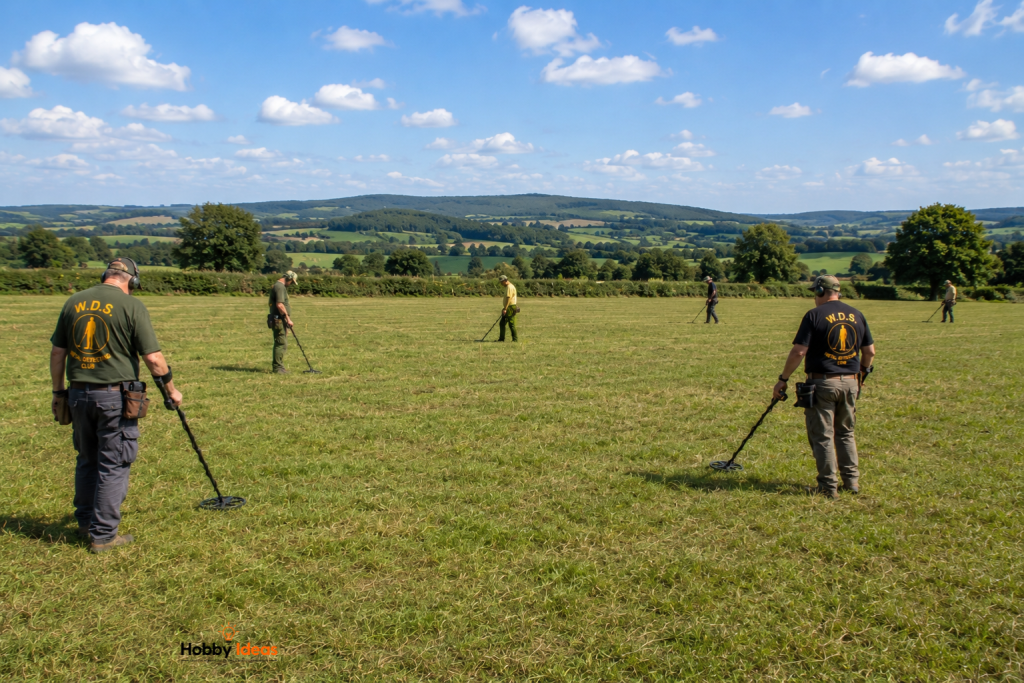
I regularly attend organised digs run by WDS, Woburn Detecting Store, also known as WDS Digs, organised by Steve Denton. The group has a friendly, welcoming atmosphere, and experienced detectorists often help newcomers identify finds, understand signals and pick up practical advice. For anyone new to the hobby, groups like this can shorten the learning curve dramatically.
Facebook can provide a useful starting point. Search for detecting groups in your county or region, read the rules carefully, check how often they run digs, and look for comments from regular members. A good group such as WDS Digs, which covers Norfolk and Suffolk, should feel organised, respectful and clear about permission, reporting finds and responsible detecting.
The Lingo
Once you attend a few club digs, you will start to understand how detectorists talk about fields, signals, soil, finds and technique. More importantly, you will realise that metal detecting is not just a solo hobby. It also has a friendly community side, especially when people share knowledge generously.
Choosing Your First Metal Detector
Walk into a metal detecting shop or spend ten minutes browsing online, and you will quickly discover hundreds of opinions about which detector you should buy. Some people insist you need the latest technology. Others swear by machines that are twenty years old. Meanwhile, manufacturers compete to advertise greater depth, faster recovery speeds and more features than ever before.
For someone researching metal detecting for beginners, the choice can feel overwhelming. However, the good news is surprisingly simple. You do not need the most expensive detector to enjoy the hobby, find interesting artefacts or uncover historic coins.
In fact, many experienced detectorists would rather spend a day on good land with a modest machine than search poor ground with the most expensive detector on the market.
Your first detector should help you learn the hobby, not complicate it. Therefore, simplicity, comfort and reliability matter far more than an endless list of advanced features.
What Matters Most in a First Detector?
Many beginners focus on depth because manufacturers often use it as a major selling point. While depth certainly matters, it is only one part of the story.
A good beginner detector should feel comfortable after several hours of use. It should provide clear target signals, easy-to-understand controls and enough adjustment options to grow with your experience.
What to Look for in Your First Metal Detector
A beginner-friendly detector should feel comfortable, respond clearly and let you concentrate on searching rather than wrestling with complicated controls.
Comfortable to Use
Choose a well-balanced detector that will not feel heavy after several hours of searching.
Clear Target Identification
Simple numbers and tones should help you judge whether a signal deserves investigating.
Straightforward Controls
A clear menu makes it easier to learn the detector without becoming overwhelmed by settings.
Reliable Ground Performance
Look for a machine that remains stable across pasture, ploughed fields and other common ground conditions.
Good Battery Life
Long battery life prevents a promising day’s detecting from ending earlier than planned.
Weather Resistance
British weather changes quickly, so the coil and control unit should cope with damp conditions.
The best first detector is not necessarily the most expensive. It is the one you can understand, carry comfortably and enjoy using.
Most importantly, choose a detector that encourages you to spend time outdoors. After all, a machine sitting in a cupboard never finds anything.
For newcomers looking for a capable machine that can grow with them, the Minelab Vanquish 540 Multi-Frequency Metal Detector strikes an excellent balance between performance, ease of use and value. Thanks to Minelab’s Multi-IQ technology, it performs well across a variety of ground conditions while remaining straightforward enough for beginners to learn quickly.
Features Beginners Often Worry About Too Much
Marketing can make metal detecting look like a race to buy the most advanced machine available. However, many features sound far more important than they actually are during your first year.
What Beginners Think Matters… and What Actually Does
New Detectorists Often Focus On
- Extreme depth claims
- Dozens of search programmes
- Complicated menus
- Wireless accessories
- Colour screens
- Advanced expert settings
Experienced Detectorists Value
- A detector that’s comfortable to use
- Stable, reliable performance
- Learning the detector’s sounds
- Good permissions to search
- Patience and practice
- Time spent in the field
The best detector isn’t the one with the longest specification sheet. It’s the one you know how to use with confidence.
While these features have their place, they rarely make the difference between finding something and finding nothing. Instead, success usually comes from researching good locations, gaining permission, understanding signals and spending time on the ground.
The best detector is often the one you understand thoroughly rather than the one with the longest specification sheet.
For Serious Detectorists and Future Upgraders
Many detectorists eventually reach a point where they start looking for lighter weight, greater flexibility and premium performance. If that sounds familiar, the XP Deus II with MI-6 Pinpointer Bundle sits firmly in the top tier of modern detecting equipment.
Its fully wireless design, waterproof capability and impressive performance across a wide range of conditions have made it a favourite with many experienced detectorists. While it represents a significant investment, it is also the kind of machine that many hobbyists aspire to own.
New or Second-Hand?
Many people assume they must buy brand new equipment. However, the second-hand market offers some excellent opportunities.
Detectorists frequently upgrade to newer machines, which means well-maintained detectors regularly become available at attractive prices. As a result, beginners can often purchase a higher-quality machine for the same budget as a new entry-level model.
When buying used equipment, always check:
- Coil condition
- Battery compartment
- Control box condition
- Cable wear
- Charging equipment
- Proof that the machine functions correctly
If possible, buy from an established dealer or a trusted member of a local detecting group.
“A reliable detector gets you started. The right accessories make every day in the field easier, more comfortable and far more enjoyable.”
— Hobby Ideas
Essential Equipment Beyond the Detector
Choosing your first metal detector naturally attracts most of the attention, but it soon becomes clear that the supporting equipment makes just as much difference to an enjoyable day in the field. The good news is that you don’t need to buy everything at once. Most detectorists gradually add to their kit as they gain experience and discover what works best for them.
A proper digging tool is usually the first worthwhile upgrade. Many people begin with an ordinary garden trowel, only to discover that compacted farmland and tree roots quickly expose its limitations. A purpose-built digging tool is stronger, more comfortable to use and designed to cut neat plugs that leave the land looking exactly as you found it. We eventually settled on the Quest Diamond Digger RS, and after many outings it has proved to be one of the best investments we’ve made.
Keeping your finds organised is equally important. A good finds pouch allows you to separate interesting discoveries from the inevitable collection of rusty nails, bits of wire and discarded aluminium that almost every detectorist digs during a typical day. Taking rubbish home is simply good etiquette, and landowners genuinely appreciate detectorists who leave their fields cleaner than they found them. We’ve been particularly impressed with this ProtectorTech Finds Pouch for Metal Detecting, which combines generous storage with a practical holder for a pinpointer.
Some accessories don’t seem particularly exciting until you spend several hours outdoors. A comfortable pair of gloves soon proves its worth when handling rusty iron, broken glass or thorny undergrowth, while knee pads can make an enormous difference after kneeling hundreds of times during a long session. They’re the sort of purchase many people dismiss initially, then wonder how they ever managed without.
Finally, never underestimate the importance of suitable clothing. British weather has a habit of changing without warning, and an enjoyable morning can quickly become an uncomfortable afternoon if you’re unprepared. Waterproof footwear, a reliable jacket and a couple of extra layers are often every bit as valuable as the detector itself. After all, the longer you remain comfortable in the field, the longer you’ll be detecting—and the greater your chances of uncovering something memorable.
Why Every Detectorist Eventually Buys a Pinpointer
Most beginners start with just a metal detector and a digging tool. It seems perfectly adequate until you recover your first tiny target and spend several minutes searching through loose soil, wondering where it has disappeared to.
That’s exactly the problem a pinpointer solves. This small handheld detector pinpoints the exact location of the target once you’ve opened the hole, making it much quicker to recover coins, buttons, jewellery and other small finds without unnecessary digging.
After using one for the first time, it’s easy to understand why experienced detectorists rarely head into the field without it. Recoveries become faster, neater and far less frustrating, leaving more time to concentrate on what really matters – finding the next signal.
Among experienced detectorists, the Garrett Pro-Pointer AT, often known simply as the “Carrot”, remains one of the most trusted pinpointers available. It has earned its reputation through years of reliable field use and continues to be a popular choice amongst beginners and seasoned detectorists alike.
Understanding Detector Settings Without Getting Overwhelmed
One of the first things many beginners notice is the number of settings on a modern metal detector. Menus, numbers and different search modes can make it feel as though you need an engineering degree before you even switch the machine on.
The good news is that you don’t.
Most successful detectorists begin with the factory settings and spend their time learning how the detector sounds rather than constantly changing menus. As your confidence grows, you’ll naturally start experimenting with the different controls and discover what works best on the ground you regularly search.
Sensitivity
Sensitivity controls how strongly your detector responds to buried objects. Turning it up can increase depth, but it may also make the machine unstable, especially on difficult ground. A detector that runs smoothly will usually outperform one that constantly chatters with false signals.
Discrimination
Discrimination allows the detector to ignore certain types of metal. Although it sounds tempting to reject rubbish completely, experienced detectorists often keep discrimination fairly low because valuable finds can produce signals that are surprisingly similar to unwanted objects.
Ground Balance
Different parts of the country contain different soil conditions. Ground balance helps the detector cope with natural minerals in the ground, reducing unwanted noise and improving target detection. Fortunately, many modern detectors perform this automatically.
Search Modes
Most machines include ready-made programmes for fields, parks and beaches. These presets are an excellent place to start because they have been designed to suit typical conditions. Once you’ve gained some experience, you can begin adjusting individual settings to match your own detecting style.
Remember, the most important skill isn’t mastering every menu. It’s learning to recognise the sounds your detector makes and understanding what those signals are trying to tell you. That comes with time, practice and plenty of hours spent in the field.
The goal is to learn what targets sound like, not spend the day adjusting menus.
How Much Does Metal Detecting Really Cost?
Metal detecting can be started relatively modestly, although equipment costs often rise as experience and enthusiasm grow.
Budget Setup
A Few Hundred Pounds
A good used detector, a digging tool and a few basic accessories can provide everything needed to begin.
Mid-Range Setup
£500–£1,000
This is where many regular detectorists find a useful balance of performance, durability and extra features.
Enthusiast Setup
£1,500+
Premium detectors, wireless accessories, specialist coils and advanced technology can quickly push costs higher.
My Advice After Years in the Hobby
If I could offer one piece of advice to anyone interested in metal detecting for beginners, it would be this: spend less time worrying about equipment and more time learning the hobby and the machine you chose to start with.
The best detectorists are not always the people carrying the most expensive machines. More often, they are the people who understand local history, research their permissions carefully, listen to every signal and spend plenty of time in the field.
You will dig rubbish. Definitely find bits of aluminium or lead. On occasions question whether there is anything worth finding at all. Then one day, a coin appears from the soil, a centuries-old button emerges from a clod of earth, or a forgotten artefact sees daylight for the first time in generations.
That moment keeps detectorists coming back.
The machine matters. However, the adventure matters far more.
The Laws Every Detectorist Should Know
One of the reasons metal detecting remains such a rewarding hobby in Britain is that it allows ordinary people to discover and record pieces of the nation’s history. However, that privilege comes with responsibilities.
Most detectorists are honest, respectful and passionate about preserving history. As a result, the hobby enjoys a far better reputation today than it did several decades ago. Nevertheless, every newcomer should understand the basic legal framework before heading into the field.
Fortunately, the rules are not difficult to follow. In fact, responsible detectorists often find that understanding the law improves their enjoyment of the hobby because they know they are doing things properly.
Permission Always Comes First
Example Permission Request Letter
Many landowners appreciate a simple, honest approach. Keep your letter short, polite and easy to read.
Dear [Landowner’s Name],
My name is [Your Name] and I am a local metal detectorist. I wondered whether you might consider allowing me permission to metal detect on some of your land.
I always detect responsibly, fill all holes carefully, respect crops and livestock, and remove any scrap metal I recover from the field. Many farmers appreciate this as it helps reduce the risk of damage to machinery and livestock.
Any historically important finds would be recorded through the proper channels, and any treasure finds would be reported in accordance with the law.
I am happy to agree a fair split of any proceeds from valuable finds, with the exact arrangement discussed beforehand so that everything is clear from the start.
I carry public liability insurance through my detecting club and would be happy to provide details if required.
If you would like to discuss it further, I would be pleased to call by at a convenient time.
Many thanks for your time and consideration.
Kind regards,
[Your Name]
[Telephone Number]
Detectorist’s Tip: A polite conversation often works even better than a letter. Dress neatly, be honest about what you do, and never pressure a landowner if they decline.
Always Ask Permission First
If there’s one rule every beginner should remember, it’s this: always obtain the landowner’s permission before you switch your detector on.
Whether it’s a ploughed field, permanent pasture or a small patch of woodland, the land belongs to someone. Most landowners are surprisingly approachable if you’re polite, explain your interest and respect their decision if they decline.
Once permission has been granted, you’re representing the hobby as much as yourself. Close every gate, avoid damaging crops, respect livestock, refill every hole neatly and take any rubbish home with you. It only takes a few extra minutes, but it shows professionalism and appreciation for the opportunity you’ve been given.
Many detectorists enjoy the same permissions for years because they’ve earned the trust of the people who own the land. Looking after that relationship is every bit as important as looking after your equipment.
Protected Sites Are Off Limits
Some locations carry special legal protection because of their archaeological importance.
You cannot simply obtain a detector and start searching ancient monuments, protected archaeological sites or historically sensitive locations.
Many of these sites fall under legal protection and detecting there without the correct permissions can result in prosecution.
Before detecting anywhere unfamiliar, take time to understand whether the land has any restrictions. Responsible detectorists always research first and detect second.
The Treasure Act Explained Simply
One of the questions almost every beginner asks is, “What happens if I find something valuable?” The answer depends on what you’ve discovered, but it’s far less complicated than many people imagine.
Some finds made in England, Wales and Northern Ireland are legally classed as treasure and must be reported. This often includes certain gold and silver objects, groups of prehistoric metal artefacts and some coin hoards, although the exact rules depend on the age, composition and circumstances of the find.
The important thing to remember is that you don’t need to become an expert in treasure law before you start detecting. If you recover an object that looks historically important or you believe it may qualify as treasure, simply stop, keep it safe and seek advice. Your local Finds Liaison Officer or museum will be able to guide you through the next steps.
Most detectorists never discover treasure as defined by the law. However, everyone hopes that one day they might, which is why understanding the basics from the outset is well worth the effort. Reporting significant finds protects Britain’s history and ensures important discoveries are properly recorded for future generations.
The Portable Antiquities Scheme
One of Britain’s greatest success stories in archaeology is the Portable Antiquities Scheme, often shortened to PAS.
The scheme allows detectorists, field walkers and members of the public to record historically important finds. Consequently, thousands of discoveries made by hobbyists now contribute to our understanding of British history.
Many finds do not qualify as treasure. Nevertheless, they may still hold historical significance.
A Roman brooch, medieval buckle, Saxon artefact or unusual coin can all provide valuable information when properly recorded.
The Portable Antiquities Scheme encourages responsible recording and helps ensure discoveries contribute to historical knowledge rather than disappearing into private collections without any record.
For more information, visit the official Portable Antiquities Scheme website.
Why Recording Finds Matters
Finding an old coin or artefact is always exciting, but the object itself only tells part of the story. Where it was found can be just as important as what it is.
Imagine discovering a single Roman coin in the middle of a field. On its own, it might not seem particularly remarkable. However, if other detectorists have recorded similar Roman finds from the same area over several years, archaeologists can begin to build a picture of how that landscape was used nearly two thousand years ago. What first appears to be an ordinary field may once have been a farmstead, roadside settlement or trading route.
The same applies to medieval buckles, trade tokens, brooches and countless everyday objects. Individually they may have little financial value, yet together they create a valuable record of Britain’s past that would otherwise remain hidden beneath the soil.
That’s why responsible detectorists record significant finds through the Portable Antiquities Scheme. Every recorded object adds another piece to the historical jigsaw, helping researchers understand how people lived, travelled and worked across the country.
For many enthusiasts, knowing they’ve contributed to Britain’s history is every bit as rewarding as the excitement of making the discovery itself.
Best Practice in the Field
Responsible detectorists know that protecting the hobby is just as important as making good finds. These simple habits help preserve landowner relationships, safeguard Britain’s heritage and ensure everyone can continue enjoying the hobby.
🕳 Fill Every Hole
Leave the ground exactly as you found it by replacing plugs carefully and leaving no trace behind.
♻ Remove Rubbish
Take away cans, scrap metal and other litter you recover rather than putting it back into the ground.
🌾 Respect the Land
Avoid damaging crops, keep clear of livestock and always leave gates exactly as you found them.
🏛 Protect Heritage
Never disturb known archaeological sites and report significant discoveries through the proper channels.
📝 Record Important Finds
Keeping accurate notes and recording notable discoveries helps preserve valuable historical information.
🤝 Build Trust
Work openly with landowners, follow local restrictions and always represent the hobby professionally.
These habits protect the future of the hobby while also strengthening relationships between detectorists, archaeologists, landowners and local communities.
What Happens If You Find Something Significant?
For many detectorists, this is the moment they have imagined for years. The signal is strong, the first glimpse in the soil looks promising and suddenly an ordinary day in the field feels anything but ordinary.
It may be a gold coin, a rare brooch, part of a hoard or an artefact that has remained undisturbed for centuries. Whatever it is, the first instinct is often to lift it, clean it and find out exactly what has been discovered. However, this is the point where patience matters most.
If the object appears important, pause before disturbing the area further. Take clear photographs of the find in the ground, note the exact location and look carefully for any nearby objects or signs that more may be present. A single coin can be exciting, but several coins close together may tell a much bigger story.
Avoid scrubbing, polishing or using chemicals to reveal detail. Soil, corrosion and even the position of the object can provide useful information, while enthusiastic cleaning can damage a fragile surface in seconds. Keep the find safe, record as much as possible and contact your local Finds Liaison Officer or the appropriate authority for advice.
Finding something significant is one of the great thrills of metal detecting, but the real importance often lies in more than the object itself. Its location, depth and relationship to anything found nearby may help explain how it came to be there and what was happening on that landscape hundreds of years ago.
Handled carefully, a remarkable discovery becomes more than a memorable find. It becomes part of the historical record, and that is one of the most rewarding contributions a detectorist can make.
Metal Detecting and Responsible Hobbying
Metal detecting for beginners should never focus solely on what you might find. Instead, it should also focus on how you find it.
The best detectorists understand that they act as temporary custodians of history. They recover objects carefully, record important discoveries, respect the land and follow the law.
As a result, they help ensure future generations can continue enjoying the hobby.
When practised responsibly, metal detecting offers far more than the chance to uncover old coins or interesting artefacts. It creates a connection with the landscape, local history and the countless people who lived before us.
That sense of discovery, combined with respect for the past, remains one of the reasons the hobby continues to attract new enthusiasts every year.
Your First Day Metal Detecting
There comes a moment every new detectorist remembers. You’ve done the research, chosen your detector, gained permission from the landowner and finally stepped into your first field. The machine is switched on, the search coil begins its slow sweep across the grass and, for a few moments at least, it feels as though anything could happen.
Then reality arrives.
The detector starts making sounds you don’t recognise. Some signals seem loud and confident, others disappear as quickly as they appeared. You dig your first target convinced you’ve found something exciting, only to uncover a rusty nail or an old drinks can buried just beneath the surface.
If that sounds familiar, don’t be discouraged. Every detectorist, no matter how experienced, started exactly the same way.
“Your first day isn’t about finding treasure. It’s about learning to understand the language your detector is speaking.”
— Hobby Ideas
The biggest lesson you’ll learn isn’t how deep your detector can search or which settings are best. It’s how the machine behaves. Over time you’ll begin recognising the subtle differences between a crisp coin signal, an irregular piece of iron or the unmistakable sound of modern rubbish. That knowledge only comes from time spent in the field.
Some days you’ll go home with little more than a handful of scrap metal. Other days you’ll uncover old coins, buckles, buttons or objects that haven’t seen daylight for generations. Both days are valuable because every signal teaches you something.
So don’t judge your first outing by what ends up in your finds pouch. Judge it by what you’ve learned. Every experienced detectorist can point to a first day that was full of uncertainty, and most would tell you they wouldn’t change a thing because it was the beginning of a hobby that has given them years of enjoyment.
What a Successful First Day Really Looks Like
It’s easy to think your first outing will be judged by what you bring home. Many newcomers secretly hope for an old silver coin, a medieval relic or even the discovery of a lifetime. In reality, the most successful first day usually looks far less dramatic.
If you’ve learned how to swing your detector smoothly, recognised the difference between a good signal and an uncertain one, dug neat plugs and recovered your finds without damaging them, you’ve achieved far more than you might realise. Becoming familiar with your equipment is the foundation that every experienced detectorist builds upon.
Of course, finding an interesting coin or artefact is always exciting, but it’s never the whole story. Confidence grows with every outing as the sounds become more familiar, recoveries become quicker and the detector gradually feels like an extension of your arm rather than a complicated piece of technology.
The detectorists who remain passionate about the hobby for years aren’t usually the ones chasing instant riches. They’re the people who enjoy being outdoors, appreciate the history beneath their feet and understand that every signal, whether it turns out to be a Roman coin or a rusty nail, teaches them something for the next time they head into the field.
Common Beginner Mistakes
Common Beginner Mistakes
Every new detectorist makes a few mistakes. However, once you know what to watch for, you can avoid wasted time, missed signals and unnecessary frustration in the field.
Swinging Too Fast
Slow, steady sweeps give your detector time to process signals properly. If you rush, you may miss deeper or weaker targets.
Lifting the Coil
Keep the coil close to the ground from left to right. Many beginners lift it at the end of each swing, which reduces detection depth.
Ignoring Weak Signals
Not every good find gives a perfect signal. Some interesting coins and artefacts start as faint, broken or uncertain sounds.
Changing Settings Too Often
Stick with basic factory settings while you learn. Constant tweaking makes it harder to understand what your detector tells you.
Expecting Treasure Too Soon
Most days involve buttons, coins, lead, scrap and mystery objects. However, those ordinary finds help you build the skill needed for better discoveries.
The Mistakes Every Beginner Makes (Including Me)
Spend a few minutes watching someone on their very first outing and you’ll probably spot the same mistakes every experienced detectorist once made themselves. The good news is that they’re all part of the learning process, and none of them take long to overcome.
The most common mistake is simply rushing. Excitement takes over, the detector is swept too quickly across the ground and weak signals are missed before the machine has a chance to process them properly. A slow, controlled sweep almost always produces better results than trying to cover as much ground as possible.
It’s equally common to see the search coil lifted into the air at the end of every swing. It seems harmless enough, yet every few inches the coil rises above the ground reduces its ability to detect deeper targets. Keeping the coil level and close to the surface soon becomes second nature with a little practice.
Another trap involves becoming obsessed with the detector itself rather than the signals it produces. Modern machines offer countless settings, menus and adjustments, but constantly changing them usually creates more confusion than improvement. Most experienced detectorists would rather use familiar settings they understand well than endlessly chase the perfect combination.
Perhaps the biggest surprise for newcomers is discovering that not every worthwhile find produces a loud, confident signal. Some of the most interesting objects begin as little more than a faint, uncertain whisper. Learning which weak signals deserve investigation is one of the skills that develops naturally with experience.
The final mistake has nothing to do with technique at all. It’s expecting too much too soon. Television programmes, YouTube videos and newspaper headlines naturally focus on spectacular discoveries, yet they rarely show the dozens of ordinary outings that came before them. Metal detecting rewards patience far more often than luck.
“Every experienced detectorist has dug hundreds of rusty nails. The difference is they kept learning until the good finds started to appear.”
— Hobby Ideas
Building Your Skills Over Time
One of the most satisfying parts of metal detecting is realising how much your abilities improve without you even noticing. Fields begin to reveal subtle clues, detector signals become easier to interpret and your recoveries grow quicker and neater with every outing.
Before long, you’ll start recognising the sort of places that have produced finds in the past, develop a better understanding of local history and gain the confidence to trust your own judgement. Those skills can’t be learned from a manual or a YouTube video. They come from spending time outdoors with your detector, making mistakes and gradually learning from each one.
Some days you’ll return home with little more than a pocketful of scrap. Other days you’ll uncover a coin, a buckle or an artefact that makes the whole outing worthwhile. Both days have value because every hour spent detecting teaches you something new. In the end, that’s what keeps so many people enjoying the hobby decade after decade.
The Community Side of Metal Detecting
Although many people imagine metal detecting as a solitary pursuit, the hobby also has a strong community spirit.
Across Britain, detectorists regularly share finds, exchange advice and help identify unusual objects. Clubs, organised digs, rallies and online groups provide opportunities to learn from others while meeting people who share similar interests.
For beginners, this support can prove invaluable.
A quick conversation with an experienced detectorist can often save weeks of trial and error. Likewise, sharing finds with knowledgeable enthusiasts frequently helps uncover fascinating stories behind seemingly ordinary objects.
The hobby combines independent exploration with a welcoming community, which is one reason so many people remain involved for decades.

Why Metal Detecting Continues to Grow in Popularity
In a world where so much of life revolves around screens, notifications and busy schedules, metal detecting offers a welcome change of pace. It encourages you to slow down, enjoy the fresh air and look at the countryside with fresh eyes. A field becomes more than just open land; it becomes a place where generations of people have lived, worked and left behind traces of their lives.
Few hobbies bring together so many different interests. History, walking, local research, conservation and the excitement of discovery all become part of a single day outdoors. No two outings are ever quite the same, because every permission has its own story waiting to be uncovered.
Some days you’ll find little more than modern coins and the occasional rusty nail. On others, a Victorian penny, a medieval buckle or a forgotten relic may emerge from the soil, untouched for generations. It’s that uncertainty that keeps detectorists returning, because every signal carries a question that can only be answered by carefully digging it.
Perhaps that’s the real appeal of metal detecting. It’s not simply about finding objects; it’s about satisfying curiosity. Every outing offers the chance to learn something new, improve your skills and uncover another small piece of Britain’s remarkable history. Long after the excitement of an individual find has faded, that sense of discovery is what keeps so many people enjoying the hobby for a lifetime.
Metal Detecting for Beginners: Frequently Asked Questions
These straightforward answers cover some of the questions people commonly ask before starting metal detecting in the UK.
Do I need permission to go metal detecting?
Yes. You must obtain permission from the landowner before detecting on farmland, pasture, woodland or any other private land. Owning a metal detector does not give you the right to search wherever you choose. You should also check any local restrictions before detecting on beaches or publicly accessible land.
How much does it cost to start metal detecting?
A beginner can often start for a few hundred pounds by choosing a reliable used or entry-level detector, a suitable digging tool and a small collection of basic accessories. You do not need an expensive machine to make interesting finds or begin learning the hobby.
What can beginners expect to find?
Most beginners uncover a mixture of modern rubbish and everyday historical objects. Common finds include coins, buttons, buckles, lead weights, tokens, military fittings and pieces of old farm equipment. Gold and valuable artefacts occasionally appear, but they represent only a tiny proportion of discoveries.
Is metal detecting difficult to learn?
The basic technique is easy to learn, although recognising different signals takes practice. Beginners usually achieve better results by starting with the detector’s factory programme, sweeping the coil slowly and learning how the machine responds before changing advanced settings.
Do I really need a pinpointer?
A pinpointer is not essential for your first outing, but it quickly becomes one of the most useful accessories you can own. It helps locate small objects inside a hole or plug, making target recovery quicker, neater and far less frustrating.
What should I do if I find something important?
Stop digging, photograph the find in place and record its precise location. Avoid cleaning it aggressively or disturbing the surrounding area unnecessarily. Keep the object safe and contact your local Finds Liaison Officer or another appropriate authority for advice.
Do all old or valuable finds count as treasure?
No. The legal definition of treasure depends on factors such as the object’s age, metal content and whether it was found with other items. If you suspect a discovery may qualify, seek expert advice rather than selling, cleaning or disposing of it.
Is metal detecting a good hobby for older beginners?
Yes. Metal detecting suits a wide range of ages and fitness levels because you can choose the length, pace and difficulty of each outing. A lightweight, well-balanced detector and a comfortable digging tool can make the hobby easier to enjoy for longer periods.
Frequently Asked Questions About Metal Detecting
If you are exploring metal detecting for beginners, these quick answers will help you understand the practical, legal and everyday questions that often come up before your first proper search.
Is metal detecting legal in the UK?
Yes, metal detecting is legal in the UK, provided you have the landowner’s permission and avoid protected sites such as scheduled monuments. You must also report finds that may qualify as treasure.
Do I need a licence to go metal detecting?
You do not need a general metal detecting licence in England and Wales. However, you do need permission from the landowner before detecting on private land. Some beaches, parks and public spaces may also have local rules.
Can you keep what you find?
That depends on the find, the landowner agreement and the law. Many ordinary finds can stay with the detectorist if the landowner agrees. However, anything that may count as treasure must follow the official reporting process.
How much does a beginner metal detector cost?
A beginner metal detector can cost from around £150 to £400, while stronger mid-range machines often sit between £500 and £1,000. You can start modestly, then upgrade once you know the hobby suits you.
Can I metal detect on beaches?
Many beaches allow metal detecting, but not all of them. Always check local council, Crown Estate or landowner rules before you start. Also, watch tide times carefully and avoid unsafe conditions.
How deep can a metal detector find coins?
Depth depends on the detector, coil size, soil conditions, target size and settings. Many coin finds come from a few inches deep, although larger objects can sit deeper. Good technique often matters more than chasing maximum depth.
Is metal detecting suitable for children?
Yes, metal detecting can make a brilliant family hobby. Children enjoy the excitement of signals and discoveries. However, adults should supervise digging, permission, sharp objects and any finds that may need reporting.
How often do people find treasure?
Most detectorists do not find treasure often. Instead, they find coins, buttons, buckles, lead, scrap and everyday relics. That said, spectacular finds do happen, and the possibility of discovery keeps the hobby exciting.
Final Thoughts On Metal Detecting For Beginners
Metal detecting for beginners can appear complicated at first. There are machines to choose from, permissions to obtain, laws to understand and techniques to learn.
However, once you step into your first field, the hobby becomes much simpler.
Listen carefully. Learn gradually. Respect the land. Enjoy the process.
The greatest rewards rarely come from financial value. Instead, they come from the excitement of discovery, the connection with history and the simple pleasure of spending time outdoors.
Every coin, button, buckle and artefact has a story to tell. As a detectorist, you become part of that story.
So charge the batteries, pack your finds pouch and head out into the countryside.
Your next signal could be absolutely anything. Swing Low!
Looking for another fascinating British Treasure Hunting hobby? Explore our guide to Mudlarking on the Thames Foreshore, where history waits to be discovered along Britain’s famous riverbanks.
Some links in this article are affiliate links. If you choose to purchase through these links, HobbyIdeas may earn a small commission at no extra cost to you. We only recommend products, tools and resources that are relevant to the hobby being discussed and that we believe offer genuine value to our readers.