

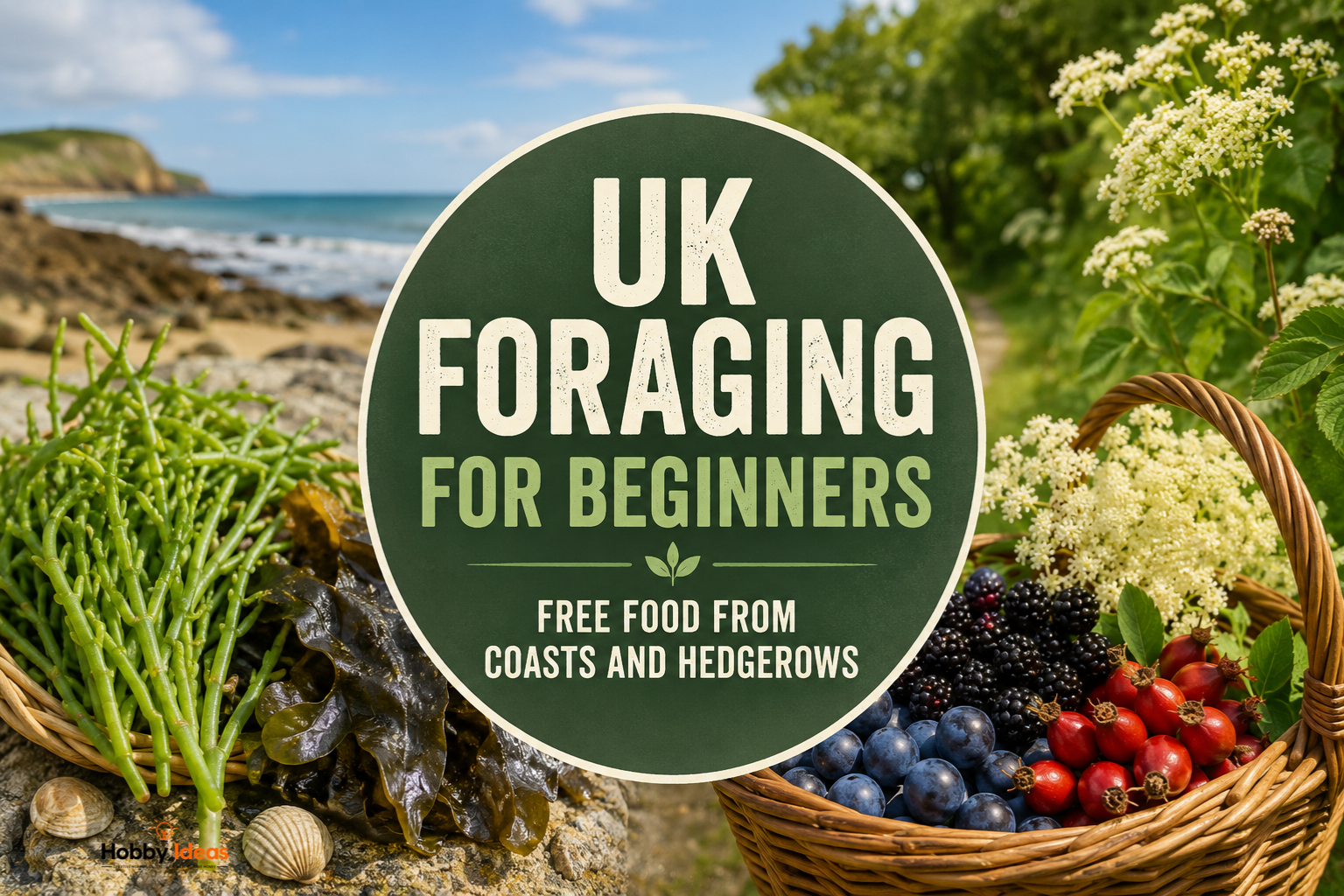
UK foraging is a rewarding outdoor hobby that turns an ordinary walk into a seasonal treasure hunt. From salty coastal plants to berries and flowers in country hedgerows, Britain offers plenty of wild food for beginners to discover safely and responsibly.
However, foraging is not about grabbing everything you see. Instead, it is about slowing down, learning the landscape, identifying plants correctly and taking only what you need.
This beginner-friendly guide looks at two of the best places to start: Britain’s coastlines and traditional hedgerows. Along the way, you will discover samphire, sea beet, kelp, elderflower, blackberries, sloes and rosehips.
UK Foraging Safety: The Golden Rule
Never Eat Anything Unless You Are 100% Sure
Plant identification can be difficult. Some edible plants have harmful lookalikes, and mistakes can cause serious illness. Therefore, never eat any wild plant, berry, flower, fungus or seaweed unless you are completely certain of its identity.
Use trusted field guides, learn from experienced foragers and start with easy, familiar species such as blackberries before moving on to more advanced finds.
If you are serious about learning safely, investing in a good wild food identification guide can help you build confidence while avoiding common mistakes. A reliable reference book is one of the most valuable tools a beginner forager can own.
Why UK Foraging Makes Such a Good Hobby
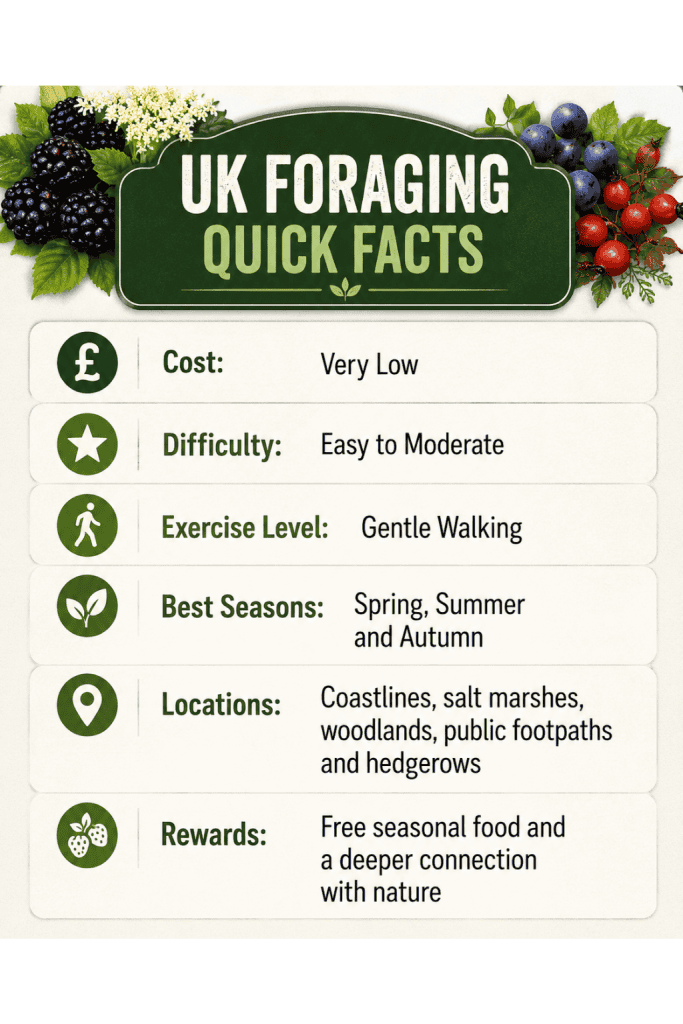
UK foraging appeals to people who enjoy walking, nature, food and learning practical skills. Moreover, it costs very little to begin. You do not need expensive equipment, complicated tools or specialist clothing.
Foraging also encourages you to notice details you might normally miss. A country lane becomes more than a route from one place to another. A beach walk becomes a chance to study tides, plants and seasonal growth.
If you enjoy gentle outdoor activities, you may also like our guide to nature hobbies, which explores more ways to connect with wildlife, seasons and the natural world.
Coastal Foraging UK: What Beginners Can Look For
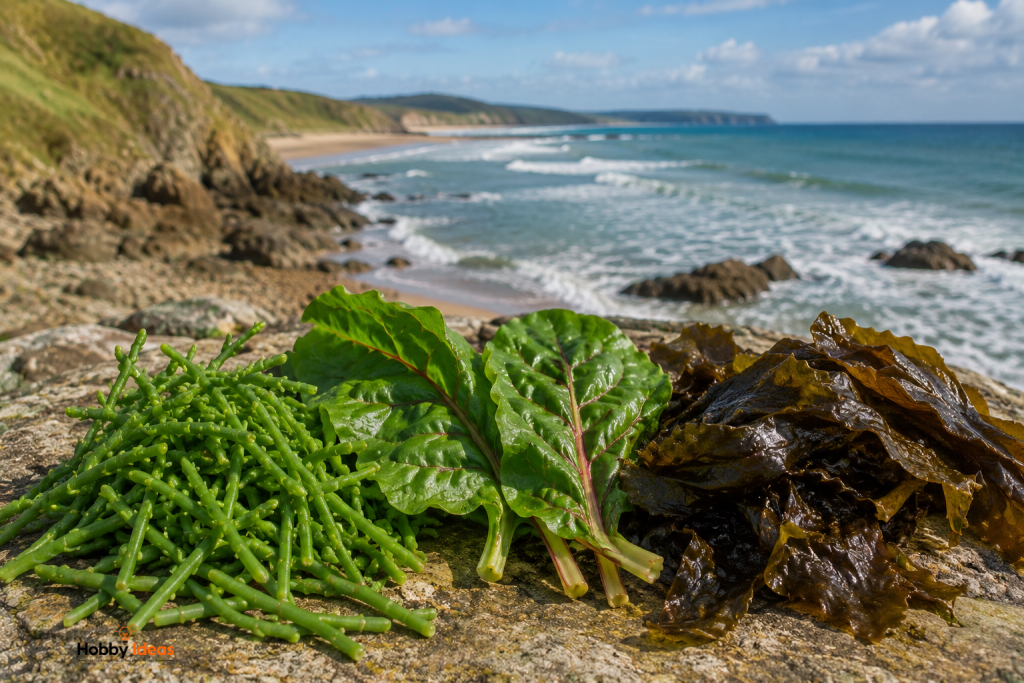
Coastal foraging in the UK can feel especially exciting because the landscape changes constantly. Salt marshes, estuaries, shingle beaches and rocky shores all support different plants and seaweeds.
However, coastal foraging needs extra care. Always check tide times, avoid polluted water, stay away from harbours and sewage outlets, and never take risks on mudflats or slippery rocks.
Samphire
Samphire is one of the best-known coastal foraging finds in Britain. It often grows in salt marshes and muddy coastal areas, where its crisp green stems absorb a naturally salty flavour.
Many people describe samphire as sea asparagus. It works well with fish, potatoes, eggs and simple summer meals. In many areas, samphire appears from late spring through summer, although timing varies by location and weather.
Sea Beet
Sea beet grows along many British coastlines and is the wild ancestor of beetroot, chard and sugar beet. Its leaves can be cooked like spinach, especially when young and tender.
You may find sea beet near shingle beaches, coastal paths and sea walls. Once you learn to recognise it confidently, it can become one of the most useful coastal plants for beginners.
Kelp and Edible Seaweeds
The UK coastline supports many edible seaweeds, including kelp. Seaweeds can add minerals, flavour and texture to soups, broths and seasoning blends.
Nevertheless, beginners should treat seaweed with caution. Only collect from clean water, avoid unknown species and consider learning from an expert guide before eating seaweed for the first time.
Hedgerow Foraging UK: Easy Seasonal Finds
Hedgerow foraging is often the easiest place for beginners to start. Many familiar wild foods grow along footpaths, field edges, woodland margins and quiet country lanes.
Unlike some specialist wild foods, hedgerow finds such as blackberries and elderflowers are already familiar to many people. As a result, they help beginners build confidence gradually.
Elderflower
Elderflower appears in late spring and early summer. The creamy white flower heads have a sweet, distinctive scent and are commonly used for cordials, sparkling drinks and desserts.
Elder trees often grow in hedgerows, woodland edges and quiet lanes. When picking, take only a few flower heads from each tree and leave plenty behind for insects, birds and later elderberries.
Blackberries
Blackberries are probably Britain’s most familiar wild food. They ripen from late summer into autumn and grow widely along paths, hedgerows and woodland edges.
They are excellent for crumbles, pies, jams and freezing. Additionally, they make a perfect first foraging project because most people already know what they look like.
Sloes
Sloes are the dark blue fruits of the blackthorn bush. They taste extremely sharp when raw, but many people collect them in autumn to make sloe gin.
Because blackthorn has dense thorns, harvesting sloes can feel a little awkward. Therefore, gloves and careful picking make the job much easier.
Rosehips
Rosehips are the red or orange fruits that appear on wild roses after flowering. They often remain visible into autumn and winter.
Historically, people valued rosehips for their vitamin C content. Today, foragers use them in syrups, teas and preserves. However, they need careful preparation because the tiny hairs inside can irritate the mouth and throat.
UK Hedgerow Foraging Calendar
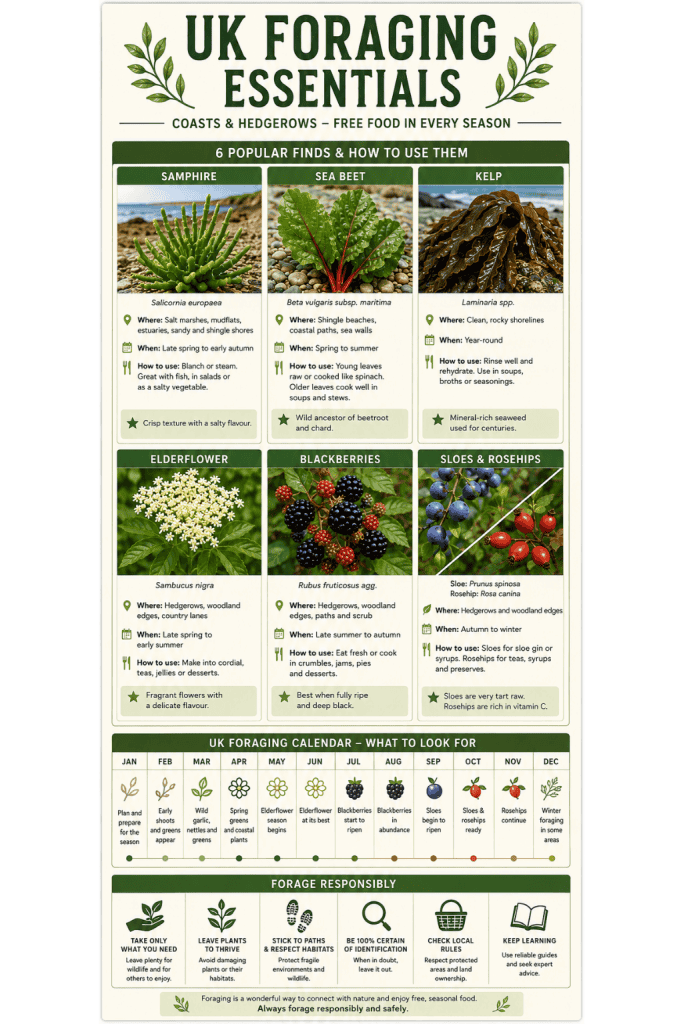
Foraging changes with the seasons. Therefore, beginners often enjoy the hobby more when they learn a few reliable finds for each part of the year.
Spring: Fresh growth appears, and young edible leaves begin to emerge.
Late Spring: Elderflower becomes one of the easiest and most rewarding hedgerow finds.
Summer: Samphire, sea beet and blackberries become more noticeable.
Autumn: Blackberries, sloes and rosehips dominate many hedgerows.
Winter: Rosehips may remain available, although most beginners use winter for learning, walking and planning.
Where Can You Legally Forage in the UK?
UK foraging laws can feel confusing, so beginners should keep things simple. Do not forage on private land without permission. Also, avoid taking plants from nature reserves, protected sites or places with clear restrictions.
In general, responsible foraging means collecting small amounts for personal use, never uprooting plants and never damaging habitats. Furthermore, always leave plenty behind for wildlife and other people.
For more outdoor inspiration, explore our guide to outdoor hobbies for adults.
For reliable information about British trees, plants and wildlife, the Woodland Trust guide to native trees and plants is a useful starting point.
Beginner Foraging Kit
You do not need much equipment to begin UK foraging. However, a few simple items can make each walk safer and more enjoyable.
- Basket or cloth bag: Useful for carrying delicate finds without crushing them.
- Field guide: Essential for checking plant identification carefully.
- Comfortable footwear: Important for coast paths, muddy tracks and uneven ground.
- Gloves: Helpful for brambles, sloes and thorny hedgerows.
- Notebook or phone: Useful for recording locations, seasons and future walks.
No beginner should rely entirely on memory when learning UK foraging. Therefore, carrying a trusted foraging field guide can help you double-check identification and learn new species as your confidence grows.
A traditional foraging basket is another useful addition for regular foragers. Unlike plastic bags, a basket allows air to circulate around your finds and helps prevent delicate flowers, berries and leaves from becoming crushed during a walk.
Responsible UK Foraging Tips
Good foraging protects nature. Therefore, take a small amount, avoid stripping plants bare and leave enough for birds, insects, mammals and other foragers.
Also, avoid rare plants, polluted areas and places close to busy roads. Wash all edible finds carefully and prepare them properly before eating.
Finally, build your knowledge slowly. One correctly identified plant is far better than a basket full of uncertain finds.
Frequently Asked Questions About UK Foraging
What is the easiest wild food to forage in the UK?
Blackberries are often the easiest wild food for beginners because they are widespread, familiar and simple to recognise.
Where can I find samphire in the UK?
Samphire often grows in salt marshes, estuaries and muddy coastal areas. However, always check local rules before collecting it.
Is UK foraging legal?
Small-scale personal foraging is often allowed in places where you have legal access, but restrictions apply on private land, protected sites and nature reserves. Never uproot wild plants without permission.
When is the best time to start foraging?
Late spring through autumn offers the easiest starting point because flowers, berries and coastal plants become more visible.
Can beginners forage safely?
Yes, but only if they start slowly, use reliable identification sources and avoid eating anything unless they are completely certain what it is.
Final Thoughts
UK foraging for beginners is not about becoming an expert overnight. Instead, it is about learning slowly, walking more often and seeing familiar landscapes with fresh eyes.
From samphire on the coast to blackberries in the hedgerow, wild food can add interest, flavour and purpose to ordinary walks. Moreover, it encourages a deeper respect for the seasons and the natural world.
Start with simple, recognisable finds. Learn one plant at a time. Take only what you need. Most importantly, stay safe and never eat anything unless you are completely certain.
If you’ve discovered that slowing down and paying attention to the natural world is part of what makes rockpooling so enjoyable, you might also like our full rockpooling guide. Like foraging, it encourages you to look more closely at your surroundings, rewards patience and curiosity, and reveals a fascinating world that many people simply walk straight past.
Important Safety Disclaimer
This article is for general educational purposes only. Plant, berry, fungus and seaweed identification can be difficult, and mistakes can have serious consequences. Never consume any wild food unless you are 100% certain of its identification and safety.
HobbyIdeas accepts no responsibility for illness, injury, allergic reaction, loss or damage resulting from the use of information in this article. Always consult trusted field guides, local rules and expert advice before foraging.
Affiliate Disclosure: Some links in this article may be affiliate links. If you choose to make a purchase through these links, HobbyIdeas may earn a small commission at no extra cost to you. We only recommend products, tools and resources that are relevant to the hobby being discussed and that we believe offer genuine value to our readers.