

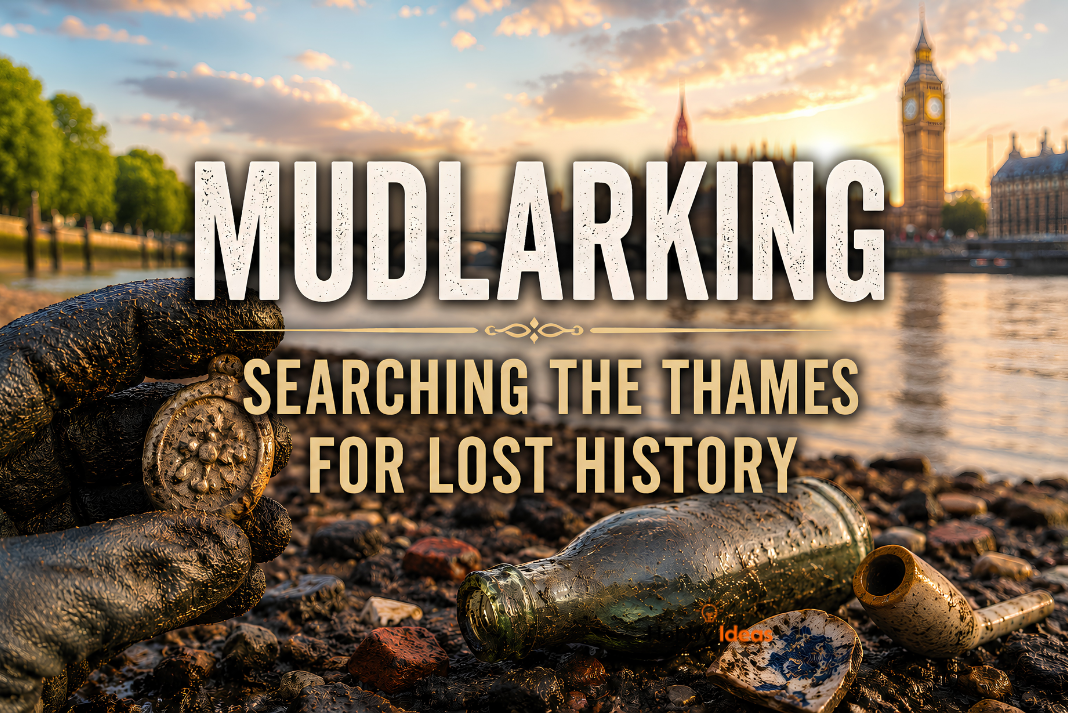
Few hobbies feel quite as atmospheric as mudlarking.
One moment you are standing beside the River Thames watching tourists drift past on sightseeing boats. Then suddenly, half-hidden amongst the wet stones and dark river mud, you spot something that has not seen daylight for hundreds of years.
Perhaps it is a Tudor dress pin. Maybe a Victorian clay pipe. Occasionally, lucky mudlarks uncover medieval pottery, Roman fragments, or ancient coins carried by the tides for centuries.
That sense of direct connection to the past explains exactly why mudlarking has become one of the UK’s most fascinating outdoor hobbies.
Unlike many collecting hobbies that involve auctions, shops, or online marketplaces, mudlarking feels unpredictable and strangely immersive. Every tide reveals something different, and even experienced mudlarks never quite know what might appear next.
If you enjoy unusual discovery hobbies, our article on treasure hunting hobbies explores more fascinating ways people search for hidden history outdoors.
According to the Portable Antiquities Scheme, responsible hobbyists continue helping record important historical discoveries found across Britain every year.
What Is Mudlarking?
The word “mudlark” originally described impoverished Victorians who scavenged river mud searching for anything valuable enough to sell.
During the nineteenth century, many people living beside the Thames survived by searching the foreshore for coal, rope, nails, scrap metal, and discarded objects washed along the river.
It was dangerous, filthy work carried out largely by children and the poorest members of society.
Modern mudlarking feels completely different.
Today, the hobby attracts history enthusiasts, collectors, archaeologists, photographers, treasure hunters, and ordinary people fascinated by London’s hidden past.
However, the basic thrill remains surprisingly similar.
The river still gives up lost objects carried through centuries of human history.
Why the River Thames Is the World’s Most Famous Mudlarking Spot
The Thames remains the global centre of mudlarking because London has existed beside the river for nearly two thousand years.
Romans traded there. Medieval merchants worked there. Tudor ships crowded the waterfront. Victorian industries poured waste directly into the river.
As a result, the tidal Thames contains layer upon layer of lost history buried beneath the mud.
Twice every day, the tides pull back and expose sections of foreshore filled with fragments from different periods of London’s past.
Many mudlarks describe the experience as strangely addictive because every exposed patch of mud carries possibility.
Even a quiet day often produces something interesting.
The Strange Beauty of the Thames Foreshore
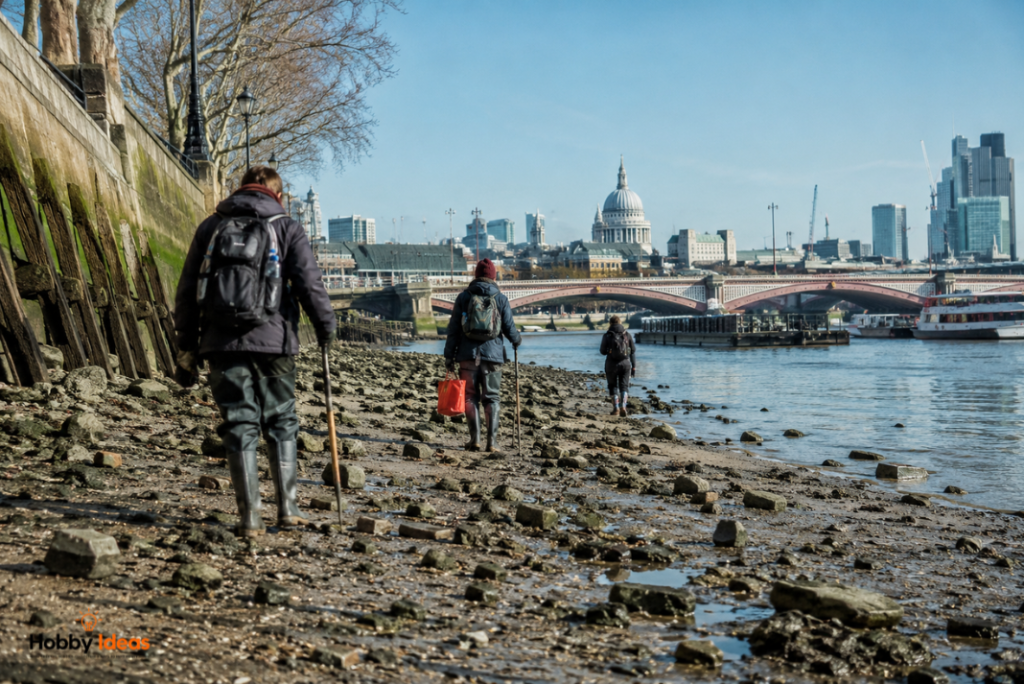
Part of mudlarking’s appeal comes from atmosphere.
The foreshore feels completely different from the busy streets above it. Once you climb down onto the river edge, modern London suddenly fades into the background.
Broken pottery glints amongst wet stones. Old bricks emerge from black mud. Rusted metal protrudes from ancient timbers buried beneath the shoreline.
Some areas feel almost post-apocalyptic during low tide.
Others look surprisingly peaceful, especially during early mornings when fog drifts across the water and the city remains quiet overhead.
That mixture of history, decay, and discovery gives mudlarking a very distinctive atmosphere.
What Can Mudlarks Actually Find?
The range of objects discovered along the Thames foreshore surprises many beginners.
Some finds look insignificant at first glance. However, even small fragments often carry fascinating historical stories once properly identified.
Roman and medieval finds occasionally include:
coins, pottery fragments, pins, leather shoes, buckles, and trade items.
Tudor and Stuart finds regularly include:
dress pins, clay pipes, tokens, glass fragments, and early household objects.
Victorian mudlarking finds often include:
ink bottles, marbles, frozen Charlotte dolls, pottery, medicine bottles, and ordinary domestic waste from nineteenth-century London.
Interestingly, many mudlarks become just as excited by everyday objects as rare treasures because ordinary items reveal how people actually lived centuries earlier.
If mudlarking sparks an interest in old coins, our guide on how to start coin collecting explains how to build a simple beginner collection without feeling overwhelmed.
The Tides Change Everything
Mudlarking depends entirely on tides.
Every low tide exposes different areas of foreshore, while storms and river movement constantly uncover new material beneath the mud.
That shifting landscape explains why the hobby never feels repetitive.
One stretch of foreshore may appear completely empty one week, then suddenly produce interesting finds after heavy rain or strong tidal movement.
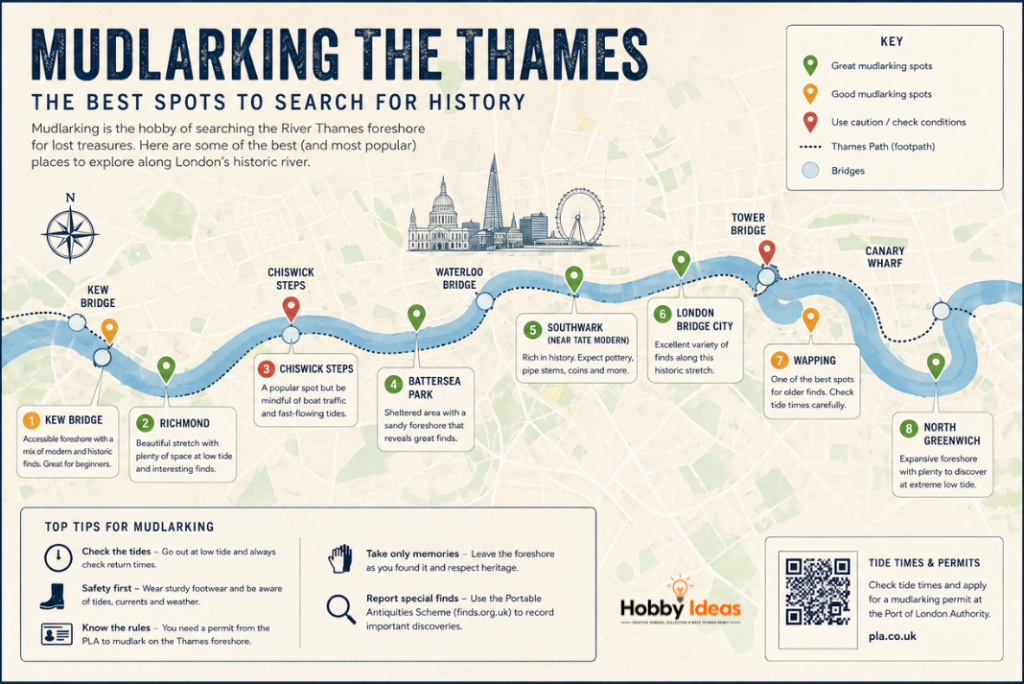
Experienced mudlarks often plan trips carefully around tide tables because timing can completely change what becomes accessible.
Mudlarking Permits and Legal Rules
Importantly, mudlarking on the Thames is not simply a case of wandering onto the foreshore and digging freely.
The Port of London Authority controls access to much of the tidal Thames, and hobbyists require permits before searching many sections of foreshore legally.
Different permits allow different levels of searching activity.
Additionally, certain areas remain protected because of archaeological importance.
Responsible mudlarks also report significant discoveries through the Portable Antiquities Scheme where appropriate.
Those rules help preserve historically important objects while protecting the archaeological integrity of the river itself.
The Mudlark’s Code
Most experienced mudlarks care deeply about protecting the foreshore.
Interestingly, the hobby often attracts people who genuinely value history and conservation rather than simply searching for profit.
Responsible mudlarks generally:
avoid damaging river structures, respect protected areas, leave dangerous objects alone, and avoid aggressive digging that destroys archaeological layers.
Many mudlarks also remove modern rubbish and plastic during searches because they feel protective towards the river environment.
Safety Matters Far More Than Finds
The Thames foreshore can become dangerous surprisingly quickly.
Fast-moving tides regularly trap inexperienced visitors, while deep mud, slippery algae, hidden metal, and sudden drop-offs all create serious risks.
Additionally, parts of the foreshore remain extremely uneven beneath the mud itself.
Because of that, experienced mudlarks usually wear:
heavy-duty gloves, sturdy boots, layered waterproof clothing, and knee pads for longer searches.
Health risks also exist.
River water can contain sewage contamination and bacteria linked to Weil’s disease, so cuts and scratches should always be cleaned properly afterwards.
Importantly, no historical object is worth risking serious injury for.
Why Mudlarking Feels So Addictive
Part of the appeal comes from uncertainty.
Unlike hobbies with predictable outcomes, mudlarking constantly creates suspense because nobody truly knows what the next tide might reveal.
One small object hidden amongst ordinary stones can suddenly open a direct connection to Roman London, Tudor trade, or Victorian street life.
That emotional connection to real human history feels surprisingly powerful.
Many mudlarks also describe the hobby as calming.
Hours disappear quietly while searching the shoreline, listening to water movement, watching the tide shift, and carefully scanning the mud for unusual shapes.
It feels strangely detached from modern city life despite taking place in the centre of London itself.
Cleaning and Preserving Mudlarking Finds
Beginners often feel tempted to scrub finds aggressively the moment they get home.
However, experienced mudlarks usually clean discoveries carefully and slowly because fragile objects can easily become damaged.
Waterlogged leather, ancient wood, delicate pottery, and corroded metal sometimes require specialist preservation techniques.
Interestingly, identification often becomes part of the fun itself.
Many mudlarks spend evenings researching makers’ marks, pottery fragments, old bottle designs, and unusual historical objects discovered during searches.
Online mudlarking communities have also grown enormously over recent years, helping hobbyists identify finds and share discoveries.
How Social Media Changed Mudlarking
For many years, mudlarking remained relatively unknown outside specialist history circles.
That changed dramatically once photographs and videos of foreshore finds began spreading across Instagram, YouTube, and TikTok.
Suddenly, millions of people discovered the idea that ancient objects still emerge daily from the Thames mud.
Some mudlarking videos now attract huge audiences because viewers enjoy the same suspense and discovery feeling experienced by the mudlarks themselves.
Interestingly, museum exhibitions featuring finds recovered by amateur mudlarks have also helped the hobby gain wider respect.
Mudlarking Is About More Than Treasure
Although dramatic discoveries grab headlines, most mudlarks quickly realise the hobby is not really about becoming rich.
The real appeal comes from atmosphere, history, curiosity, and connection to the past.
Even small finds can feel memorable because they once belonged to real people living ordinary lives centuries earlier.
That human connection makes mudlarking feel very different from ordinary collecting.
“`htmlRecommended Reading for Beginner Mudlarkers
If mudlarking has captured your imagination, a good guide book can help you identify finds, understand local history, and learn where different types of objects are most commonly discovered. It can also make each visit to the foreshore far more rewarding.
One useful resource is The Mudlark’s Handbook: A Practical Guide to Finding Hidden Treasure on Britain’s Shoreline and Waterways. The book covers techniques, identification tips, safety considerations, and the fascinating stories behind many common mudlarking finds.
Whether you are completely new to the hobby or looking to expand your knowledge, a specialist guide can help you make the most of every search.
“`Enjoy The Hobby
Mudlarking combines history, treasure hunting, archaeology, exploration, and outdoor discovery in a way very few hobbies manage to balance naturally.
One low tide beside the Thames can suddenly uncover Roman fragments, Victorian bottles, Tudor objects, or forgotten pieces of everyday London life hidden beneath the mud for centuries.
And honestly, that mixture of unpredictability, atmosphere, and genuine historical discovery may explain exactly why mudlarking continues growing as one of Britain’s most fascinating hobbies.
Disclosure: This article contains affiliate links. If you purchase through these links, HobbyIdeas may earn a small commission at no extra cost to you. We only recommend products and resources that are relevant to the hobby being discussed.