

Watercolour painting for beginners remains one of the most relaxing creative hobbies because it combines simplicity, creativity, and experimentation without requiring expensive equipment.
Unlike some artistic hobbies that feel intimidating immediately, watercolour painting encourages people to explore gradually.
In fact, slight imperfections often improve the final result.
That alone makes watercolour surprisingly beginner-friendly.
Why Watercolour Painting Appeals to Beginners
Many people enjoy watercolour because the hobby feels calm, flexible, and relatively affordable.
Additionally, beginners can start with only a few basic materials while still producing attractive results.
A simple beginner setup usually includes:
- Basic watercolour paints
- Watercolour paper
- A few soft brushes
- A jar of water
- A mixing palette
According to the Watercolour Affair beginner guide, simple exercises and colour experiments help beginners gain confidence quickly without feeling overwhelmed.
Start With Simple Subjects
Beginners often improve faster by painting simple objects rather than attempting highly detailed masterpieces immediately.
Popular beginner subjects include:
- Leaves
- Flowers
- Clouds
- Cups and mugs
- Fruit
- Simple landscapes
Importantly, watercolour works beautifully with loose, slightly imperfect styles.
Consequently, beginners do not need perfectly realistic results to create visually pleasing artwork.
Understanding Water and Pigment
One of the biggest differences between watercolour and other painting styles involves the relationship between water and pigment.
More water creates softer lighter effects.
Meanwhile, less water creates stronger colour and sharper detail.
Learning this balance takes practice, although experimentation forms part of the fun.
Admittedly, beginners sometimes create accidental “muddy puddles” during early attempts.
That experience appears almost mandatory.
Cheap Supplies Work Fine at the Start
Beginners often assume they need expensive professional art materials immediately.
Fortunately, that is rarely true.
Affordable beginner sets work perfectly well for learning:
- basic brush control
- colour mixing
- layering
- simple techniques
Later, once confidence improves, upgrading paper and paints usually makes a noticeable difference.
However, expensive equipment cannot replace practice.
Watercolour Encourages Relaxation
Many people use watercolour painting as a way to unwind after work or reduce screen time.
The slower pace of painting encourages patience and concentration in a surprisingly satisfying way.
Additionally, watercolour setups remain compact and easy to store compared with some other art hobbies.
As a result, painting sessions can happen almost anywhere.
Simple Techniques Beginners Can Learn Quickly
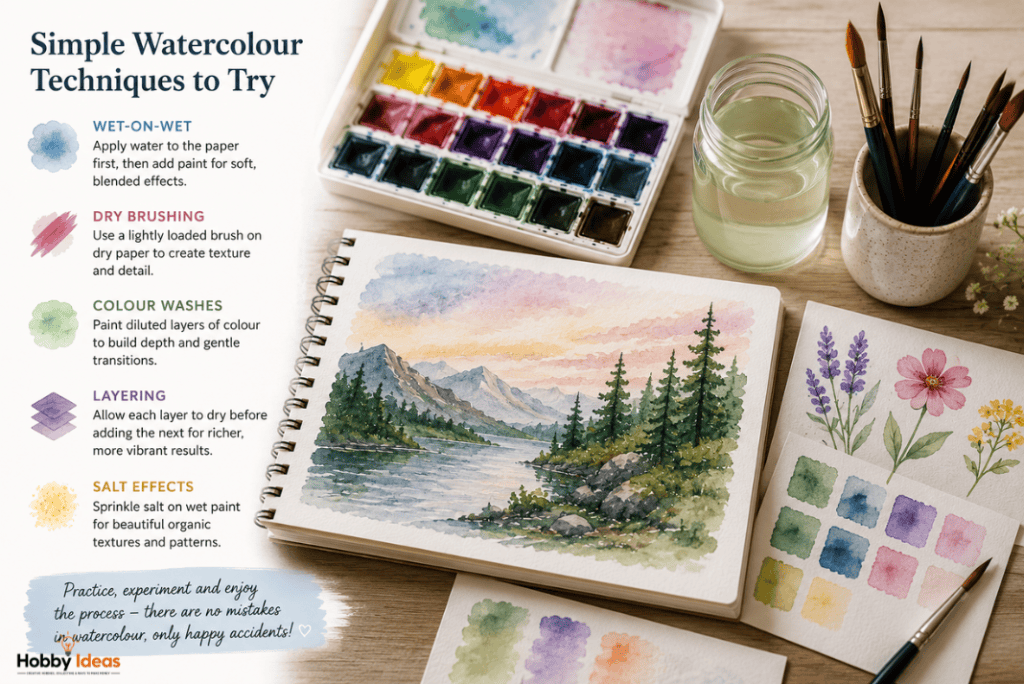
Several beginner-friendly techniques create impressive effects fairly quickly.
These include:
- Wet-on-wet painting
- Dry brushing
- Colour washes
- Layering
- Salt texture effects
Even simple experiments often produce attractive unexpected results.
That unpredictability forms part of watercolour’s charm.
Sketchbooks Help Beginners Improve Faster
Many artists recommend using sketchbooks regularly rather than focusing only on “perfect” finished paintings.
Sketchbooks allow beginners to: – practise freely – test colour combinations – experiment without pressure – develop confidence gradually
Interestingly, some rough experimental pages often become more visually appealing than carefully planned paintings.
Online Tutorials Make Learning Easier Than Ever
Today, beginners can access thousands of free painting tutorials online.
Many people learn through: – YouTube – Pinterest – art blogs – online classes – short-form social media tutorials
Consequently, beginners no longer need formal classes to start learning effectively.
Creative Hobbies Often Overlap Naturally
People interested in painting frequently explore other creative hobbies including:
- drawing
- journaling
- calligraphy
- crochet
- crafting
Creative hobbies often complement one another because they encourage experimentation and self-expression.
If you enjoy relaxing creative hobbies, you might also enjoy our guide to beginner crochet projects.
Final Thoughts On Watercolour Painting For Beginners
Watercolour painting for beginners remains one of the most accessible and enjoyable creative hobbies available today.
More importantly, watercolour encourages experimentation rather than perfection.
That makes the hobby feel calming rather than stressful for many beginners.
Whether you paint simple leaves or eventually create detailed landscapes, watercolour offers endless opportunities to improve and explore creativity at your own pace.
Most importantly, beginners should remember that even experienced artists still produce occasional strange-looking paintings.
That simply comes with the territory.