

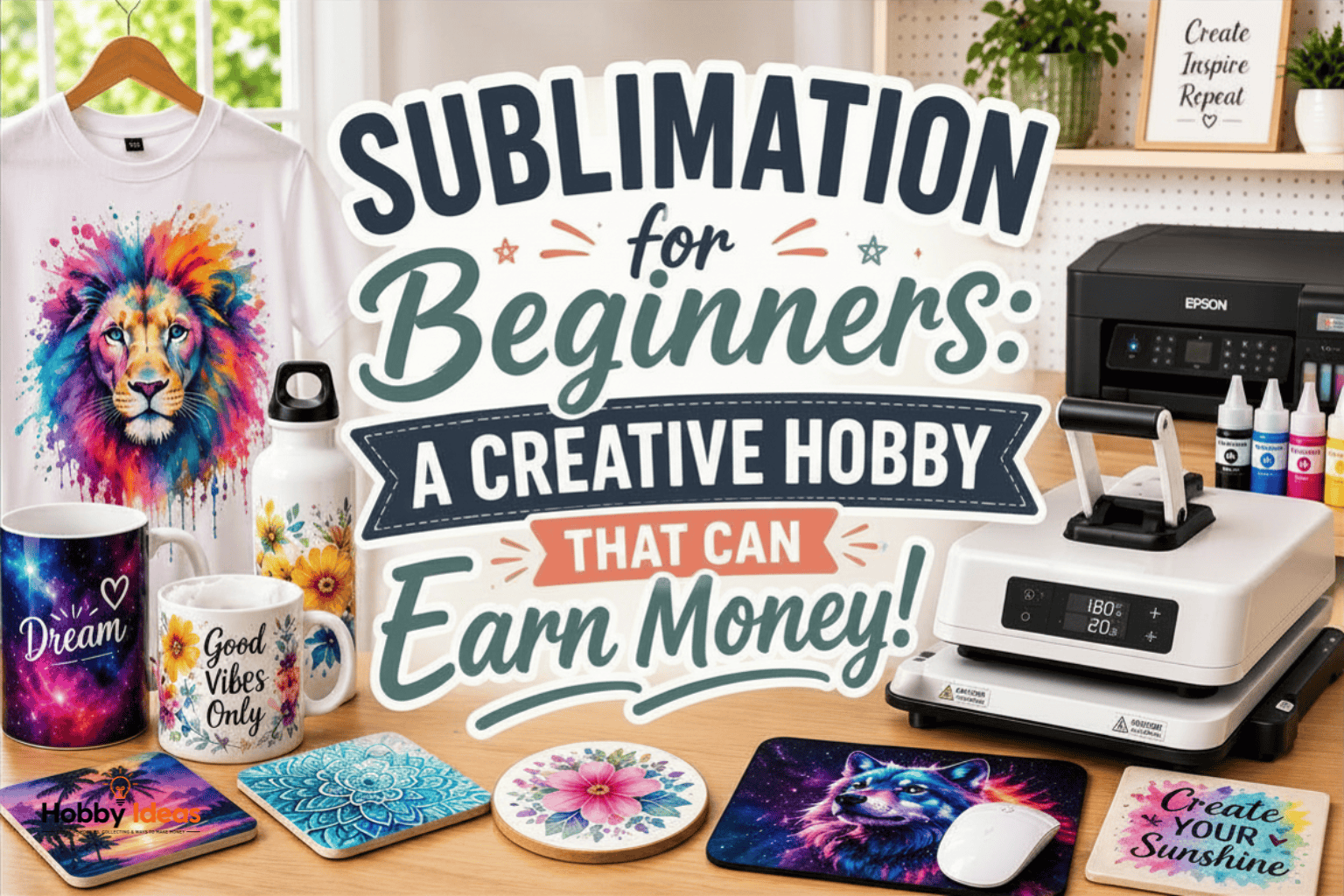
Sublimation for beginners is one of the most exciting creative hobbies to emerge in recent years. It combines design, technology and craftsmanship, allowing ordinary items to become personalised gifts, products and keepsakes.
At first glance, sublimation can seem complicated. There are printers, inks, heat presses, blank products and software to learn. However, once you understand the basics, the process becomes surprisingly straightforward.
Many people start sublimation simply because they enjoy making things. They create gifts for friends, personalised T-shirts for local events, coasters for craft fairs or custom items for family members. Then, before long, they discover that people are willing to pay for those creations.
That combination of creativity and income potential makes sublimation particularly appealing. It works as a relaxing hobby, yet it can also grow into a profitable side business if you decide to take it further.
Quick summary: Sublimation uses heat to transfer special ink into compatible products such as T-shirts, coasters, mouse mats, tote bags and other coated or polyester-based blanks. The result is a permanent, vibrant design that becomes part of the product rather than sitting on the surface.
What Is Sublimation?
Sublimation printing uses specialised inks that react to heat. When heated to the correct temperature, the ink turns into a gas and bonds with a specially coated surface or polyester fabric.
Unlike vinyl transfers or stickers, the design becomes part of the product itself. Consequently, sublimated items usually feel smooth to the touch and resist cracking, peeling and fading.
This is one reason why sublimation has become so popular among hobbyists. The finished products often look professional even when produced at home.
Why People Love Sublimation as a Hobby
Some hobbies take months before you see meaningful results. Sublimation is different.
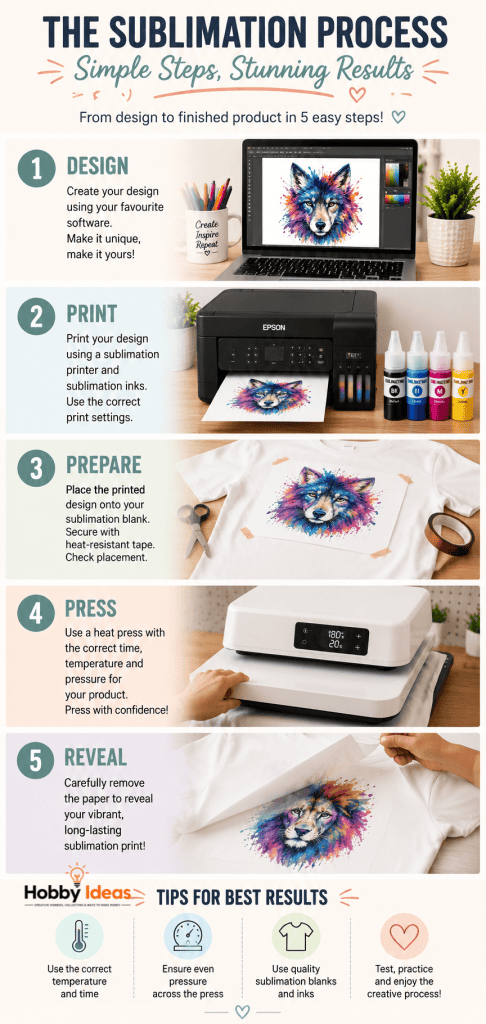
You can design something on your computer, print it, press it and hold the finished product in your hands within an hour.
That sense of immediate achievement keeps many people engaged. Furthermore, there is always something new to try. One week you might personalise a tote bag. The next week you might create coasters, mouse mats or slate plaques.
The variety keeps the hobby fresh, while the creative possibilities seem almost endless.
If you enjoy making things at home, you may also enjoy browsing our collection of Home and Lifestyle Hobbies for more creative inspiration.
What Can You Make with Sublimation?
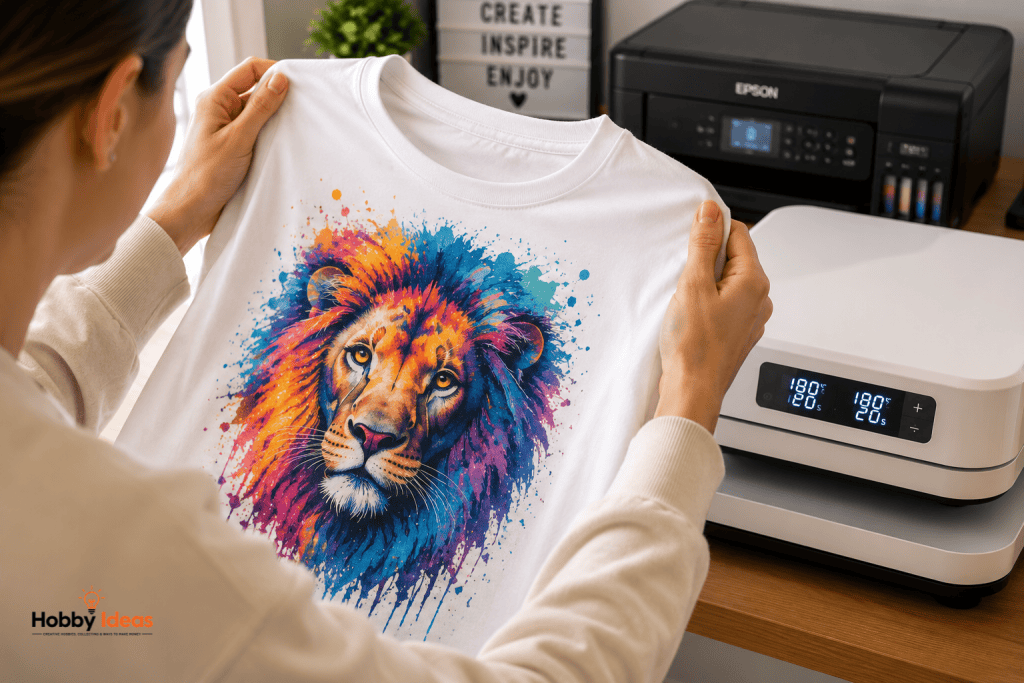
This is where the hobby becomes particularly interesting.
Most beginners start with simple flat products because they are easier to press and less intimidating than shaped items. However, once they gain confidence, they often expand into a wide range of personalised gifts and small product lines.
Popular sublimation products include T-shirts, tote bags, mouse mats, mugs, tumblers, coasters, cushion covers, keyrings, slate plaques, signs, small wall art and personalised gifts.
Many of these items can be produced in small quantities, which makes sublimation ideal for hobbyists who enjoy creating unique pieces rather than mass-produced products.
Want to start with mugs? Personalised mugs are one of the most popular beginner-friendly sublimation products because they make useful gifts and can also sell well locally or online. Our guide on how to make personalised mugs at home explains the equipment, process, common mistakes and profit potential in more detail.
The Equipment You Need to Get Started with Sublimation for Beginners
One of the biggest misconceptions about sublimation is that you need a professional workshop.
You do not.
Many hobbyists begin on a spare table, in a home office or even in a corner of the dining room. However, you do need the right core equipment.
A Sublimation Printer
The printer forms the heart of the setup. While several options exist, beginners often become confused by the technical differences.
I personally use a printer from the same series as the Ink Experts Dye Sublimation A4 Printer Bundle. It combines an Epson EcoTank printer with sublimation inks, removing much of the guesswork that often frustrates beginners.
Starting with a purpose-built bundle can save a great deal of time and troubleshooting compared with trying to convert equipment yourself.
A Heat Press
Once your design is printed, you need heat and pressure to transfer it onto the blank product.
For flat products such as T-shirts, tote bags, coasters and mouse mats, I personally use the HTVRONT Auto Heat Press. I have used this exact model for around two years and have been consistently impressed with its performance and ease of use.
The automatic pressure and release features help remove much of the uncertainty that beginners often experience. However, it is important to note that this type of press is designed for flat products. If you plan to make mugs, you will also need a dedicated mug press.
Beginner Tip
Do not rush into buying every machine available. Start with a printer, a heat press and a small selection of blank products. Learn the process first, then expand your equipment as your confidence grows.
Not Ready to Buy a Printer Yet?
One of the biggest misconceptions about personalised product businesses is that you must buy a printer immediately.
In reality, many beginners start much more simply.
Several UK suppliers now produce DTF (Direct to Film Transfers) gang sheets. You upload your artwork, the supplier prints the transfers professionally and sends them to you ready for application.
You simply cut out the designs and press them onto compatible garments using a heat press.
This approach allows beginners to experiment with product ideas, practise pressing techniques and even make sales before investing in their own printer.
Although DTF and sublimation use different printing methods, both can produce equally excellent results. Therefore, some people use DTF as an affordable stepping stone before eventually purchasing their own sublimation equipment.
Common Sublimation Mistakes Beginners Make
Like any hobby, sublimation comes with a learning curve.
Fortunately, most mistakes are easy to avoid once you know what to look for.
Using the Wrong Products
Not every shirt, coaster, mouse mat or blank product will accept sublimation ink. Products must either contain a high polyester content or have a special sublimation coating.
Ignoring Temperature Guidelines
Different blanks require different temperatures and pressing times. Therefore, always follow the supplier’s recommendations rather than guessing.
Using Poor Quality Images
A blurry image will still look blurry after sublimation. Consequently, using high-resolution artwork makes a significant difference to the finished result.
Skipping Test Prints
Experienced sublimators regularly test colours and settings before producing final products. A few minutes spent testing can save wasted blanks later.
Can You Make Money from Sublimation?
Yes, many people do.
However, it helps to approach the opportunity realistically.
Sublimation is not a guaranteed route to instant wealth. Instead, it is a creative skill that can gradually develop into a small business.
Many successful sellers begin by creating gifts for friends and family. Then they receive requests from local clubs, schools, small businesses and event organisers. Over time, those requests can evolve into a steady stream of orders.
The ability to create personalised products on demand gives small sublimation businesses a significant advantage over mass-produced retail products.
Photographing Your Products Properly
If you decide to sell your creations, presentation matters.
Even beautifully produced products can struggle if the photographs fail to show them at their best.
Fortunately, good product photography does not require an expensive studio. Our guide on how to photograph handmade items that look professional explains how to create clean, attractive images using simple equipment and techniques.
Good photographs can dramatically improve both online sales and social media engagement.
When a Hobby Becomes a Business
One of the most enjoyable aspects of sublimation is that you can choose your own pace.
Some people remain hobbyists forever. They enjoy creating gifts, experimenting with designs and learning new techniques.
Others gradually move into craft fairs, Etsy shops, local markets or their own websites.
Neither approach is right or wrong.
The beauty of sublimation lies in its flexibility. It can remain a creative outlet, a side hustle or a fully fledged business depending on your goals.
Want to go further? If you are interested in turning sublimation into a genuine home business, the guide Start a Sublimation Business from Home explores equipment, products, pricing, marketing and practical steps for building a profitable sublimation venture.
Is Sublimation Right for You?
Sublimation suits people who enjoy creating, experimenting and learning practical skills.
It offers enough technical challenge to remain interesting, yet it also provides quick results that keep motivation high.
Furthermore, the hobby rewards creativity. Every new design creates an opportunity to learn, improve and develop your own style.
For some people, that is enough.
For others, it becomes the foundation of a rewarding side business.
Final Thoughts On Sublimation For Beginners
Sublimation for beginners offers a rare combination of creativity, practicality and income potential.
Few hobbies allow you to design something on a computer, create a physical product within minutes and potentially sell it to someone who genuinely wants it.
Whether you simply want a relaxing creative outlet or hope to build a profitable side business, sublimation provides a rewarding and accessible starting point.
Start small, learn the basics, enjoy the process and focus on creating products you would be proud to give as a gift. The skills, confidence and opportunities will often grow naturally from there.
Disclosure: HobbyIdeas.co.uk participates in the Amazon Associates programme. If you purchase through links on this page, we may earn a small commission at no additional cost to you. This helps support the site and allows us to continue creating free hobby guides and inspiration.