

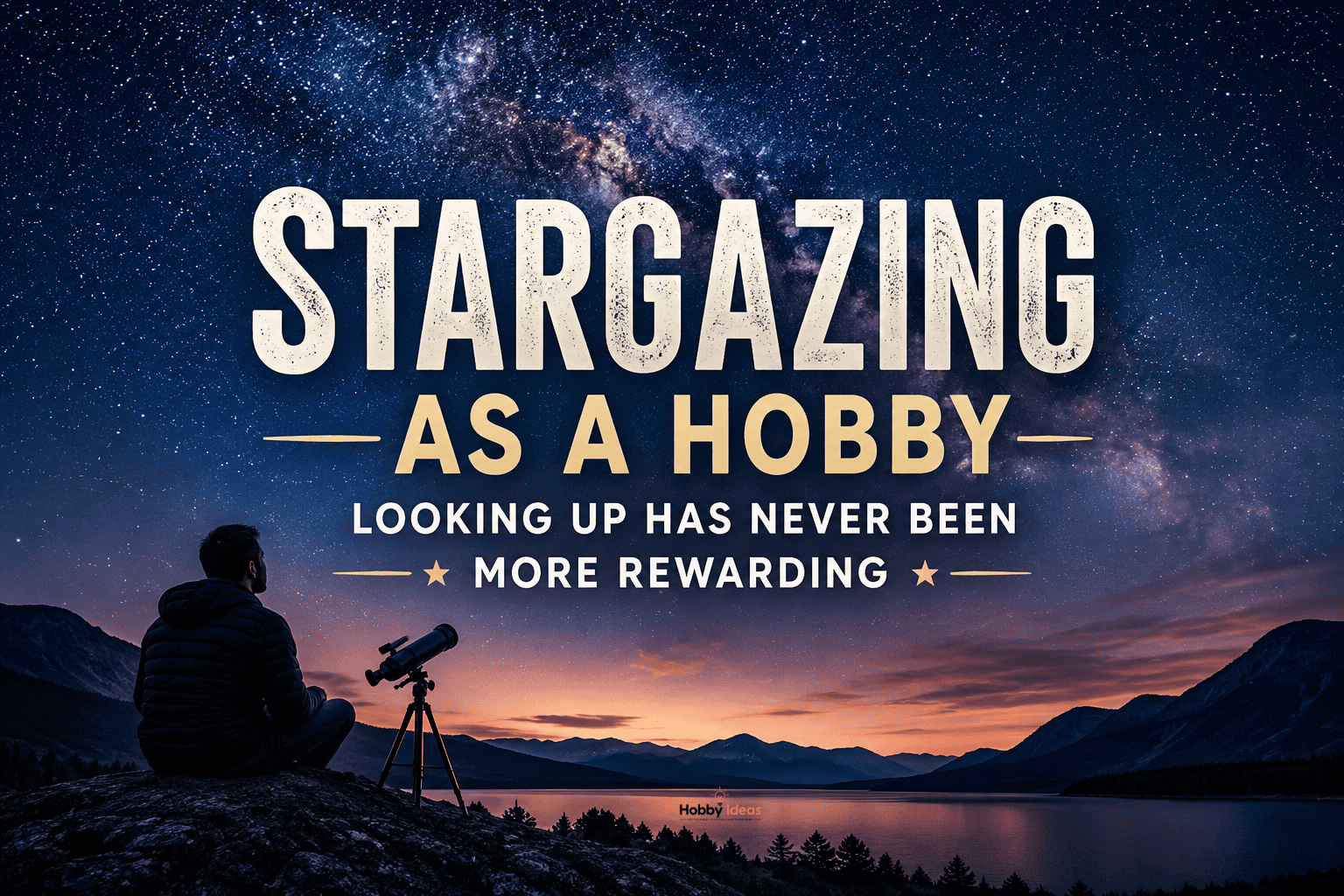
Stargazing as a hobby has quietly become one of Britain’s most rewarding outdoor pastimes. While many hobbies require expensive equipment, memberships or dedicated venues, stargazing begins with something most of us already have, a clear night sky above our heads.
In an age dominated by screens, notifications and constant distractions, more people are discovering the simple pleasure of stepping outside, looking up and reconnecting with the universe. The night sky offers something increasingly rare: genuine wonder.
Whether you live in the countryside or the suburbs, stargazing provides a fascinating hobby that combines relaxation, discovery, nature and science. Best of all, you can begin tonight.
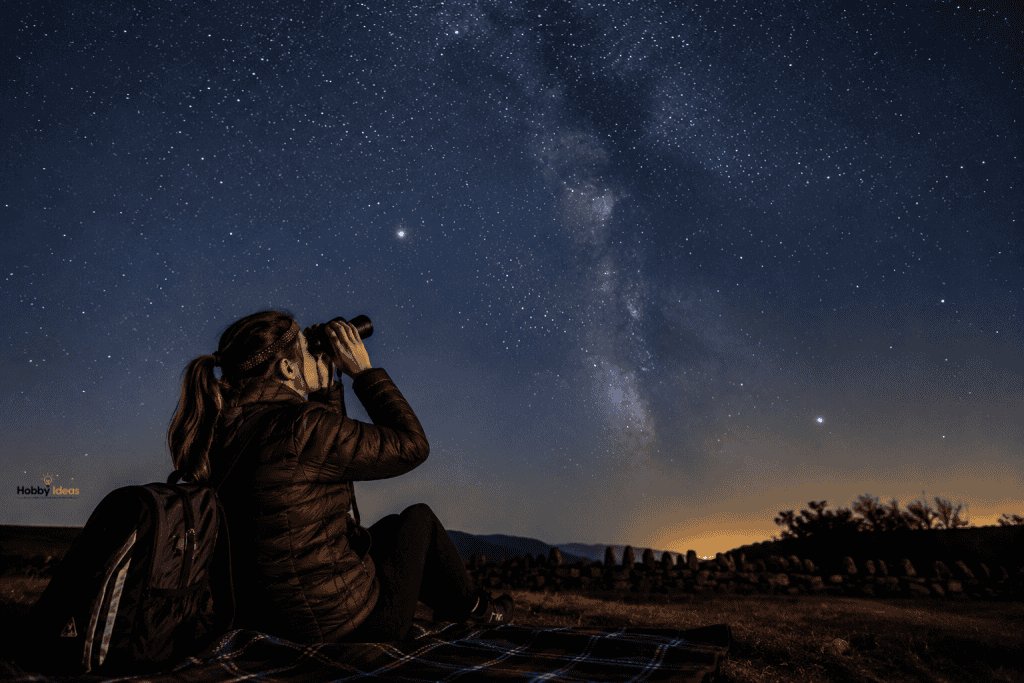
The best thing about stargazing? You do not need a telescope to get started. Many of the most impressive sights in the night sky can be enjoyed with nothing more than your own eyes.
Why Stargazing Is Becoming Popular Again
Several trends have helped drive renewed interest in stargazing as a hobby.
Firstly, many people want hobbies that encourage them to spend less time staring at phones and computers. Secondly, growing awareness of dark sky locations has made astronomy more accessible than ever. Finally, the hobby offers a rare opportunity to slow down and simply observe.
Unlike many modern activities, stargazing rewards patience rather than speed. Consequently, many enthusiasts describe it as both relaxing and surprisingly mindful.
It also pairs naturally with other outdoor pursuits. For example, readers who enjoy our guide to outdoor hobbies for adults often discover that stargazing adds a completely new dimension to time spent outdoors.
Many stargazers enjoy combining an evening under the stars with a night of wild camping. If you’re planning to stay out after dark, our wild camping cooking guide will help you prepare warm, satisfying meals that are lightweight to carry and easy to cook beside your tent.
The Surprising Things You Can See Without a Telescope
Many beginners assume astronomy starts with an expensive telescope. In reality, some of the most impressive sights require no equipment whatsoever.
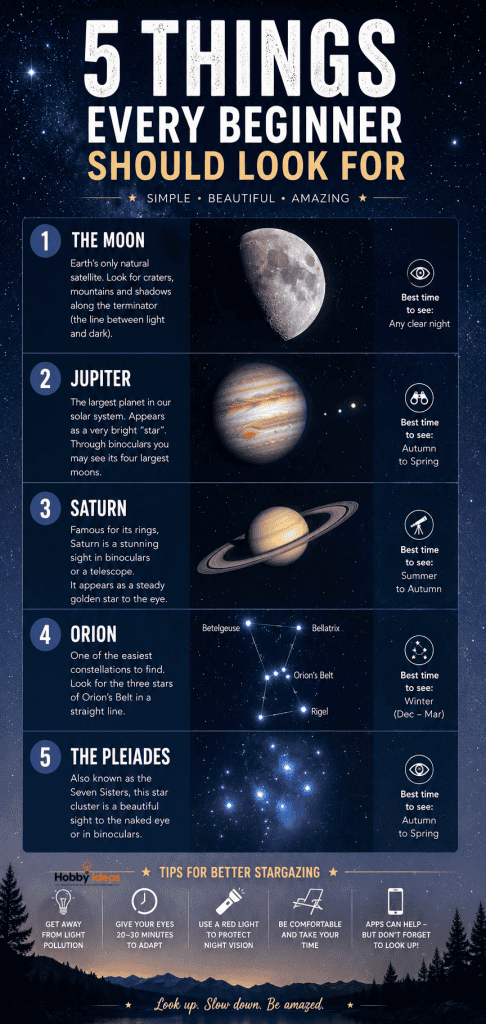
The Moon alone can provide months of fascination as its appearance changes throughout the month. Furthermore, bright planets such as Jupiter and Venus regularly become visible to the naked eye.
Meanwhile, meteor showers, satellites and even the International Space Station frequently pass overhead, often without most people noticing.
Six Amazing Things Beginners Can Spot
The night sky is far busier than most people realise. Even without a telescope, these are some of the fascinating sights that regularly capture the attention of beginner stargazers.
Craters, shadows and changing phases create a different view throughout the month.
One of the brightest objects in the night sky and often easy to spot.
A favourite target for many beginners once binoculars or a telescope are added.
Nature’s own fireworks display, with dozens of shooting stars possible on peak nights.
The International Space Station regularly passes overhead and can be visible to the naked eye.
Ancient star patterns that have guided travellers and inspired stories for thousands of years.
The more time you spend looking up, the more familiar these celestial sights become, and before long you’ll start recognising them instinctively.
Do You Need Expensive Equipment?
The short answer is no.
One of the biggest misconceptions surrounding stargazing as a hobby is that beginners need to spend hundreds of pounds on a telescope immediately.
In reality, experienced astronomers often encourage newcomers to learn the sky first. Understanding constellations, planets and seasonal changes makes any future equipment far more useful.
Many enthusiasts begin with:
- Their own eyes
- A star chart app
- A comfortable chair
- A pair of binoculars
Only later do they consider investing in a telescope.
Recommended for beginners: If you would like a simple introduction to the night sky, the Stargazing for Beginners: Explore the Wonders of the Night Sky guide provides an accessible way to learn constellations, planets and seasonal sky events without investing in expensive equipment.
Another useful beginner tool: The Planisphere and Starfinder Practical Astronomy Guide helps you identify constellations, planets and seasonal night sky highlights. Unlike a mobile phone app, it works anywhere and encourages you to learn the sky for yourself.
The Best Places to Stargaze in Britain
Britain is home to some remarkable dark sky locations.
National parks, coastal areas and rural landscapes often provide excellent viewing conditions. However, you do not need to travel to a designated dark sky reserve to enjoy the hobby.
Many people begin in their own garden.
Reducing nearby light pollution often makes a surprising difference. Even moving away from a streetlight can dramatically improve visibility.
For those interested in discovering Britain’s best dark sky locations, the excellent resources provided by DarkSky International offer useful guidance and information.
Why Stargazing Feels Different from Other Hobbies
Many hobbies focus on creating, collecting or competing.
Stargazing offers something quite different.
It encourages observation rather than action. Instead of rushing towards a goal, participants slow down and appreciate what is already there.
The hobby also creates a strong sense of perspective. Watching a meteor streak across the sky or spotting a distant planet often reminds people how vast the universe really is.
As a result, many enthusiasts describe stargazing as calming, grounding and surprisingly inspiring.
If you’re thinking about investing in your first telescope, it’s worth reading our guide to choosing between a Dobsonian and an equatorial telescope before spending your money. It explains the strengths of both designs and helps beginners decide which type best suits the way they want to explore the night sky.
Did You Know?
The light from some stars visible in the night sky began its journey towards Earth hundreds or even thousands of years ago. When you look up, you are literally seeing history.
Why People Stay with the Hobby for Years
Unlike some hobbies, stargazing never truly becomes repetitive.
The sky changes every night. Different constellations appear throughout the year, planets move across the heavens and special events such as eclipses and meteor showers create exciting highlights.
Furthermore, the hobby grows naturally over time. Many people begin with casual observation before progressing to binoculars, telescopes, astrophotography or astronomy clubs.
Others remain perfectly happy simply spending time under the stars.
In that respect, stargazing is similar to many of the activities featured in our guide to nature hobbies. The enjoyment comes from observation, discovery and developing a deeper appreciation for the world around us.
Final Thoughts On Stargazing As A Hobby
Stargazing as a hobby offers something that feels increasingly valuable in modern life: the chance to pause, slow down and experience genuine wonder.
It costs very little to begin, rewards curiosity and provides endless opportunities for learning. Whether you spend ten minutes watching the Moon from your garden or travel to a dark sky reserve to witness the Milky Way, the experience can be unforgettable.
The next time the sky clears after sunset, step outside and look up.
You may discover that one of the most rewarding hobbies in Britain has been waiting above your head all along.
Affiliate Disclosure: HobbyIdeas.co.uk participates in the Amazon Associates Programme, an affiliate advertising programme designed to provide a means for websites to earn advertising fees by linking to Amazon.co.uk. If you purchase a product through one of our links, we may earn a small commission at no extra cost to you. We only recommend products we believe are relevant to the hobby or activity being discussed.