

Vinyl collecting continues growing rapidly, although modern record collectors no longer search only for rare vinyl records in perfect condition, or albums sitting behind glass cabinets.
Instead, many collectors now enjoy the thrill of crate digging, the slow and often unpredictable hunt for hidden records buried inside charity shops, boot sales, flea markets, record fairs, antique centres, and dusty second-hand shops.
That treasure-hunting aspect explains why vinyl collecting feels so addictive for many people.
Importantly, crate digging combines nostalgia, music history, collecting, and genuine discovery in a way very few hobbies manage to replicate. One minute you are flipping through forgotten Perry Como albums, while the next you suddenly uncover an original pressing worth hundreds of pounds.
According to Discogs, vinyl sales and collector activity continue growing worldwide as younger buyers increasingly embrace physical music formats again.
Whether you collect classic rock, jazz, punk, indie, soul, electronic music, or obscure soundtracks, crate digging remains one of the most enjoyable collecting hobbies around.
Quick Answer: What Is Crate Digging?
Crate digging is the hobby of searching through boxes of vinyl records in record shops, charity shops, markets, fairs and private collections in the hope of finding interesting, unusual or valuable releases. Collectors look for rare pressings, forgotten albums, original editions and records that other buyers may have overlooked.
Why Crate Digging Feels Different From Online Buying
Modern collectors can buy almost any record online within seconds. However, crate digging creates something completely different, unpredictability.
You never quite know what waits inside the next box.
That uncertainty forms a huge part of the appeal.
Many collectors enjoy the atmosphere just as much as the records themselves. Dusty cardboard sleeves, handwritten price stickers, old shop owners, faded promotional posters, and stacks of forgotten albums all contribute to the experience.
Importantly, crate digging also rewards patience and knowledge rather than simply spending large amounts of money.
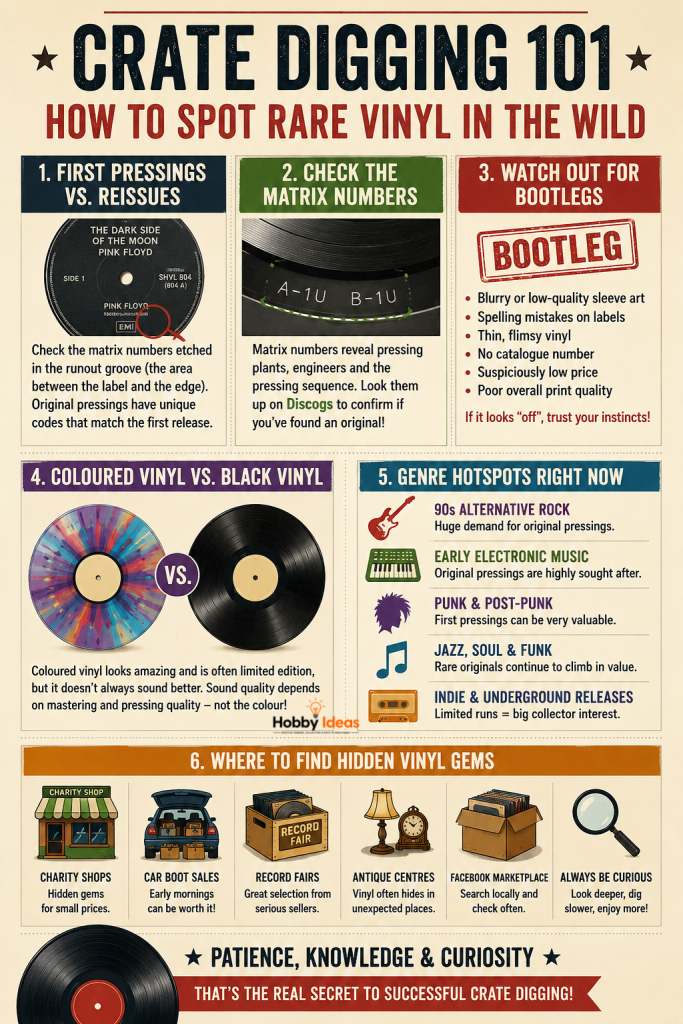
First Pressings vs Reissues
One of the first things serious collectors learn involves understanding the difference between original pressings and later reissues.
First pressings usually hold the strongest collector appeal because they represent the earliest production runs released when the album first entered shops.
Later reissues often sound perfectly good. However, collectors usually value original rare vinyl records more highly, because they feel historically authentic and sometimes feature different mastering quality, sleeve artwork, labels, or inserts.
Importantly, identifying first pressings often requires careful inspection rather than guesswork.
How Matrix Numbers Help Identify Rare Vinyl Records
Collectors often examine the matrix numbers etched near the centre label of a vinyl record.
These tiny markings, sometimes called runout grooves or deadwax markings, help identify specific pressings and manufacturing runs.
Interestingly, two records with identical sleeves may contain completely different pressings once collectors inspect the matrix numbers properly.
Many experienced crate diggers now carry phones specifically to compare matrix numbers with Discogs listings while searching through boxes.
That tiny etched code can sometimes mean the difference between a £5 record and a genuinely valuable collector piece.
The Bootleg Warning
Not every rare-looking record turns out to be valuable.
Bootlegs remain surprisingly common, particularly with live recordings, punk albums, underground metal releases, and unofficial concert pressings.
Some collectors enjoy bootlegs purely for historical interest. However, low-quality unofficial releases often suffer from poor sound quality, blurry artwork, flimsy sleeves, and unreliable pressing quality.
Importantly, collectors of rare vinyl records should watch for:
- Pixelated or blurry album artwork
- Misspelled labels or track listings
- Very thin vinyl pressings
- Poor print quality
- Suspiciously low prices for supposedly rare albums
- Albums missing official catalogue numbers
Learning to recognise bootlegs simply becomes part of the crate digging process over time.
Coloured Vinyl vs Black Vinyl
Modern vinyl collectors often debate whether coloured vinyl actually sounds better than traditional black vinyl.
Honestly, most evidence suggests sound quality depends far more on pressing quality and mastering than colour itself.
However, coloured vinyl continues booming because collectors enjoy the visual appeal and limited-edition nature of special releases.
Splatter vinyl, transparent pressings, glow-in-the-dark editions, marble effects, and picture discs all continue attracting modern collectors looking for visually striking records.
Importantly, some collectors still prefer classic black vinyl because carbon black historically strengthened records and reduced surface noise slightly.
Meanwhile, many modern collectors simply enjoy both styles for different reasons.
Where Collectors Actually Find Rare Vinyl Records
Interestingly, some of the best crate digging locations remain completely ordinary places.
Collectors regularly uncover valuable records inside:
- Charity shops
- Car boot sales
- Record fairs
- Antique centres
- Second-hand bookshops
- Junk shops
- House clearances
- Facebook Marketplace listings
- Local auctions
Importantly, successful crate diggers rarely expect instant success every single time. The hobby rewards consistency far more than luck alone.
Many collectors actually enjoy the hunt itself just as much as the records they eventually buy.
If you enjoy discovery-focused hobbies, our Collecting & Antiques hobby guides explore even more fascinating collector communities, nostalgic hobbies, and treasure-hunting interests.
Genre Hotspots That Continue Growing
Vinyl trends constantly change, although several genres continue attracting particularly strong collector interest right now.
Some of the strongest modern vinyl collecting categories include:
- 1990s alternative rock
- Early electronic music
- Original punk pressings
- Japanese jazz releases
- Rare soul and funk records
- Indie label releases
- Classic hip-hop albums
- Limited soundtrack pressings
Interestingly, many younger collectors now actively search for records from the late 1990s and early 2000s because those albums originally received very limited vinyl releases.
That generational nostalgia continues pushing certain records sharply upwards in value.
Condition Matters More Than Many Beginners Realise
Condition plays a huge role in vinyl collecting.
Even genuinely rare records lose significant value when heavily scratched, warped, mouldy, or badly damaged.
Collectors usually inspect:
- Surface scratches
- Warping
- Sleeve damage
- Ring wear
- Water damage
- Inner sleeves
- Original inserts and posters
Importantly, beginners often focus only on rarity while overlooking condition completely.
Experienced collectors know both factors matter equally.
If you enjoy the thrill of searching for rare and desirable collectables, you may also enjoy collecting iconic fashion. Much like crate digging for vinyl records, fashion collectors hunt for overlooked treasures, limited editions and culturally significant pieces, where knowledge, patience and a keen eye often matter far more than simply spending the most money.
Why Vinyl Collecting Feels So Rewarding
Part of the reason vinyl collecting continues growing comes from the physical experience itself.
Records encourage people to slow down slightly. You hold the sleeve, study the artwork, place the record carefully on the turntable, and listen more intentionally.
That ritual feels very different from endless digital streaming playlists.
Interestingly, crate digging also combines several hobbies at once:
- collecting
- music discovery
- history
- treasure hunting
- nostalgia
- social interaction
Very few hobbies combine all those elements quite so naturally.
If you enjoy discovery-focused hobbies, our guide to the most popular collecting hobbies in 2026 explores even more fascinating collector communities.
Final Thoughts on Crate Digging and Rare Vinyl Records
Crate digging remains one of the most enjoyable collecting hobbies because every box of records carries the possibility of surprise.
Whether you uncover a rare first pressing, an obscure forgotten band, a nostalgic childhood album, or simply an excellent record for a few pounds, the hobby constantly rewards curiosity and patience.
And honestly, that sense of discovery may explain why vinyl collecting continues attracting new generations of hobbyists year after year.