


Home brewing beer has quietly become one of the most rewarding hobbies for people who enjoy making something real with their own hands.
At first glance, the hobby can look slightly intimidating. Stainless steel containers, bubbling fermentation vessels, mysterious ingredients, and endless brewing terminology often make beginners assume home brewing is only for serious beer enthusiasts.
However, the reality feels surprisingly different once people actually try it.
Many home brewers begin with a simple starter kit on a kitchen counter or in a garage corner. Then gradually, almost without noticing, the hobby becomes strangely addictive.
Part of the appeal comes from the process itself.
There is something deeply satisfying about turning water, malt, hops, and yeast into a drink people can genuinely enjoy. Unlike many modern hobbies that happen entirely on screens, home brewing feels physical, creative, and rewarding from start to finish.
Interestingly, the hobby has grown rapidly over recent years as more people look for hands-on activities that feel relaxing, practical, and slightly nostalgic.
If you enjoy slower hobbies with a strong creative side, our article on low stress hobbies explores more relaxing activities that help people switch off from modern life.
According to the Brewers Association, home brewing continues growing internationally as more people become interested in craft beer culture and independent brewing.
Why Home Brewing Beer Feels So Rewarding
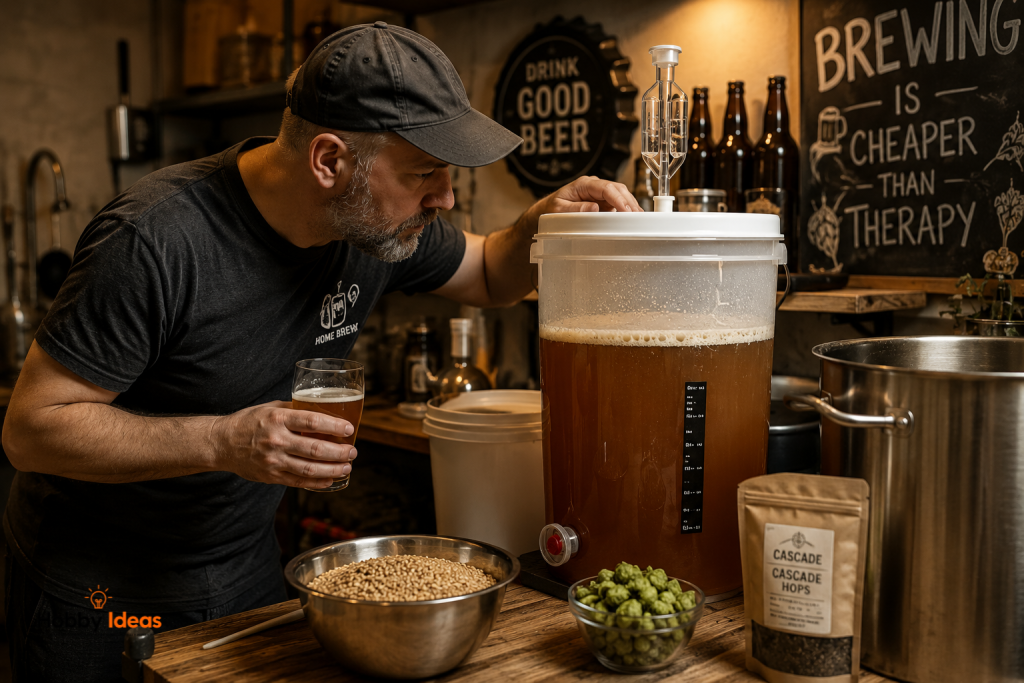
Many hobbies provide temporary entertainment. Home brewing creates something tangible at the end of the process.
That difference matters.
From the first bubbling fermentation to pouring the finished beer weeks later, the hobby creates a genuine sense of anticipation and achievement.
Additionally, brewing naturally slows people down.
You cannot rush fermentation. You cannot force flavours to mature instantly. Good beer takes patience.
That slower rhythm feels strangely calming in a world where most things happen immediately.
Interestingly, many home brewers describe the hobby as relaxing for exactly that reason.
If you enjoy practical hobbies that combine creativity with a slower, more relaxing pace, our article on making soap at home explores another rewarding hands-on hobby growing in popularity across the UK.
The Rise of Craft Beer Helped Home Brewing Grow
The modern craft beer movement has played a huge role in home brewing’s popularity.
Years ago, beer choices often felt fairly limited for many drinkers. Today, breweries experiment constantly with:
IPAs, stouts, porters, pale ales, fruit beers, sour beers, and traditional real ales.
That variety naturally inspires hobbyists to experiment themselves.
Many brewers begin by recreating styles they already enjoy drinking. Then eventually they start creating recipes of their own.
Some people prefer traditional British ales with rich malt flavours, while others enjoy experimenting with heavily hopped modern craft beers.
The hobby easily adapts to both styles.
You Do Not Need Expensive Equipment to Start
One reason home brewing beer appeals to so many beginners is the relatively low starting cost.
Despite how technical the hobby sometimes appears online, basic home brewing can begin with surprisingly simple equipment.
Most beginners start with:
a fermentation bucket, steriliser, bottles, brewing ingredients, and a beginner beer kit.
That simplicity often surprises people.
Of course, experienced brewers sometimes build extremely advanced setups with temperature control systems, stainless brewing vessels, pressure fermentation equipment, and keg systems.
However, beginners do not need any of that initially.
Many excellent first beers come from kits.
Many beginners start with a simple starter kit because it removes much of the confusion around buying separate equipment individually. A reusable setup like the Brewery in a Box Classic British IPA beer making kit gives new brewers an easy way to learn the process while still producing a proper all-grain craft beer at home.
The Brewing Process Feels Like a Small Science Experiment
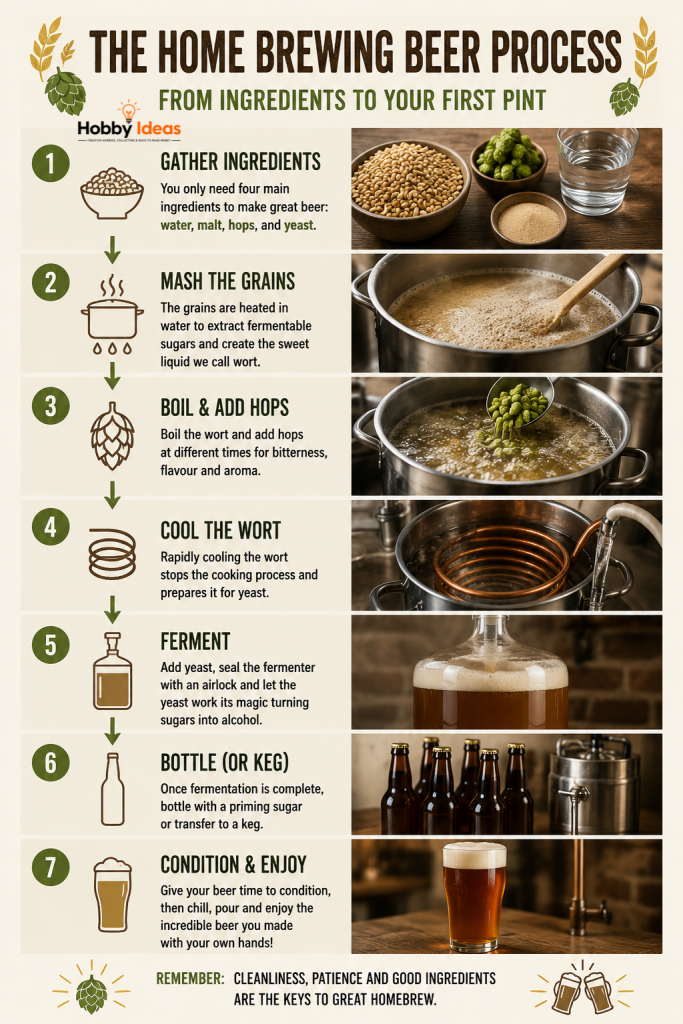
Part of home brewing’s charm comes from the transformation itself.
At the beginning, the ingredients seem ordinary and slightly unimpressive. Then gradually, fermentation begins quietly bubbling away as yeast converts sugars into alcohol and flavour.
For many beginners, that first successful fermentation feels genuinely exciting.
Even the sounds become strangely satisfying.
The soft bubbling of an airlock in a quiet room quickly becomes one of those oddly comforting hobby experiences people remember.
Home brewing also rewards curiosity.
Small ingredient changes can dramatically affect flavour, strength, colour, and aroma. That experimentation keeps the hobby feeling fresh long after the first batch.
Home Brewing Has a Surprisingly Strong Community
Many people assume brewing happens entirely alone in garages or sheds.
In reality, home brewing has a huge social side.
Online forums, local brewing clubs, beer festivals, and social media groups allow brewers to exchange recipes, advice, equipment tips, and tasting notes constantly.
Interestingly, brewers often enjoy talking about mistakes as much as successes.
Every hobby develops its own stories, and home brewing certainly has plenty of them.
Exploding bottles, strange experimental flavours, forgotten fermentations, and unexpectedly brilliant recipes all become part of the hobby’s culture.
British Brewing Traditions Still Influence the Hobby
Home brewing feels particularly well suited to Britain because brewing already forms such a large part of British social and cultural history.
Traditional ales, local breweries, historic pubs, and regional beer styles all create a strong sense of heritage around brewing.
Many hobbyists enjoy recreating classic beer styles inspired by traditional British brewing.
Others lean towards modern craft beer experimentation instead.
Both approaches fit naturally within the hobby.
The Hobby Appeals to Creative People
Interestingly, many home brewers enjoy the hobby for creative reasons rather than purely for the beer itself.
Recipe building, flavour combinations, branding ideas, bottle labels, and experimentation all play a huge role.
Some brewers even begin designing:
custom beer names, homemade labels, tap handles, and personalised brewing spaces.
That creative freedom helps explain why the hobby overlaps naturally with other hands-on interests like cooking, baking, woodworking, and crafting.
Patience Matters More Than Perfection
Beginners often worry excessively about getting everything perfect immediately.
However, experienced brewers usually learn through experimentation and occasional mistakes rather than flawless brewing from day one.
Temperature fluctuations, ingredient adjustments, timing differences, and small errors all become part of the learning process.
Interestingly, slightly imperfect homemade beer often still feels incredibly satisfying because people created it themselves.
Home Brewing Can Become Surprisingly Atmospheric
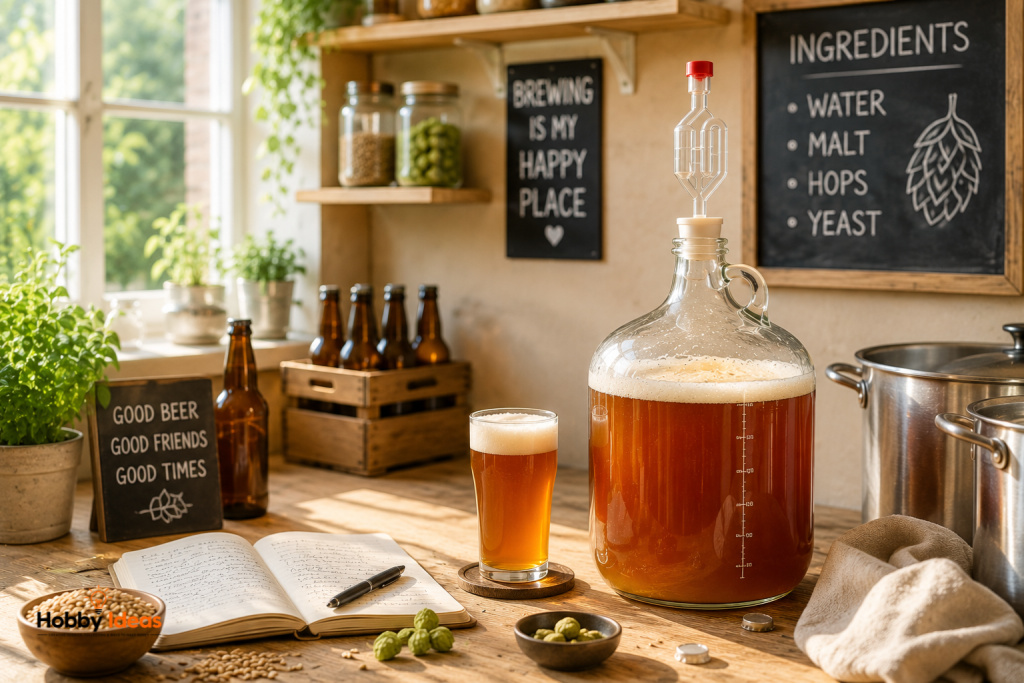
Part of the hobby’s appeal comes from atmosphere as much as the finished drink.
Brewing on a cold evening with malt aromas filling the kitchen feels cosy and strangely timeless.
Rows of bottled beer quietly conditioning on shelves create a real sense of progress and anticipation.
Many brewers eventually develop favourite routines around the hobby.
Some enjoy quiet solo brewing sessions with music playing in the background, while others turn brewing days into social events with friends.
The hobby easily accommodates both approaches.
Why Home Brewing Beer Continues Growing in Popularity
Modern life increasingly pushes people towards hobbies that feel practical, calming, and genuinely rewarding.
Home brewing ticks all three boxes naturally.
It combines creativity, patience, experimentation, craftsmanship, and social culture in a way very few hobbies manage to balance so successfully.
Importantly, the hobby also creates something people can share.
That sharing element gives brewing a warmth many solitary hobbies lack.
Final Thoughts on Home Brewing Beer
Home brewing beer offers far more than simply making alcohol at home.
For many people, the hobby becomes a relaxing creative outlet that combines science, craftsmanship, tradition, and experimentation in one surprisingly satisfying process.
And honestly, once somebody pours their first successful homemade beer after weeks of brewing and waiting, it becomes very easy to understand exactly why so many people become hooked on the hobby.
Disclosure: This article may contain affiliate links. If you purchase through these links, HobbyIdeas may earn a small commission at no extra cost to you. We only recommend products we genuinely believe are useful, relevant, or interesting to the hobby being discussed.