

Learning how to stay motivated when starting a new hobby can feel surprisingly difficult.
Many people begin hobbies with enthusiasm, buy supplies, make ambitious plans, and imagine themselves becoming instantly skilled within a few days.
Then reality arrives.
Projects remain unfinished, routines disappear, and expensive craft supplies quietly gather dust in cupboards across the country.
Importantly, this happens to almost everyone.
Starting hobbies feels exciting because new activities create curiosity, creativity, and optimism. However, maintaining motivation over time requires a slightly different mindset.
Why Motivation Often Disappears Quickly
Many people assume motivation should feel constant.
Unfortunately, motivation rarely works that way.
When starting a new hobby, people often experience: – excitement – inspiration – unrealistic expectations – impatience – comparison with experts online
Consequently, motivation can disappear quickly once hobbies begin feeling slower or more difficult than expected.
Importantly, losing enthusiasm temporarily does not mean you chose the wrong hobby.
According to the mental health charity Mind UK, creative activities and enjoyable routines can support wellbeing and reduce stress when approached realistically and without pressure.
Start Small Instead of Overcommitting
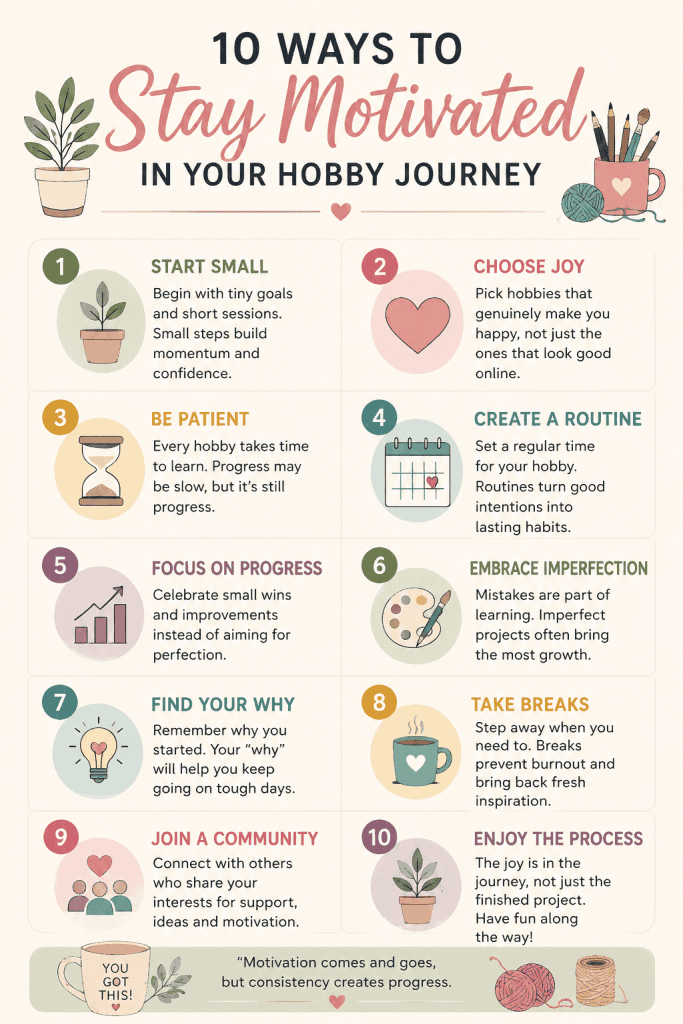
One of the biggest mistakes beginners make involves trying to do too much too quickly.
For example: – buying excessive equipment – planning complicated projects – setting unrealistic schedules – expecting immediate results
Instead, smaller goals usually work far better.
Simple approaches often help people stay motivated longer because hobbies continue feeling enjoyable rather than overwhelming.
Even spending: – fifteen minutes sketching – one evening gardening – a short crochet session – half an hour painting
can help build consistency naturally.
Choose Hobbies You Actually Enjoy
This sounds obvious, yet many people accidentally choose hobbies based on: – trends – social media – aesthetics – pressure from others
Instead, hobbies should genuinely suit your personality and interests.
Some people enjoy: – quiet hobbies – collecting – hands-on crafts – outdoor activities – creative hobbies – practical projects
Others prefer: – group activities – competitive hobbies – learning-based interests – social events
The more naturally enjoyable the hobby feels, the easier motivation becomes.
Stop Comparing Yourself to Experts
Social media creates unrealistic expectations for beginners.
People often see: – flawless paintings – perfect crochet projects – highly organised craft rooms – professional-level photography
without seeing the years of practice behind them.
Consequently, beginners sometimes feel discouraged far too quickly.
Importantly, hobbies should focus on enjoyment and progress rather than perfection.
Most skilled hobbyists once created terrible first attempts too.
Although many carefully hide the evidence.
Create Comfortable Hobby Routines
Many people stay motivated more easily when hobbies become part of relaxing routines.
For example: – Sunday afternoon crafting – evening reading sessions – quiet gardening mornings – weekly painting time
Small routines help hobbies feel natural rather than forced.
Additionally, regular routines often reduce the pressure to feel constantly inspired.
Allow Yourself to Be a Beginner
Many adults become frustrated when hobbies do not progress quickly.
However, beginner stages form an essential part of learning any new skill.
Importantly: – mistakes happen – projects fail – techniques improve slowly – confidence develops gradually
That process remains completely normal.
People rarely begin hobbies already knowing exactly what they are doing.
Especially not knitting.
Why Relaxing Hobbies Often Last Longer
Relaxing hobbies frequently remain more sustainable because they focus on enjoyment instead of achievement.
Examples include: – crochet – journaling – gardening – reading – baking – painting
These slower hobbies often create calming routines that people naturally return to.
If you enjoy slower activities, you might also enjoy our guide to relaxing hobbies to help you slow down and unwind.
Take Breaks Without Feeling Guilty
People sometimes assume they have failed if they stop a hobby temporarily.
In reality, hobbies naturally come and go in phases.
Life changes, schedules become busy, and interests shift over time.
Importantly, taking breaks does not mean the hobby disappears forever.
Many people return to hobbies months or even years later.
Usually after rediscovering boxes of forgotten supplies hidden somewhere at the back of a cupboard.
Celebrate Small Progress
Motivation often grows through visible progress.
Consequently, smaller achievements matter far more than people realise.
Simple milestones might include: – finishing a first project – learning a new stitch – growing herbs successfully – completing a puzzle – improving drawing skills
These smaller successes help hobbies continue feeling rewarding.
Join Hobby Communities for Encouragement
Many people stay motivated more easily when hobbies include some form of community.
This might involve: – online groups – local classes – hobby clubs – social communities – creative workshops
Encouragement from others often helps beginners continue through frustrating stages.
Additionally, hobby communities usually remind people that everyone struggles occasionally while learning.
Final Thoughts On How To Stay Motivated In Your Hobby
Learning how to stay motivated when starting a new hobby becomes much easier when hobbies feel enjoyable, realistic, and free from unnecessary pressure.
Importantly, hobbies should improve your free time rather than create additional stress.
Whether you enjoy creative crafts, collecting, gardening, painting, or relaxing evening activities, long-term motivation usually grows through consistency, enjoyment, and patience.
Most importantly, hobbies do not need to become perfect in order to become meaningful.
Sometimes simply enjoying the process matters far more than mastering the result.