


Low stress hobbies for adults continue growing in popularity because many people now spend huge portions of the day staring at screens without even realising how mentally exhausting modern routines can become.
Work emails, social media, streaming services, notifications, video calls, online shopping, and constant scrolling often leave very little genuine downtime. Consequently, more people now search for hobbies that feel quieter, slower, and far less mentally draining.
According to Mind, slowing down and creating healthier routines can play an important role in reducing stress and improving overall wellbeing.
Importantly, relaxing hobbies do not need to involve expensive equipment, intense skill-building, or major lifestyle changes. In fact, many of the best screen-free hobbies feel surprisingly simple once people finally give themselves permission to slow down a little.
Whether you want something creative, practical, calming, slightly unusual, or simply different from endless scrolling, there are now plenty of enjoyable hobbies that help create genuine mental breathing space.
If you enjoy calmer home-based hobbies, our guide to relaxing hobbies to help you slow down and unwind explores even more gentle hobby ideas.
1. Urban Sketching
Urban sketching remains one of the most accessible low-stress hobbies because it encourages observation rather than perfection.
Many people simply carry a small sketchbook and draw cafés, parks, buildings, gardens, or everyday objects during quiet moments throughout the week.
Importantly, nobody needs artistic training to enjoy it.
Estimated startup cost: £10–£25 for a basic sketchbook and pencils.
2. Indoor Herb Growing
Indoor herb growing combines routine, greenery, and small daily progress in a very calming way.
Even a small kitchen windowsill can support basil, mint, parsley, or chives.
Watching herbs slowly grow often feels surprisingly satisfying, particularly for people looking for quieter hobbies connected to nature.
Estimated startup cost: £10–£30 depending on pots and seeds.
If indoor growing appeals to you, our article on indoor gardening for beginners explains how to start without needing much space.
3. Jigsaw Puzzles
Jigsaw puzzles continue returning in popularity because they encourage focus without requiring screens or constant stimulation.
Many adults now intentionally keep puzzles on dining tables or coffee tables as a way to unwind gradually during evenings.
Estimated startup cost: £8–£20.
4. Learning a Hand Whistle
This sounds oddly specific, yet it has quietly become a surprisingly popular micro-learning hobby online.
Learning to whistle loudly using fingers takes patience, repetition, and about five minutes of daily practice.
Importantly, it feels oddly satisfying once it finally clicks.
Estimated startup cost: Free.
5. Pressed Flower Art
Pressed flower art combines collecting, creativity, and slower outdoor walks beautifully.
Many people collect flowers and leaves during walks before pressing them inside books or flower presses to create decorative artwork later.
The hobby feels peaceful partly because it naturally slows people down and encourages closer observation of seasonal changes.
Estimated startup cost: £5–£20.
6. Lock Picking Practice
Surprisingly, lock picking has developed into a genuine hobby community focused on patience, problem solving, and mechanical curiosity.
Practice kits allow beginners to learn how basic locks function using transparent demonstration locks.
Importantly, hobbyists focus on legal practice tools rather than real-world misuse.
Estimated startup cost: £15–£30.
7. Birdwatching From Home
Birdwatching no longer requires standing in muddy fields at sunrise with giant binoculars.
Many people now enjoy watching garden birds from kitchen windows, balconies, or conservatories while slowly learning species names and behaviour patterns.
That gentle observational style makes birdwatching one of the most calming hobbies available.
Estimated startup cost: £5–£40 depending on feeders and binoculars.
8. Journaling
Journaling remains popular because it creates quiet personal space away from digital noise.
Some people write traditionally, while others combine journaling with sketching, collage, memory keeping, or gratitude notes.
Importantly, journaling feels completely pressure-free compared to performative online content.
Estimated startup cost: £5–£15.
9. Baking Simple Bread
Bread making has become surprisingly therapeutic for many adults.
The repetitive process of mixing, kneading, rising, and baking creates a slower rhythm that feels very different from fast digital routines.
Additionally, the smell of fresh bread genuinely improves almost any afternoon.
Estimated startup cost: £10–£20 for basic ingredients and tools.
10. Collecting Vintage Postcards
Vintage postcard collecting works particularly well for people who enjoy history, design, travel, and nostalgia.
Many postcards remain inexpensive, which allows beginners to build collections slowly without major expense.
Interestingly, postcards also provide fascinating glimpses into everyday life from previous generations.
Estimated startup cost: £1–£20 depending on collecting style.
11. Paint-by-Numbers Kits
Paint-by-numbers kits have become hugely popular again because they remove the pressure often associated with painting.
Instead of worrying about artistic skill, people simply focus on colour, repetition, and relaxation.
Estimated startup cost: £10–£25.
12. Learning Card Tricks
Simple card magic combines dexterity, memory, and playful curiosity.
Many adults enjoy practising a single trick repeatedly during spare moments because it creates focused concentration without requiring much time.
Estimated startup cost: £2–£10 for a deck of cards.
13. Houseplant Propagation
Plant propagation feels oddly rewarding because people can watch roots slowly develop in jars of water over time.
Spider plants, pothos, and tradescantia all work particularly well for beginners.
Additionally, propagated plants often become gifts for friends and family later on.
Estimated startup cost: Almost free if using existing plants.
14. Miniature Model Building
Building miniatures encourages patience and concentration in a very satisfying way.
Some hobbyists build model villages, tiny cafés, railway scenes, fantasy environments, or historical buildings.
The hobby feels immersive partly because it requires careful attention to tiny details.
Estimated startup cost: £15–£50.
15. Crossword and Word Puzzle Books
Crosswords remain timeless for good reason.
They encourage concentration without overstimulation, while also fitting easily into short breaks throughout the day.
Large-print editions also make puzzle books accessible for people dealing with visual strain.
Estimated startup cost: £3–£10.
16. Candle Making
Candle making combines creativity with practical home décor in a very relaxing way.
Many people enjoy experimenting with fragrances, jars, colours, and seasonal themes while creating candles slowly at home.
Importantly, the hobby feels calm rather than rushed.
Estimated startup cost: £20–£40.
17. Learning Basic Origami
Origami remains one of the simplest screen-free hobbies available.
Folding paper into animals, flowers, shapes, and decorative designs encourages patience and concentration while requiring very little equipment.
Additionally, origami works well as a short daily hobby because projects can take only a few minutes.
Estimated startup cost: £3–£10.
Why Low Stress Hobbies for Adults Feel More Important Than Ever
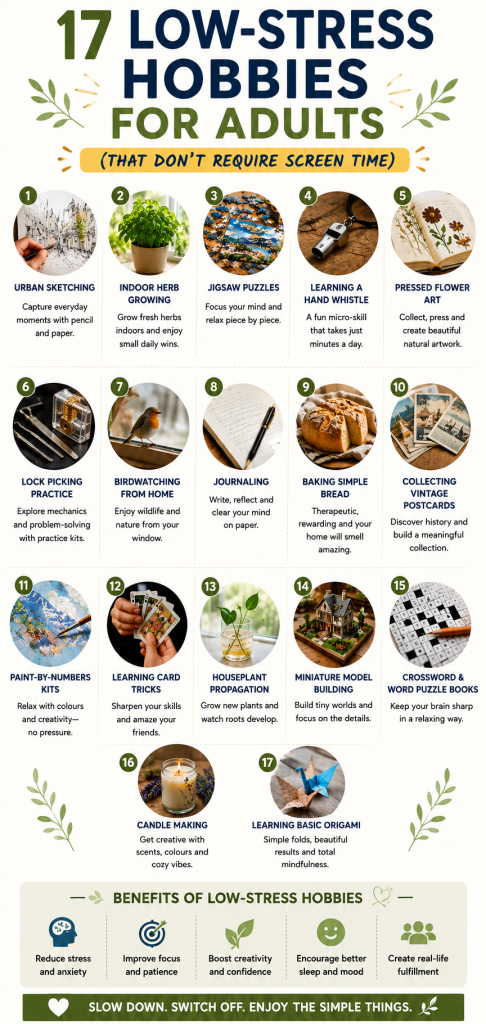
Many adults now actively search for hobbies that create mental breathing space rather than more stimulation.
Low-stress hobbies help slow racing thoughts, reduce screen fatigue, and create quieter routines that feel restorative rather than exhausting.
Importantly, relaxing hobbies do not need to become side hustles, productivity systems, or social media content projects to feel worthwhile.
Sometimes the simple act of quietly focusing on something enjoyable for half an hour becomes valuable enough on its own.
If you are looking for even more screen-free ideas, our guide to hobbies to do at home explores more calming activities for quieter evenings indoors.
Final Thoughts on Low Stress Hobbies for Adults
The best low stress hobbies for adults often share something important in common, they encourage people to slow down without feeling bored.
Whether somebody enjoys sketching, gardening, puzzles, collecting, baking, journaling, or tiny miniature buildings, screen-free hobbies continue offering something modern life increasingly struggles to provide, uninterrupted calm attention.
And honestly, that may explain why these quieter hobbies suddenly feel more appealing than ever.