

Fossil hunting Norfolk coast beaches feels very different from ordinary beach walks.
One moment you are wandering quietly across wet pebbles beneath towering cliffs. Then suddenly, half-hidden amongst the stones, something catches your eye. Perhaps it is the spiral shape of an ammonite, the outline of a fossil shell, or a strange fragment of prehistoric bone washed free by the sea.
That sense of possibility explains exactly why fossil hunting along the Norfolk coast has become such a popular outdoor hobby.
Unlike many hobbies that happen entirely indoors or through screens, fossil hunting combines fresh air, coastal scenery, local history, exercise, and genuine discovery in a way that feels surprisingly addictive once people begin.
Importantly, the Norfolk coastline constantly changes.
Storms damage cliffs. Tides shift pebbles. Heavy seas expose fresh material hidden for thousands or even millions of years beneath the sand and clay.
As a result, no two fossil hunting trips ever feel exactly the same.
According to Norfolk Museums Service, the county’s coastline remains internationally important for understanding prehistoric Britain and Ice Age history.
If you enjoy outdoor discovery hobbies, our article on treasure hunting hobbies explores more fascinating ways people search for hidden history outdoors.
Why Fossil Hunting Norfolk Coast Beaches Feel So Exciting
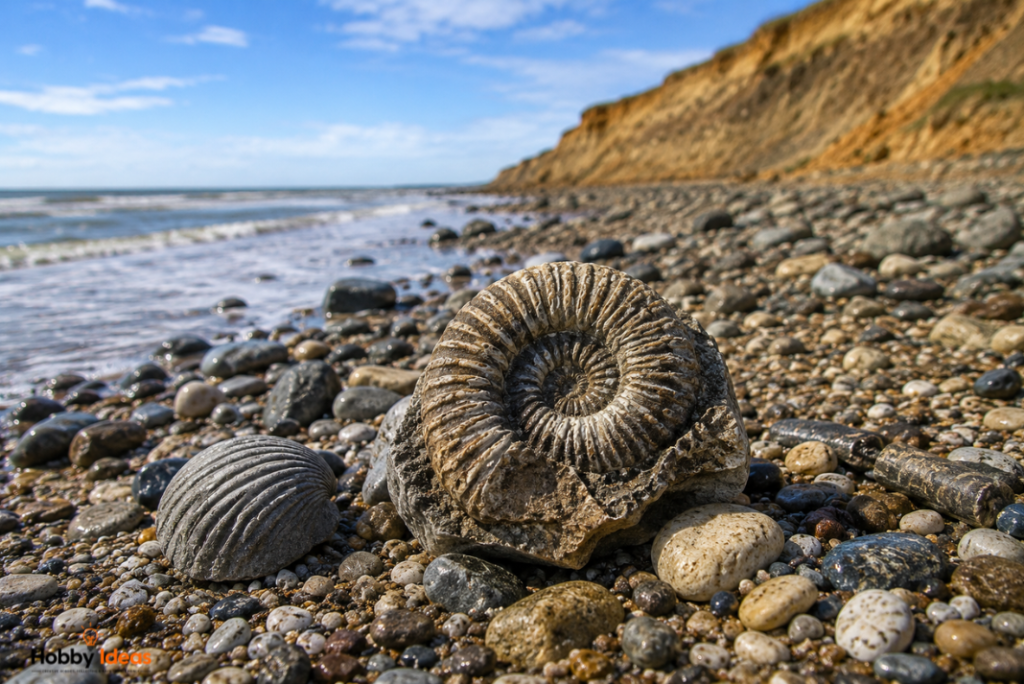
Part of the appeal comes from unpredictability.
Most people begin fossil hunting expecting an interesting beach walk. However, the hobby quickly becomes more absorbing because every stretch of coastline suddenly feels full of possibility.
A rough storm the night before may have exposed fresh fossils amongst the rocks. A recent cliff collapse may reveal prehistoric material hidden for centuries. Even small finds start feeling exciting because they connect directly to ancient worlds that existed long before modern Norfolk appeared.
Interestingly, fossil hunting also changes the way people look at beaches.
Instead of simply walking along the shoreline, hobbyists begin scanning pebbles carefully, watching the tide, studying cliff layers, and noticing unusual shapes hidden amongst ordinary stones.
That slower pace forms a huge part of the hobby’s appeal.
West Runton: Norfolk’s Most Famous Fossil Hunting Beach
West Runton remains the best-known fossil hunting Norfolk coast location for good reason.
The beach became internationally famous after the discovery of the West Runton Mammoth, one of the oldest and most complete steppe mammoths ever found in Britain.
Even today, the coastline continues attracting fossil hunters searching for prehistoric remains exposed by coastal erosion.
Walking across the foreshore at low tide feels strangely atmospheric, especially during quieter mornings when the cliffs loom above the beach and the sea mist hangs over the shoreline.
Many visitors search for ammonites, fossil shells, belemnites, ancient marine fossils, and occasional bone fragments linked to Ice Age animals.
Importantly, patience matters far more than luck.
Most successful fossil hunters spend long periods simply observing the ground carefully rather than rushing.
Sheringham and Cromer: Fossils Hidden Beneath the Cliffs
Sheringham and Cromer both attract fossil hunters because the constantly eroding cliffs regularly reveal fresh material after rough weather.
These beaches feel slightly different from West Runton.
The scenery often feels wilder, especially during winter months when heavy seas batter the coastline and expose darker clay beneath the sand.
After storms, hobbyists frequently head straight for the beaches hoping overnight erosion may have uncovered something unusual.
Interestingly, even ordinary-looking stones sometimes reveal hidden fossils once cleaned properly at home.
Many collectors still remember the exact moment they discovered their first ammonite amongst the pebbles.
That first find usually hooks people immediately.
Happisburgh and the Ancient Human Story
Happisburgh holds a special place in British prehistoric history because ancient human footprints discovered nearby completely changed understanding of early humans in Britain.
The coastline here feels dramatic and slightly raw compared to busier tourist beaches further west.
Large sections continue disappearing gradually into the sea, which creates both danger and excitement for fossil hunters.
Fresh cliff falls sometimes reveal fascinating prehistoric material after storms. However, the coastline can become extremely unstable.
Importantly, fossil hunters should never climb dangerous cliffs or search directly beneath unstable cliff faces.
The safest and most responsible approach usually involves carefully searching material already washed onto the beach itself.
What Fossils Can Be Found Along the Norfolk Coast?
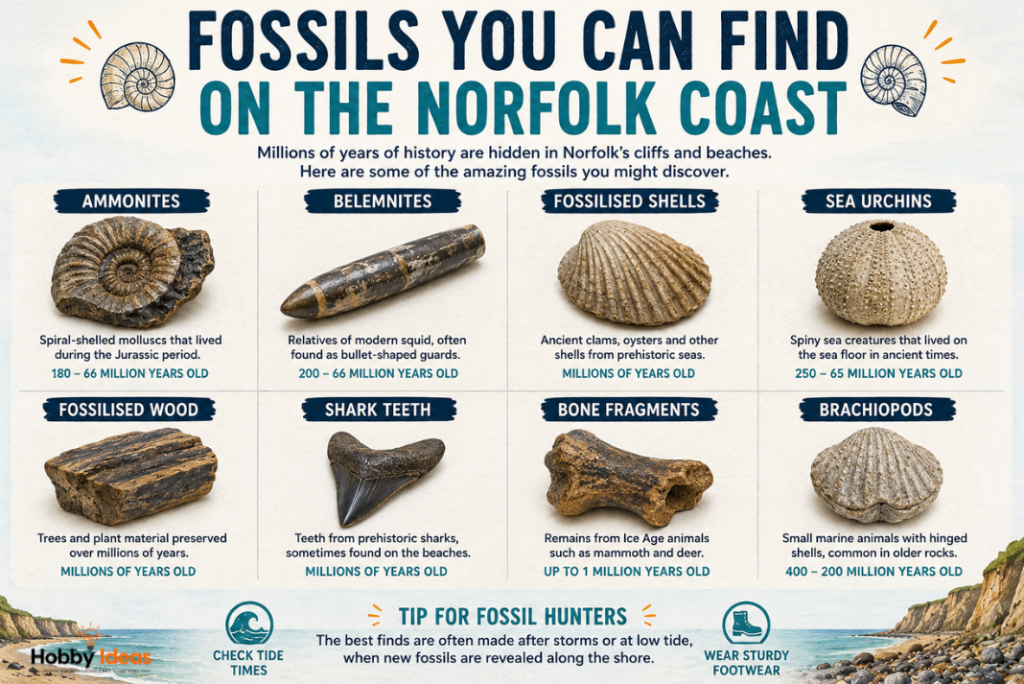
The Norfolk coast produces a surprisingly varied mix of fossils.
Some are tiny and easy to miss completely at first glance. Others stand out immediately once people learn what to look for.
Common finds include ammonites with their distinctive spiral patterns, fossil shells, belemnites shaped like ancient bullets, fossilised wood, marine fossils, and occasional prehistoric bone fragments.
Interestingly, many fossils appear surprisingly beautiful once cleaned gently at home.
Subtle textures, colours, and ancient patterns hidden beneath mud and sand suddenly become visible.
That transformation forms another satisfying part of the hobby.
The Best Time to Try Fossil Hunting Norfolk Coast Beaches
Timing makes a huge difference when fossil hunting.
Experienced collectors often prefer visiting after rough weather because storms shift sand and expose fresh material beneath the cliffs.
Low tide also creates better searching conditions by exposing wider sections of beach and foreshore.
Winter can actually become one of the most rewarding seasons for fossil hunting because coastal erosion tends to increase dramatically during rougher weather.
However, winter conditions also bring greater risks.
Strong winds, slippery rocks, collapsing cliffs, and rapidly changing tides can quickly become dangerous.
Checking tide times before every visit remains essential.
Why Fossil Hunting Appeals to Families
Many outdoor hobbies struggle to hold children’s attention for long.
Fossil hunting often works differently because the excitement of discovering something hidden feels immediately understandable at any age.
Even small finds can feel magical to younger collectors.
Children quickly begin searching the beach enthusiastically, hoping to spot unusual shapes hidden amongst the stones before anyone else notices them.
Additionally, the hobby naturally combines several things families already enjoy: fresh air, walking, beach exploration, history, wildlife, photography, and screen-free time outdoors.
That combination explains why fossil hunting trips often become regular family traditions once people start.
The Equipment You Actually Need
One reason fossil hunting Norfolk coast beaches remain so accessible is the relatively low cost of getting started.
Most beginners only really need practical outdoor clothing, sturdy footwear, and something to carry finds safely.
Gloves help during colder weather, while small containers or padded bags protect fragile fossils from damage.
Some hobbyists eventually buy geological hammers or specialist tools. However, beginners often discover plenty simply by searching exposed beach material carefully.
Observation matters far more than expensive equipment.
Safety Matters More Than Fossils
The Norfolk coastline looks beautiful. However, parts of it can become dangerous surprisingly quickly.
Cliffs regularly collapse without warning, especially after periods of heavy rain or rough weather. Incoming tides can also cut people off unexpectedly on isolated stretches of beach.
Because of that, responsible fossil hunters always check tide times, avoid unstable cliffs, wear sensible footwear, and remain aware of changing conditions throughout the day.
Importantly, no fossil is worth risking serious injury for.
Why Fossil Hunting Norfolk Coast Feels So Different From Modern Life
Many modern hobbies happen entirely through phones, televisions, or computer screens.
Fossil hunting feels completely different.
Hours can disappear quietly while searching the shoreline, listening to waves, watching seabirds overhead, and scanning the beach for signs of prehistoric life.
There is also something strangely grounding about holding an object that may have existed millions of years before modern civilisation appeared.
Even small fossils create a genuine connection to deep history.
That feeling explains why many people find fossil hunting surprisingly calming as well as exciting.
Respecting the Norfolk Coast
Responsible fossil hunting helps preserve the coastline for future generations.
Most experienced hobbyists understand the importance of searching carefully without damaging cliffs or disturbing protected areas unnecessarily.
Additionally, many fossil hunters quietly collect litter during walks because they care deeply about the beaches they regularly explore.
The hobby works best when excitement, curiosity, and respect for the coastline all exist together.
Final Thoughts on Fossil Hunting Norfolk Coast Beaches
Fossil hunting Norfolk coast beaches combine outdoor exploration, history, exercise, coastal scenery, and genuine discovery in a way very few hobbies manage to balance naturally.
One small fossil hidden amongst ordinary pebbles can suddenly transform an ordinary walk into something memorable.
And honestly, that sense of quiet discovery may explain exactly why so many people continue returning to the Norfolk coastline searching for pieces of ancient history hidden beside the sea.