

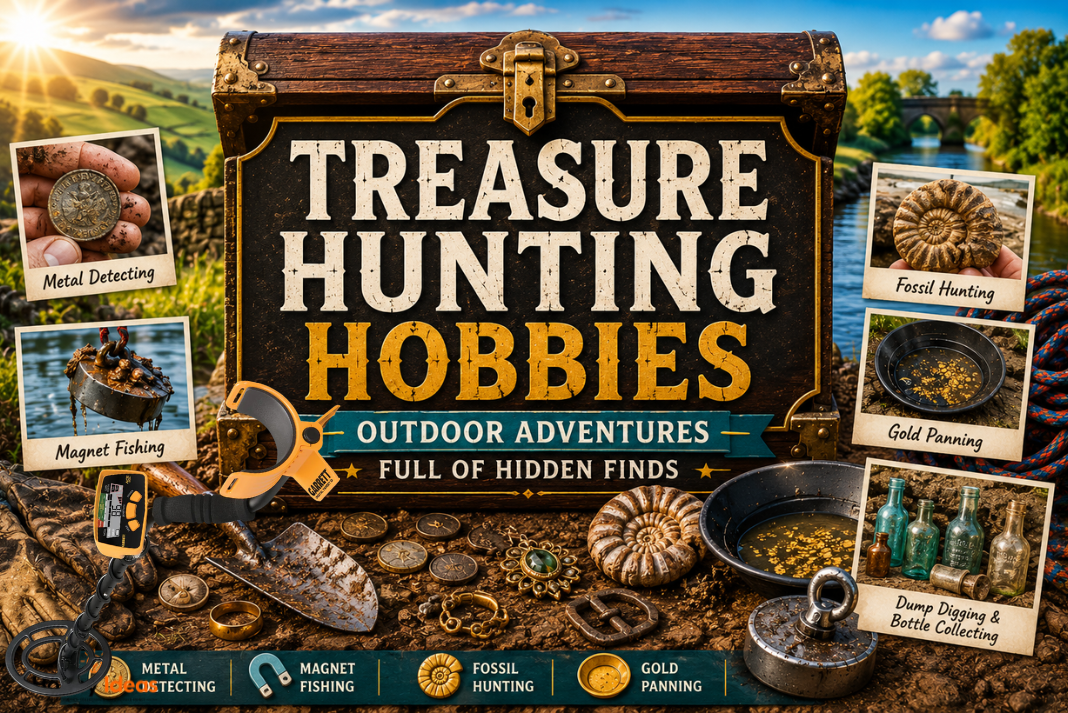
Treasure hunting hobbies continue growing rapidly because many people now actively search for outdoor activities that combine adventure, history, exercise, discovery, and genuine excitement.
Unlike many modern hobbies that happen entirely through screens, treasure hunting hobbies encourage people to get outside, explore forgotten places, and experience the thrill of uncovering objects hidden beneath the ground, underwater, or inside long-abandoned locations.
That combination explains why so many treasure hunting hobbies feel strangely addictive once people begin.
Importantly, treasure hunting rarely guarantees instant riches. In fact, most hobbyists spend far more time searching than actually finding valuable objects. However, the excitement comes from possibility rather than certainty.
One old coin, Victorian bottle, fossil, gold flake, or military relic can completely transform an ordinary afternoon outdoors.
According to The Portable Antiquities Scheme, thousands of historically important objects continue being discovered across the UK every year by responsible hobbyists and detectorists.
Interestingly, treasure hunting hobbies also attract a very wide mix of people. Some enjoy the historical side, while others love exploration, collecting, relaxation, exercise, or simply the unpredictability of the hunt itself.
If you enjoy unusual collecting hobbies, our article on crate digging and rare vinyl records explores another hobby built around discovery and hidden finds.
Why Treasure Hunting Hobbies Feel So Addictive
Part of the appeal comes from unpredictability.
Unlike hobbies with fixed outcomes, treasure hunting hobbies constantly create suspense because nobody truly knows what might appear next.
A muddy field, riverbank, woodland path, or beach may seem completely ordinary until somebody suddenly uncovers:
- a Roman coin
- a gold ring
- a Victorian bottle
- a fossilised tooth
- an old military badge
- silver jewellery
- a forgotten relic from local history
That uncertainty creates excitement which many people find incredibly rewarding.
Additionally, treasure hunting hobbies encourage curiosity about local history, landscapes, old industries, forgotten communities, and the lives of previous generations.
Metal Detecting: The Most Popular Treasure Hunting Hobby
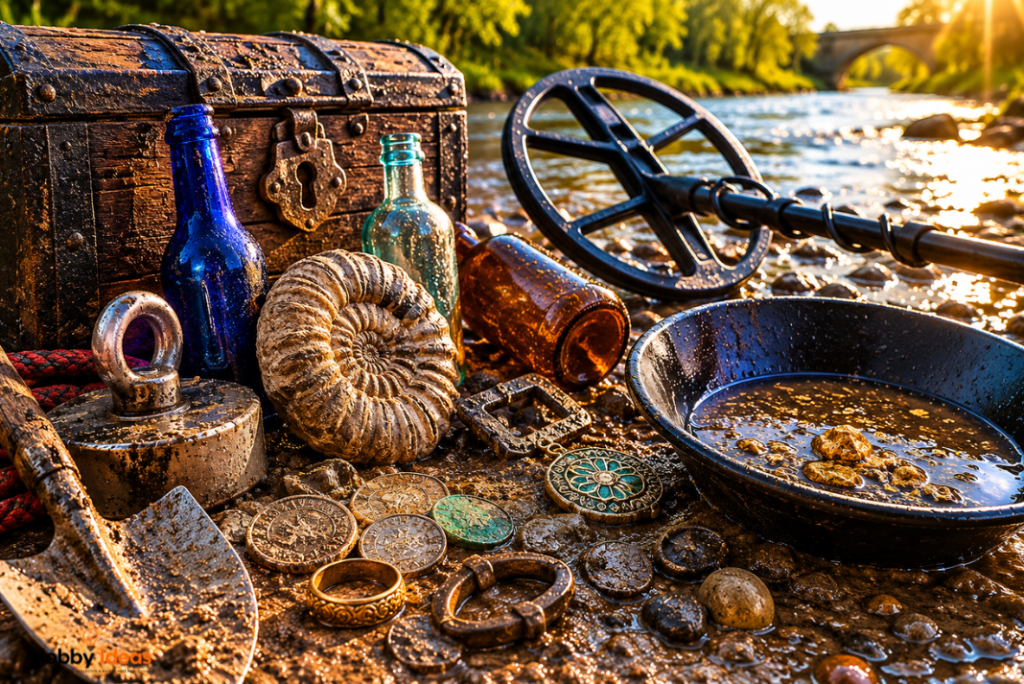
Metal detecting remains one of the best-known treasure hunting hobbies in the UK.
Detectorists search fields, beaches, woodland edges, and pasture land looking for buried metallic objects using electronic detectors that respond to conductive metals underground.
Importantly, modern metal detecting involves far more than simply searching for gold.
Many hobbyists become fascinated by:
- historic coins
- military relics
- trade tokens
- medieval artefacts
- buckles and buttons
- Victorian objects
- local history finds
Interestingly, even relatively ordinary discoveries can feel exciting because each object carries a story connected to the land where it was found.
Responsible metal detecting also requires permission from landowners and proper recording of significant historical finds.
Magnet Fishing: Pulling History From Waterways
Magnet fishing has exploded in popularity over recent years because the hobby combines treasure hunting with urban exploration and environmental clean-up.
Using extremely strong magnets attached to ropes, magnet fishers search canals, rivers, lakes, harbours, and bridges for submerged metallic objects.
Some discoveries prove surprisingly dramatic.
Magnet fishers occasionally uncover:
- bicycles
- safes
- coins
- tools
- old weapons
- historic metal objects
- discarded machinery
Importantly, the hobby also carries safety responsibilities.
Unexploded ordnance, sharp objects, and dangerous waste occasionally appear in waterways, so hobbyists must approach unusual discoveries carefully and responsibly.
Nevertheless, magnet fishing appeals strongly to people who enjoy unpredictability and exploration.
Fossil Hunting: Searching Millions of Years Into the Past
Fossil hunting differs slightly from other treasure hunting hobbies because the focus shifts toward natural history rather than human history.
However, the excitement of discovery remains almost identical.
Many fossil hunters search coastal cliffs, beaches, quarries, and exposed rock formations looking for prehistoric remains hidden inside stone.
Common fossil finds include:
- ammonites
- shark teeth
- prehistoric shells
- plant fossils
- marine fossils
- dinosaur-era fragments
Interestingly, some of the UK’s best-known fossil hunting areas attract hobbyists from around the world.
The Jurassic Coast in Dorset remains especially popular because storms and coastal erosion constantly expose new material.
Fossil hunting also appeals strongly to families because children often find the hobby exciting immediately.
Gold Panning: The Romantic Treasure Hunting Hobby
Gold panning remains one of the most iconic treasure hunting hobbies because it feels closely connected to historic gold rush stories and frontier exploration.
Using pans, flowing water, patience, and sediment separation techniques, hobbyists search riverbeds for tiny pieces of natural gold.
Importantly, most modern gold panners rarely become rich.
However, the appeal comes from the process itself.
Many hobbyists enjoy:
- quiet riverside locations
- slow methodical searching
- beautiful landscapes
- the possibility of genuine gold
- the historical atmosphere surrounding the hobby
Interestingly, parts of Scotland continue attracting hobby gold panners today because natural gold still exists within some waterways.
Mudlarking: Searching the Tides for Lost History
Mudlarking has become one of the fastest-growing treasure hunting hobbies in the UK because it combines history, exploration, archaeology, and genuine unpredictability.
Mudlarkers search tidal riverbanks and exposed foreshore areas looking for historic objects revealed by changing tides and erosion.
Along the River Thames especially, hobbyists regularly uncover:
- Victorian clay pipes
- old coins
- medieval pottery
- glass bottles
- buttons and buckles
- historic tools
- military relics
Interestingly, many mudlarking finds survive remarkably well because oxygen-poor mud helps preserve objects for centuries.
However, mudlarking also involves important legal responsibilities.
Anyone searching the Thames foreshore legally requires a permit from the Port of London Authority before mudlarking in permitted areas.
Additionally, some areas remain completely protected because of archaeological importance and environmental safety concerns.
Mudlarkers should also understand tide timings carefully because river conditions can change surprisingly quickly and dangerously.
Despite those responsibilities, mudlarking appeals strongly to people who enjoy urban history, hidden stories, and the excitement of uncovering objects connected to everyday life from centuries earlier.
Dump Digging and Bottle Collecting
Dump digging remains one of the strangest yet most fascinating treasure hunting hobbies.
Collectors search old Victorian rubbish dumps, bottle dumps, and forgotten disposal sites looking for historic bottles, ceramics, glassware, clay pipes, and domestic objects buried decades earlier.
Surprisingly, old rubbish often becomes valuable historical evidence once enough time passes.
Victorian dump diggers commonly uncover:
- ink bottles
- medicine bottles
- marble bottles
- stoneware jars
- Victorian pottery
- advertising bottles
- household objects
Many collectors particularly enjoy embossed bottles because they preserve names of old businesses, breweries, chemists, and local manufacturers that disappeared long ago.
Importantly, dump digging also requires careful safety precautions because broken glass, unstable ground, contaminated waste, and sharp metal often remain present underground.
The Equipment Treasure Hunters Commonly Use
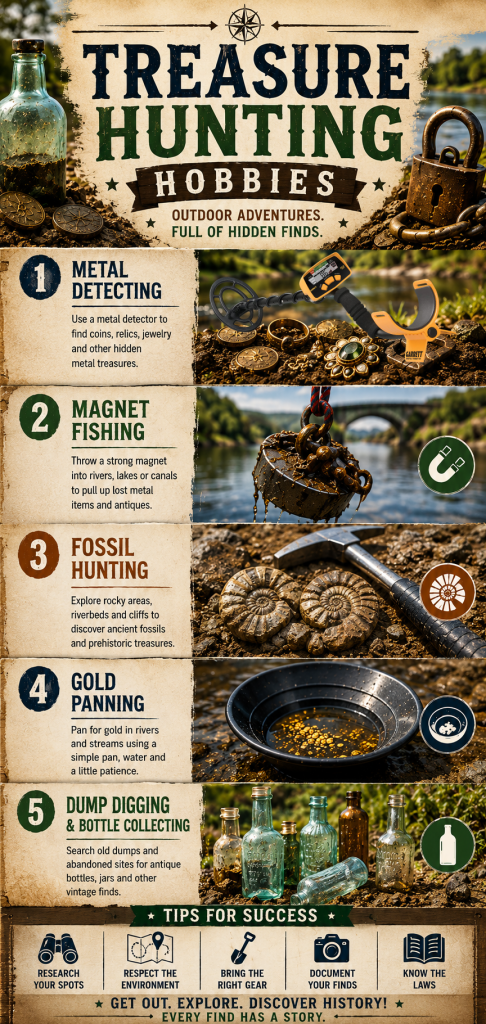
Different treasure hunting hobbies obviously require different equipment. However, several common themes appear across most treasure hunting communities.
Many hobbyists eventually invest in:
- strong outdoor boots
- waterproof clothing
- gloves
- storage bags
- cleaning tools
- display cabinets
- collecting boxes
- maps and research books
Importantly, most hobbyists start relatively simply before upgrading equipment gradually over time.
Treasure hunting hobbies tend to reward patience and experience far more than expensive equipment alone.
Why Treasure Hunting Hobbies Appeal to So Many Adults
Many adults now actively search for hobbies that feel more immersive and physically engaging than digital entertainment.
Treasure hunting hobbies encourage people to:
- spend time outdoors
- exercise naturally
- explore local history
- disconnect from screens
- develop collecting knowledge
- experience genuine surprise
That combination explains why treasure hunting hobbies often become long-term passions rather than short-lived interests.
Importantly, these hobbies also create stories.
Every hobbyist eventually remembers:
- their first coin
- their best bottle
- their strangest magnet fishing discovery
- their oldest fossil
- their first gold flake
Those memories become part of the hobby itself.
Treasure Hunting Hobbies Also Build Strong Communities
Interestingly, treasure hunting hobbies often develop surprisingly friendly communities.
Many hobbyists enjoy:
- club meetings
- finds identification groups
- online forums
- group digs
- history discussions
- equipment advice
- shared discoveries
That community aspect helps many beginners stay motivated while learning.
Additionally, experienced hobbyists often enjoy teaching newcomers because everyone remembers the excitement of early discoveries.
Safety and Legal Responsibilities Matter
Treasure hunting hobbies remain enjoyable partly because responsible hobbyists follow important safety and legal rules carefully.
For example:
- metal detectorists should always obtain landowner permission
- magnet fishers must handle dangerous objects responsibly
- fossil hunters should respect protected locations
- mudlarkers should obtain proper permits where required
- dump diggers need to avoid unsafe or contaminated sites
- gold panners should research local regulations
Importantly, responsible hobbyists help preserve both historical objects and public trust surrounding these activities.
Why Treasure Hunting Hobbies Continue Growing
Part of the reason treasure hunting hobbies continue growing comes from how different they feel compared to modern digital life.
These hobbies encourage patience, exploration, curiosity, and real-world discovery in ways many people increasingly value.
Importantly, treasure hunting also creates moments of genuine excitement that cannot easily be replicated online.
One small discovery hidden underground or underwater can suddenly transform an ordinary day into something memorable.
If you enjoy unusual outdoor activities, our article on low stress hobbies for adults explores more relaxing hobbies that help people reconnect with slower and more tactile experiences.
Final Thoughts on Treasure Hunting Hobbies
Treasure hunting hobbies combine outdoor exploration, history, collecting, exercise, curiosity, and genuine unpredictability in a way very few hobbies manage to balance naturally.
Whether somebody searches for Roman coins, Victorian bottles, fossils, lost jewellery, or tiny flakes of gold, the excitement always comes from possibility.
And honestly, that sense of discovery may explain exactly why treasure hunting hobbies continue attracting so many people looking for adventure beyond screens and ordinary routines.