

Making soap at home has become increasingly popular because many people now actively search for creative hobbies that feel calming, practical, and genuinely rewarding.
Interestingly, soap making combines creativity, scent blending, colour experimentation, practical crafting, and relaxing repetition in a way very few hobbies manage to balance naturally.
That rise makes perfect sense once people try it for themselves.
Importantly, homemade soap also creates something genuinely useful. Unlike hobbies that disappear unfinished into cupboards or drawers, handmade soap bars often become gifts, bathroom decor, market products, or even small side businesses later on.
According to Craft Courses, interest in handmade crafts and practical creative hobbies continues growing rapidly as more people embrace slower and more mindful activities away from screens.
Even better, making soap at home works beautifully alongside other tactile hobbies such as pottery, candle making, and clay crafting because the process feels immersive without becoming overwhelming.
If you enjoy relaxing creative hobbies at home, our guide to air dry clay projects explores another tactile hobby that combines creativity with stylish handmade home decor.
Why Making Soap at Home Feels So Relaxing
Part of the appeal comes from the physical process itself.
Melting, mixing, pouring, swirling colours, and experimenting with fragrances all encourage slower concentration without constant digital distractions.
Many hobbyists describe soap making as calming because the process feels immersive while still remaining practical and creative.
Additionally, handmade soap often looks beautiful once finished.
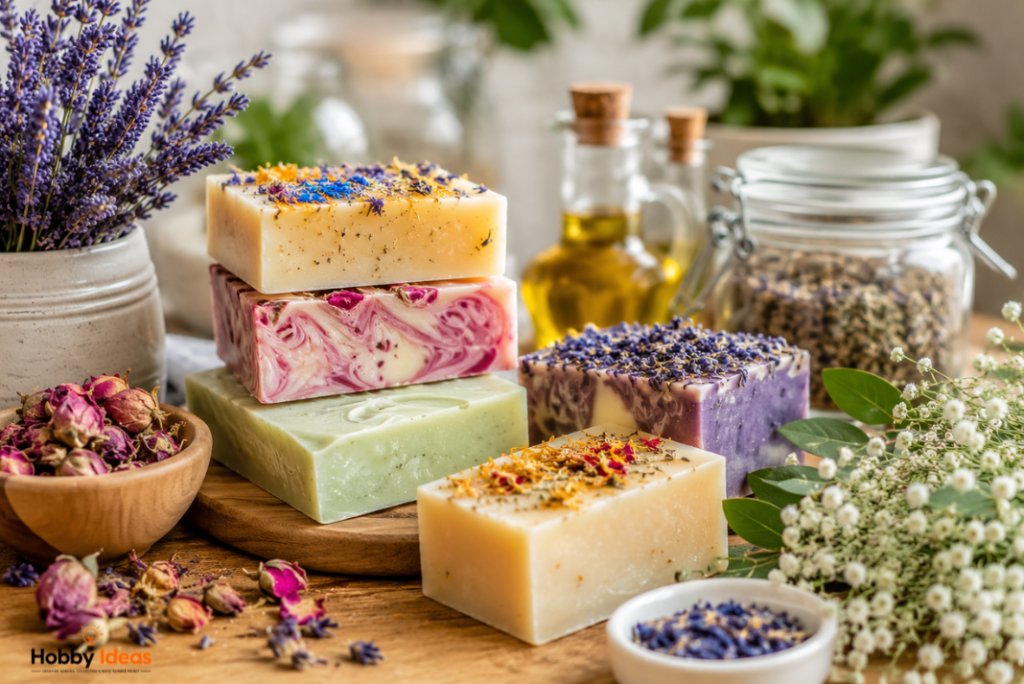
Natural textures, dried flowers, marbled colours, layered patterns, and rustic wrapping styles all contribute to the hobby’s growing visual appeal.
The Different Types of Soap Making
Interestingly, making soap at home actually includes several different approaches depending on how involved people want the hobby to become.
Melt and Pour Soap
This beginner-friendly method uses pre-made soap bases that hobbyists melt down before adding colours, fragrances, oils, botanicals, or decorative elements.
Many beginners start here because the process feels approachable and relatively simple.
Cold Process Soap
Cold process soap making creates soap entirely from scratch using oils and lye.
This method allows far greater creative control. However, it also requires proper safety precautions and more patience during curing.
Many experienced hobbyists eventually move into cold process techniques once confidence grows.
Hot Process Soap
Hot process soap uses additional heat during the production stage to accelerate saponification.
The finished soap often develops a more rustic appearance, which many hobbyists actually enjoy.
Why Making Soap at Home Looks So Appealing Online
Making soap at home works extremely well visually, which partly explains why the hobby continues spreading across Pinterest, Instagram, TikTok, and lifestyle blogs.
Beautiful soap bars photographed beside dried lavender, eucalyptus, ceramic dishes, linen towels, or wooden trays instantly create a calming handmade atmosphere.
Importantly, the hobby also photographs well because every batch looks slightly different.
Some hobbyists create:
- earthy botanical soaps
- minimalist monochrome bars
- colourful swirl patterns
- oatmeal and honey soaps
- citrus-inspired summer designs
- coffee exfoliating soaps
- seasonal festive soaps
That visual flexibility keeps the hobby feeling fresh and creative over time.
The Equipment Beginners Actually Need
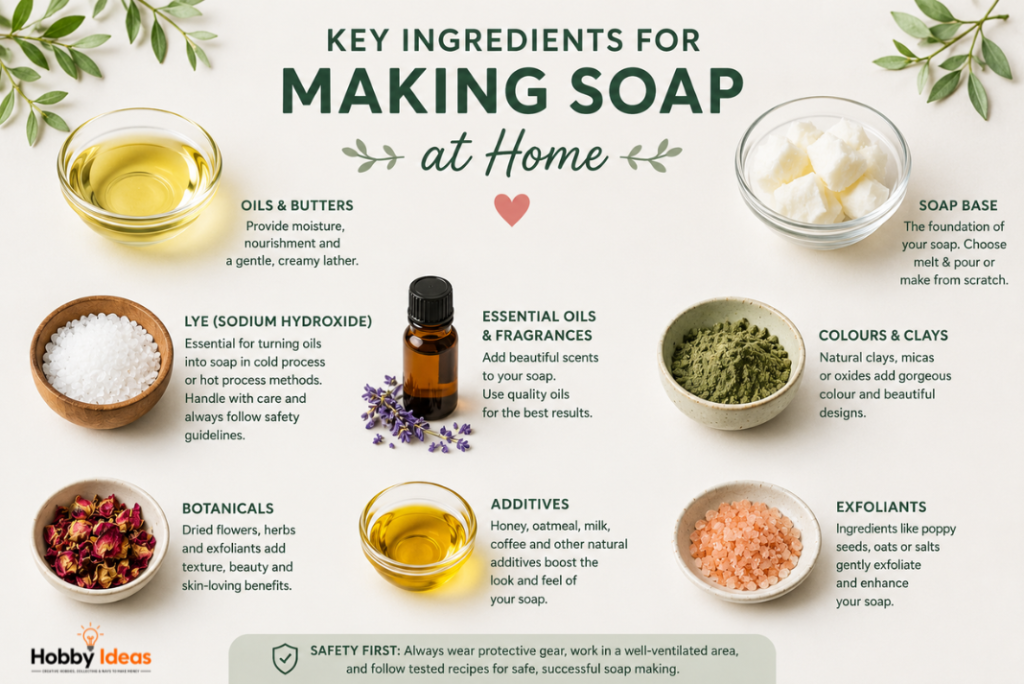
One reason making soap at home remains accessible is the relatively low startup cost.
Beginners usually only need:
- soap base or oils
- mixing bowls
- soap moulds
- essential oils or fragrances
- soap colouring
- a thermometer
- silicone spatulas
- protective gloves if making cold process soap
Importantly, beginners do not need expensive professional equipment immediately.
Many people start experimenting using simple kitchen tools before upgrading later.
Can Making Soap at Home Become a Small Side Business?
Interestingly, many hobbyists eventually begin selling small batches of handmade soap at local craft fairs, Etsy shops, gift stalls, or artisan markets.
However, the most successful soap makers usually start because they genuinely enjoy the hobby itself rather than chasing fast money.
That distinction matters.
The hobby tends to work best when creativity and enjoyment remain the priority first.
Over time, some hobbyists naturally develop:
- gift box collections
- seasonal soap ranges
- custom fragrance blends
- local market stalls
- small online shops
Interestingly, handmade soap also appeals strongly to customers looking for more natural products, handmade gifts, and small independent creators.
Soap Safety, Allergies, and Labelling Requirements
Anyone thinking about selling handmade soap should take safety and ingredient labelling very seriously.
Although making soap at home begins as a relaxing creative hobby for many people, products sold to the public fall under cosmetic safety regulations within the UK.
Importantly, some ingredients can trigger allergic reactions or skin sensitivities in certain individuals.
Essential oils, fragrance oils, nuts, oats, botanicals, citrus extracts, and colourants may all cause irritation for some users, particularly people with sensitive skin conditions or known allergies.
For that reason, handmade soap sellers should always provide clear ingredient information and accurate labelling.
Many small soap businesses include:
- full ingredient lists
- allergy warnings
- batch numbers
- contact information
- weight details
- recommended usage guidance
Importantly, UK cosmetic regulations also require safety assessments before legally selling many handmade cosmetic products to the public.
Beginners should therefore research cosmetic compliance carefully before turning a hobby into a commercial venture.
Even hobbyists selling small batches at local markets or online should understand that proper labelling protects both customers and sellers.
The Biggest Mistakes Beginners Make
Adding Too Much Fragrance
Many beginners assume stronger fragrance automatically improves handmade soap.
Unfortunately, excessive oils often create overpowering scents or skin irritation problems.
Subtle fragrance usually works better.
Rushing the Process
Making soap at home rewards patience.
Cold process soaps especially require curing time before use, even when the bars already look finished visually.
Many beginners become impatient too early.
Trying Overly Complex Designs Immediately
Complicated swirl techniques and layered designs often look easier online than they actually are in practice.
Most experienced hobbyists recommend mastering simple batches first before attempting advanced artistic designs.
Why Making Soap at Home Appeals to So Many Adults
Many modern hobbies happen almost entirely through screens.
Making soap at home feels completely different because it creates something physical, scented, tactile, and genuinely useful.
The hobby also fits naturally into several modern lifestyle trends including:
- slow living
- mindful crafting
- self-care routines
- handmade gifts
- natural home products
- creative relaxation
That combination explains why so many people continue discovering soap making for the first time.
If you enjoy calming tactile hobbies, our article on low stress hobbies for adults explores more relaxing creative hobbies that help reduce screen fatigue.
Final Thoughts on Making Soap at Home
Making soap at home combines creativity, relaxation, practical crafting, and visual satisfaction in a way very few hobbies manage to balance so naturally.
Whether someone creates simple rustic soap bars for personal use or eventually experiments with artistic designs and small market stalls, the hobby offers a calming and surprisingly rewarding creative outlet.
And honestly, that blend of creativity, practicality, and slower hands-on crafting may explain exactly why making soap at home continues growing so rapidly as a modern hobby.